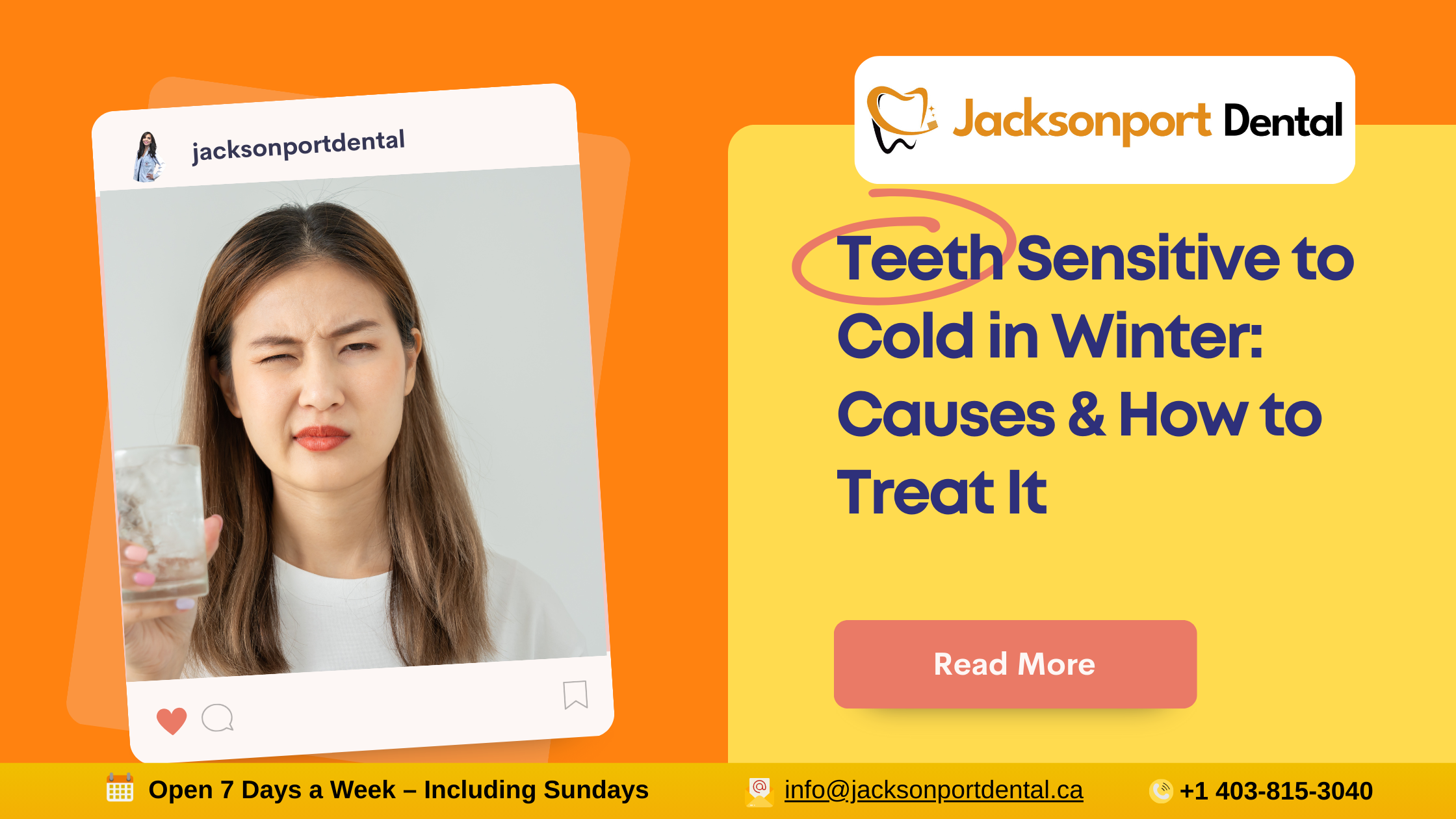
Experiencing sharp tooth pain in cold weather? 👉 Book your dental consultation today or call 403-815-3040
A Calgary Dentist Explains Why Winter Makes Your Teeth Hurt — and What You Can Do About It
Winter in Calgary is beautiful, but for many people, it also brings an uncomfortable surprise: sharp, sudden tooth pain when breathing cold air or sipping a hot drink after coming in from outside.
As a dentist practicing in NE Calgary, I see a noticeable increase in patients complaining of cold-sensitive teeth during winter months.
The good news is that this sensitivity is common, manageable, and often preventable once you understand what’s causing it.
In this blog, I’ll explain:
- Why teeth become more sensitive in winter
- What sensitivity really means for your oral health
- How to treat cold sensitivity at home
- When it’s time to see a dentist
- How we help patients manage tooth sensitivity at Jacksonport Dental
What Does Tooth Sensitivity Feel Like?
- A sudden, sharp pain when breathing cold air
- Discomfort when drinking hot tea or coffee after being outside
- Pain when eating ice cream or cold foods
- Sensitivity that fades quickly once the stimulus is removed
This type of pain is different from a constant toothache.
Why Are Teeth More Sensitive in Winter?
1. Cold Air Causes Tooth Expansion and Contraction
Cold air causes teeth to contract and expand repeatedly.
- Stress the enamel
- Expose microscopic cracks
- Irritate the inner nerve of the tooth
2. Enamel Wear Exposes Dentin
When enamel wears down, dentin becomes exposed, allowing cold to reach the nerve.
- Aggressive brushing
- Acidic foods and drinks
- Teeth grinding (bruxism)
- Acid reflux
- Natural aging
3. Gum Recession Exposes Sensitive Root Surfaces
Receding gums expose roots that lack enamel protection.
- Tooth roots become exposed
- Cold sensitivity increases
👉 Learn more about gum health:
Gum disease signs & prevention
4. Teeth Grinding Increases During Stressful Winter Months
- Shorter daylight hours
- Holiday responsibilities
- Work and family pressures
👉 Learn about protection:
Bite guards & splints
5. Existing Dental Issues Become More Noticeable
- Cavities
- Cracked teeth
- Old or failing fillings
- Early gum disease
👉 Related read:
Tooth sensitivity causes explained
Is Winter Tooth Sensitivity Normal?
- It is worsening
- It affects only one tooth
- It lingers after cold exposure
- It interferes with eating or drinking
How to Treat Cold Tooth Sensitivity at Home
Use a Toothpaste for Sensitive Teeth
- Use twice daily
- Do not rinse immediately
- Allow toothpaste to sit briefly
Switch to a Soft-Bristled Toothbrush
- Use a soft brush
- Brush gently
- Avoid aggressive scrubbing
Limit Acidic Foods and Drinks
- Citrus fruits
- Carbonated drinks
- Hot lemon water
- Sports drinks
Protect Your Teeth from Cold Air
Covering your mouth with a scarf reduces sensitivity.
Manage Teeth Grinding
A custom night guard can protect enamel and reduce sensitivity.
Professional Treatments for Tooth Sensitivity
At Jacksonport Dental, we tailor treatment based on the cause.
- Professional fluoride treatments
- Dental bonding
- Gum care
- Filling or crown replacement
- Custom night guards
👉 Explore treatments:
Dental fillings |
Crowns & veneers
When Should You See a Dentist?
- Sensitivity is persistent
- Pain occurs in one tooth
- Sensitivity is worsening
- You notice cracks or gum recession
- Home remedies are not helping
👉 Schedule your dental checkup or call 403-815-3040
How We Help Patients with Tooth Sensitivity at Jacksonport Dental
- A detailed dental exam
- X-rays if needed
- Bite evaluation
- Personalized home care guidance
👉 Book a consultation:
Dental consultation
Preventing Tooth Sensitivity in Future Winters
- Regular dental cleanings
- Early treatment of enamel wear
- Proper brushing technique
- Managing grinding
- Addressing gum recession early
👉 Learn more:
Teeth cleaning & hygiene
Frequently Asked Questions (FAQs)
Why do my teeth hurt more in winter?
Cold air triggers nerve responses in exposed dentin.
Can tooth sensitivity go away on its own?
Mild sensitivity may improve, but persistent issues need evaluation.
Is tooth sensitivity a sign of a cavity?
Sometimes. One-tooth sensitivity should be checked.
Are sensitive toothpastes safe long-term?
Yes, they are safe for regular use.
Should I avoid cold foods in winter?
Moderation helps reduce discomfort.
Final Thoughts from Dr. Richa Bhatnagar
Tooth sensitivity is your body’s way of telling you something needs attention.
If cold weather is affecting your comfort, don’t wait for it to worsen.
With the right care and guidance, sensitive teeth can be effectively managed.