
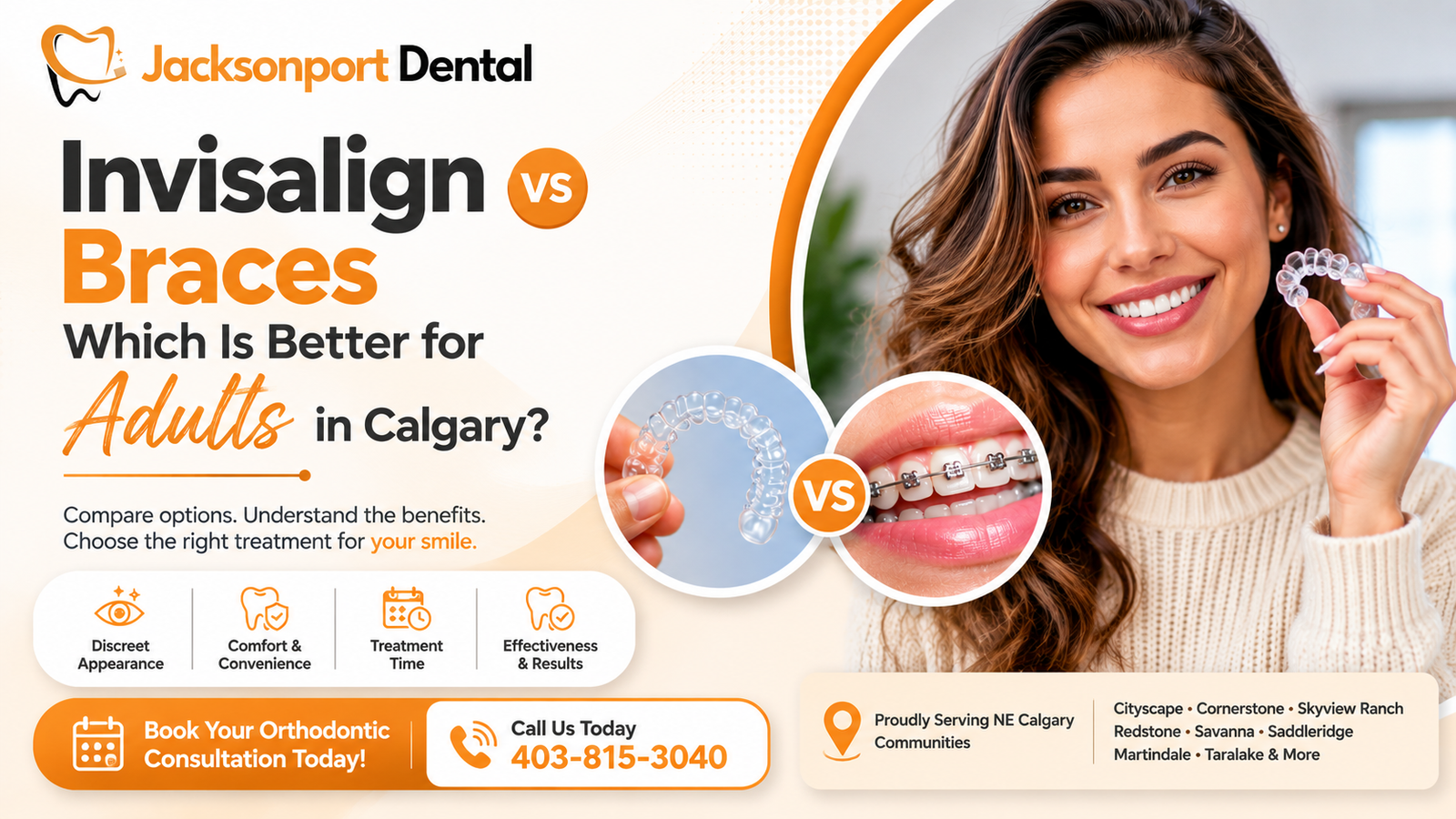
Schedule Your Invisalign or Braces Consultation Today
Discover whether Invisalign or traditional braces are the right solution for your smile.
Quick Answer: Is Invisalign Better Than Braces?
For many adults, Invisalign is often preferred because it is nearly invisible, removable, and allows easier brushing and flossing. However, traditional braces may be a better option for severe crowding, complex bite issues, or significant tooth movement. The best treatment depends on your oral health, treatment goals, and lifestyle.
Why More Adults in Calgary Are Choosing Orthodontic Treatment
Orthodontic treatment is no longer just for teenagers. Many adults in Calgary are investing in straighter teeth because they want to improve both their appearance and oral health. Adults commonly seek treatment to:
- Improve smile confidence
- Correct crowded or crooked teeth
- Close gaps between teeth
- Improve bite alignment
- Reduce uneven tooth wear
- Make brushing and flossing easier
- Support long-term oral health
Straight teeth are often easier to clean and maintain, reducing the risk of cavities and gum disease.
If you haven’t had a recent oral health assessment, consider scheduling a Comprehensive Dental Exam before starting orthodontic treatment.
What Is Invisalign?
Invisalign is a modern orthodontic treatment that uses a series of clear, removable aligners to gradually move teeth into their ideal positions. Unlike traditional braces, Invisalign does not use metal brackets or wires. Each aligner is custom-made using advanced digital scanning technology and is designed specifically for your smile.
How Invisalign Works
Treatment begins with a consultation and digital scan of your teeth. A customized treatment plan is created, and a series of aligners are fabricated to move your teeth gradually over time. Patients typically wear each aligner set for one to two weeks before moving to the next stage. For optimal results, Invisalign aligners should generally be worn for 20 to 22 hours per day.
Benefits of Invisalign for Adults
- Nearly invisible appearance
- Removable for eating and drinking
- Comfortable smooth plastic aligners
- Fewer food restrictions
- Easier brushing and flossing
- Digital treatment planning
- Suitable for many mild to moderate orthodontic issues
Learn more about our Invisalign Treatment in Calgary .
You may also find these resources helpful:
What Are Traditional Braces?
Traditional braces use brackets and wires that are attached to the teeth to gradually move them into better alignment. Braces have been used successfully for decades and remain one of the most effective orthodontic treatments available. Modern braces are smaller, more comfortable, and more efficient than previous generations.
How Braces Work
Brackets are bonded to the teeth and connected using orthodontic wires. Periodic adjustments allow your dentist to guide tooth movement throughout treatment.
Benefits of Braces
- Excellent for complex cases
- Effective for severe crowding
- Can correct significant bite issues
- No patient compliance concerns
- Continuous treatment 24 hours a day
- Highly predictable outcomes
Explore our Orthodontic Braces Services to learn more.
Additional reading:
Invisalign vs Braces: Understanding the Key Differences
Both Invisalign and braces are designed to straighten teeth and improve bite alignment, but they achieve these goals in different ways.
When deciding between Invisalign and braces, adults typically compare:
- Appearance
- Comfort
- Treatment time
- Cost
- Lifestyle impact
- Oral hygiene requirements
- Effectiveness for complex cases
In the next section, we’ll compare Invisalign and braces side-by-side to help you determine which option may be best for your smile.
Not Sure Which Treatment Is Right for You?
Every smile is unique. A personalized consultation can help determine whether Invisalign or braces will provide the best outcome for your specific needs.
Invisalign vs Braces: Side-by-Side Comparison for Adults
Both Invisalign and braces can successfully straighten teeth and improve bite alignment. However, the treatment experience can be very different depending on your lifestyle, orthodontic needs, and personal preferences.
Let’s compare the most important factors adults consider when choosing between Invisalign and braces.
1. Appearance and Confidence
Invisalign
One of the biggest reasons adults choose Invisalign is its nearly invisible appearance.
The clear aligners are difficult to notice during conversations, meetings, social events, and professional interactions.
Many professionals in Calgary prefer Invisalign because they can improve their smile without drawing attention to their orthodontic treatment.
Braces
Traditional braces are more visible because brackets and wires are attached to the teeth.
Although modern braces are smaller and less noticeable than older versions, they remain visible throughout treatment.
Winner: Invisalign
2. Comfort During Treatment
Invisalign
Invisalign aligners are made from smooth plastic and are custom-designed for your teeth.
Most patients experience mild pressure when switching to a new aligner, but there are no brackets or wires that can irritate the inside of the mouth.
Braces
Braces may cause discomfort after adjustments and can occasionally irritate the cheeks, lips, and gums.
Orthodontic wax is often used to reduce irritation during the adjustment period.
Winner: Invisalign
3. Effectiveness for Complex Cases
Invisalign
Modern Invisalign technology can successfully treat many orthodontic concerns, including:
- Mild crowding
- Moderate crowding
- Spacing issues
- Minor bite concerns
- Cosmetic alignment improvements
Advances in clear aligner technology have expanded the range of cases that can be treated with Invisalign.
Braces
Braces remain the gold standard for highly complex orthodontic cases.
They are often recommended for:
- Severe crowding
- Major bite corrections
- Significant tooth rotation
- Complex jaw alignment issues
- Extensive orthodontic movement
Winner: Braces for complex cases
4. Eating and Drinking
Invisalign
One of Invisalign’s biggest advantages is flexibility.
Because aligners are removable, patients can continue enjoying their favorite foods.
Simply remove the aligners before eating and replace them afterward.
There are virtually no dietary restrictions.
Braces
Patients with braces must avoid foods that may damage brackets or wires.
Examples include:
- Hard candy
- Sticky candy
- Popcorn
- Chewing ice
- Certain nuts
- Hard crusts
Winner: Invisalign
5. Oral Hygiene and Cleaning
Invisalign
Since aligners are removable, brushing and flossing remain largely unchanged.
This makes it easier to maintain excellent oral hygiene throughout treatment.
Patients can continue regular preventive care, including:
Braces
Cleaning around brackets and wires requires additional effort and attention.
Patients often use:
- Interdental brushes
- Water flossers
- Orthodontic floss threaders
Winner: Invisalign
6. Treatment Time
Treatment time varies depending on the complexity of the case.
Typical Invisalign Timeline
- 6 to 18 months for many adult cases
Typical Braces Timeline
- 18 to 24 months for many comprehensive cases
However, treatment length depends more on your individual orthodontic needs than the appliance itself.
Some complex cases may require similar treatment times regardless of the method selected.
7. Maintenance and Follow-Up Visits
Invisalign
Invisalign patients typically require periodic monitoring appointments to ensure treatment is progressing as planned.
Many visits are shorter and less involved compared to traditional braces adjustments.
Braces
Braces require regular adjustment appointments to tighten wires and guide tooth movement.
These visits are an important part of successful treatment.
The Hidden Factor Most Adults Overlook: Compliance
Many patients focus on appearance, comfort, and cost.
However, one of the most important factors in orthodontic success is patient compliance.
Invisalign Only Works When You Wear It
Aligners should be worn approximately 20 to 22 hours per day.
Removing them too often can delay treatment and reduce predictability.
You must be committed to:
- Wearing aligners consistently
- Cleaning aligners regularly
- Keeping track of aligners
- Following your treatment schedule
Braces Work Around the Clock
Because braces are fixed to your teeth, treatment continues 24 hours a day without relying on patient compliance.
For some patients, this can make braces a more predictable option.
Who Is the Best Candidate for Invisalign?
You may be an excellent candidate for Invisalign if you:
- Want a discreet orthodontic solution
- Have mild to moderate crowding
- Have spacing issues between teeth
- Want easier brushing and flossing
- Are comfortable wearing aligners consistently
- Have professional or social concerns about visible braces
If you’re considering Invisalign, explore our Invisalign Treatment Services and related articles:
Who May Be Better Suited for Braces?
Braces may be the preferred option if you:
- Have severe crowding
- Need significant bite correction
- Have extensive tooth rotation
- Need complex orthodontic treatment
- Prefer a fixed appliance
- Do not want to worry about wearing aligners consistently
Learn more about Orthodontic Braces and related orthodontic care.
Ready to Discover Which Option Is Right for You?
Whether you’re considering Invisalign or braces, the best treatment starts with a personalized assessment.
Dr. Richa Bhatnagar and the Jacksonport Dental team can evaluate your smile and recommend the most effective orthodontic solution for your goals.
How Much Does Invisalign Cost Compared to Braces?
Cost is one of the most common concerns among adults considering orthodontic treatment.
The reality is that treatment costs vary significantly depending on:
- Case complexity
- Treatment duration
- Number of aligners required
- Additional orthodontic procedures
- Retainer requirements
In many cases, Invisalign and braces fall within a similar overall investment range.
A consultation is the best way to receive an accurate estimate based on your unique needs.
Why Retainers Matter After Invisalign or Braces
One of the biggest misconceptions about orthodontic treatment is that the process ends when the aligners or braces come off.
In reality, retention is critical. Teeth naturally want to shift back toward their original positions. Retainers help protect your investment and maintain your new smile for years to come.
We recommend reading:
Why More Adults in NE Calgary Are Choosing Invisalign
Patients throughout NE Calgary increasingly choose Invisalign because it combines aesthetics, convenience, and modern technology.
Adults from communities including Cityscape, Cornerstone, Skyview Ranch, Savanna, Redstone, Saddleridge, Martindale, and Taradale appreciate the ability to straighten their teeth without the appearance of traditional braces.
For busy professionals, parents, and students, Invisalign often provides an excellent balance of effectiveness and convenience.
Serving Patients Throughout NE Calgary
Jacksonport Dental proudly serves patients and families throughout Northeast Calgary who are looking for modern orthodontic solutions and personalized dental care.
We welcome patients from:
Whether you are exploring Invisalign for the first time or considering braces as an adult, our team can help you understand your options and create a customized treatment plan that aligns with your goals.
Book Your Invisalign Consultation in Calgary
Ready to achieve a straighter, healthier smile? Schedule a consultation with Dr. Richa Bhatnagar and discover whether Invisalign or braces is the best option for you.
Final Thoughts: Invisalign vs Braces for Adults in Calgary
Choosing between Invisalign and braces is an important decision, but it doesn’t have to be overwhelming.
Both treatment options are highly effective and can help improve your smile, oral health, and confidence.
For many adults, Invisalign offers an appealing combination of convenience, comfort, and aesthetics. The nearly invisible aligners allow patients to straighten their teeth discreetly while maintaining their professional and social confidence.
However, traditional braces remain one of the most effective orthodontic solutions available, particularly for complex tooth movement and significant bite correction.
The best treatment option ultimately depends on:
- Your oral health condition
- The complexity of your orthodontic needs
- Your lifestyle and preferences
- Your treatment goals
- Your commitment to wearing aligners if choosing Invisalign
A comprehensive consultation and personalized treatment plan can help determine which solution is best for your smile.
At Jacksonport Dental, Dr. Richa Bhatnagar and our team are committed to helping patients throughout Calgary achieve healthier, more confident smiles through customized orthodontic care.
Related Orthodontic Services
Related Articles
- Invisalign in Calgary: Complete Treatment Guide
- How Long Does Invisalign Treatment Really Take?
- Why Invisalign Is Worth It for Adults
- Expert Invisalign Tips from Dr. Richa Bhatnagar
- Living with Invisalign Aligners
- Maintaining Invisalign Aligners for Long-Term Success
- Why Retainers Are Just As Important As Braces
Frequently Asked Questions About Invisalign and Braces
Is Invisalign better than braces?
Neither treatment is universally better. Invisalign is often preferred for aesthetics, comfort, and convenience, while braces may be better suited for complex orthodontic cases requiring significant tooth movement.
How much does Invisalign cost in Calgary?
The cost of Invisalign varies based on the complexity of the case, treatment duration, and the number of aligners required. A consultation is the best way to receive an accurate estimate.
Is Invisalign faster than braces?
In many mild to moderate orthodontic cases, Invisalign treatment may be completed faster than braces. However, treatment time depends on individual needs and compliance.
Can adults get braces?
Absolutely. Adult orthodontic treatment is increasingly common and can effectively address crowding, spacing, bite concerns, and other alignment issues.
Does Invisalign hurt less than braces?
Most patients report that Invisalign is more comfortable because there are no brackets or wires to irritate the cheeks and gums.
How many hours per day should Invisalign be worn?
For optimal results, Invisalign aligners should generally be worn between 20 and 22 hours per day.
Can Invisalign fix severe crowding?
Some severe crowding cases can be treated with Invisalign, but braces may sometimes be the more effective option depending on the complexity of tooth movement required.
Do I need retainers after Invisalign?
Yes. Retainers help prevent teeth from shifting after treatment and are essential for maintaining long-term orthodontic results.
Is Invisalign covered by insurance in Alberta?
Some dental insurance plans provide orthodontic coverage that may apply to Invisalign treatment. Coverage varies between providers and plans.
Where can I get Invisalign in NE Calgary?
Jacksonport Dental provides Invisalign treatment for patients throughout Cityscape, Cornerstone, Skyview Ranch, Redstone, Savanna, Saddleridge, Martindale, Taralake, and surrounding Calgary communities.
Start Your Smile Transformation Today
If you’re considering Invisalign or braces, now is the perfect time to take the next step.
Schedule a consultation with Dr. Richa Bhatnagar and receive a personalized orthodontic assessment designed around your smile goals.
Book Your Consultation | Call 403-815-3040
Jacksonport Dental
124-3730 104 Ave NE
Calgary, AB T3N 0T1