
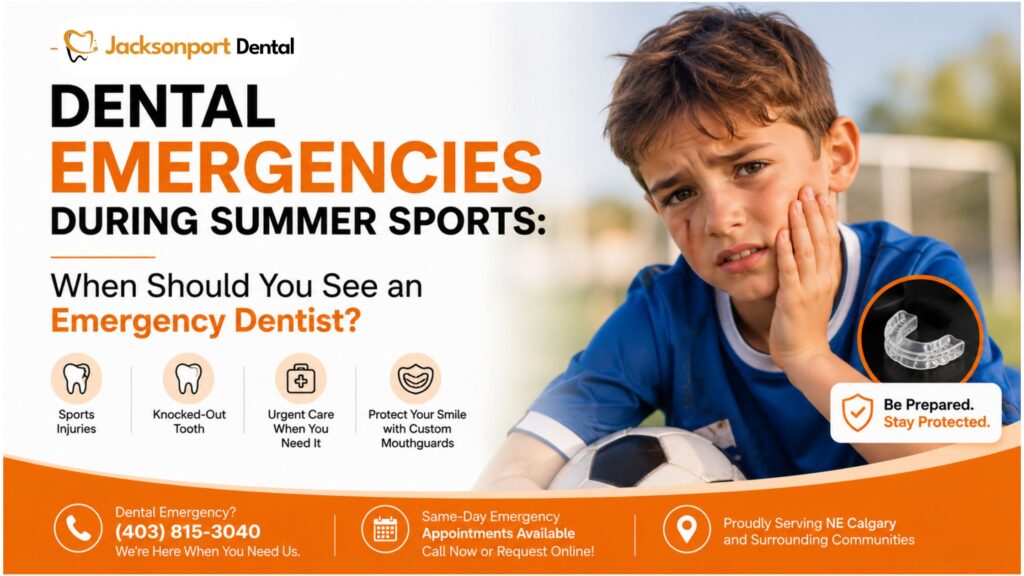
Summer is one of the busiest seasons for outdoor activities in Calgary. Whether your family enjoys soccer, baseball, cycling, skateboarding, basketball, lacrosse, or community sports, staying active is a great way to enjoy the warmer weather. Unfortunately, it is also the time of year when dentists see an increase in sports-related dental injuries.
A sudden collision, an accidental elbow, or a fall from a bicycle can quickly turn an enjoyable afternoon into a dental emergency. While some injuries may seem minor at first, delaying treatment can lead to more extensive dental problems, increased discomfort, and even permanent tooth loss.
Knowing how to recognize a true dental emergency—and acting quickly—can make all the difference in protecting your smile.
If you’re searching for an emergency dentist in NE Calgary, this guide explains what qualifies as a dental emergency, the most common sports-related dental injuries, immediate first-aid steps, and when you should seek professional dental care.
What Is Considered a Dental Emergency?
A dental emergency is any injury, infection, or dental condition that requires immediate professional care to relieve severe pain, stop bleeding, prevent infection, or save a damaged or knocked-out tooth.
Some situations require urgent treatment within minutes, while others should be evaluated the same day to prevent complications.
Common Dental Emergencies Include:
- Knocked-out permanent teeth.
- Broken or fractured teeth.
- Severe toothaches with swelling.
- Loose or displaced teeth after an injury.
- Dental abscesses or infections.
- Excessive bleeding from the mouth.
- Broken crowns, bridges, or fillings causing pain.
- Jaw injuries following trauma.
- Cuts or lacerations inside the mouth.
If you’re ever unsure whether your situation is urgent, it’s always safest to contact your dentist for advice as soon as possible.
Why Summer Sports Increase the Risk of Dental Injuries
Longer days and warmer temperatures encourage children, teens, and adults to spend more time participating in recreational activities. Contact sports, high-speed activities, and outdoor adventures naturally increase the likelihood of falls, collisions, and facial injuries.
Many sports injuries occur unexpectedly—even during recreational games where protective equipment may not always be worn.
Sports with a Higher Risk of Dental Injuries
- Soccer
- Basketball
- Baseball and softball
- Football
- Hockey
- Cycling
- Skateboarding
- Scootering
- Martial arts
- Lacrosse
- Rollerblading
Even seemingly low-contact activities can result in chipped teeth, soft tissue injuries, or dental trauma if a player falls or is struck in the face.
The Most Common Sports-Related Dental Emergencies
Sports injuries affect more than just your teeth. Trauma can damage your gums, lips, cheeks, jawbone, and existing dental restorations. Knowing how to recognize these injuries can help you respond quickly and appropriately.
1. Knocked-Out Tooth (Avulsed Tooth)
A knocked-out permanent tooth is one of the most urgent dental emergencies. The chances of saving the tooth are highest when treatment begins within the first 30 to 60 minutes after the injury.
What Should You Do?
- Pick up the tooth by the crown (the chewing surface), never by the root.
- If dirty, gently rinse it with clean water for a few seconds.
- Do not scrub, brush, or remove any tissue attached to the root.
- If possible, carefully place the tooth back into the socket.
- If reinsertion isn’t possible, keep the tooth in milk or a tooth preservation solution.
- Contact an emergency dentist immediately.
Quick action significantly improves the chances of successfully saving the tooth.
Need immediate care?
Learn About Our Emergency Dental Services →
2. Chipped or Broken Teeth
Not every chipped tooth causes severe pain, but even small fractures should be examined by a dentist. Cracks can extend beneath the surface of the tooth, increasing the risk of infection or further damage if left untreated.
Signs You Should Seek Immediate Care
- Sharp pain when biting.
- Sensitivity to hot or cold.
- Visible fracture lines.
- Bleeding around the tooth.
- Large pieces of tooth missing.
Whenever possible, save any broken tooth fragments and bring them with you to your dental appointment.
3. Loose or Displaced Teeth
A tooth doesn’t have to fall out completely to become a dental emergency. Teeth that have been pushed inward, outward, or sideways after a sports injury require prompt evaluation.
Attempting to force the tooth back into position yourself may cause additional damage. Instead, avoid chewing on the injured side and contact your dentist immediately.
4. Lost Fillings, Crowns, or Dental Restorations
Sports-related impacts can loosen crowns, fillings, bridges, or other restorations. Although this may not always seem urgent, exposing the underlying tooth can lead to sensitivity, discomfort, and an increased risk of further fracture.
If your restoration comes loose:
- Keep the restoration if possible.
- Avoid chewing on the affected side.
- Schedule an emergency dental visit as soon as possible.
Experiencing a Dental Emergency?
Prompt treatment can make a significant difference in protecting your oral health and preserving your natural teeth. If you or a family member experiences a sports-related dental injury, don’t wait to seek professional care.
Request an Emergency Dental Appointment →
Need immediate assistance?
Call (403) 815-3040 to speak with our team and receive guidance on your dental emergency.
5. Soft Tissue Injuries to the Lips, Tongue, and Gums
Not every dental emergency involves a tooth. During summer sports, it’s common for athletes to bite their tongue, cut their lips, or injure their gums after a collision or fall. While many soft tissue injuries are minor, deeper cuts or uncontrolled bleeding should always be evaluated by a dental professional.
Because the mouth contains many blood vessels, even small cuts can bleed heavily. Fortunately, most injuries respond well to basic first aid and prompt professional care when needed.
Signs You Should Seek Emergency Dental Care
- Bleeding that continues for more than 10–15 minutes.
- Deep cuts to the lips, tongue, or cheeks.
- Large pieces of tissue that appear torn.
- Difficulty speaking or swallowing.
- Visible debris or dirt inside the wound.
- Signs of infection such as swelling, pus, or fever.
Immediate First Aid
- Rinse your mouth gently with clean water.
- Apply gentle pressure using clean gauze.
- Use a cold compress on the outside of the face to reduce swelling.
- Avoid spicy or acidic foods until healing begins.
- Contact your emergency dentist if bleeding does not stop.
6. Jaw Injuries After Sports Accidents
A direct impact to the face can injure more than your teeth. Trauma may affect the jawbone or the temporomandibular joint (TMJ), making it difficult or painful to open and close your mouth.
Jaw injuries should never be ignored, particularly if they occur alongside facial swelling or difficulty breathing.
Symptoms That Require Immediate Attention
- Difficulty opening or closing your mouth.
- Jaw appears crooked or misaligned.
- Pain while chewing.
- Facial swelling.
- Numbness in the chin or lower lip.
- Persistent bleeding.
If you suspect a broken jaw or have difficulty breathing, seek emergency medical care immediately before arranging dental treatment.
Dental First Aid: What Should You Do Before Seeing a Dentist?
Knowing how to respond in the first few minutes after an injury can improve treatment outcomes and may even save a damaged tooth. While first aid is not a substitute for professional dental care, it can reduce complications until you’re able to visit an emergency dentist.
Dental Emergency First Aid Checklist
- Stay calm and assess the injury.
- Control bleeding with clean gauze.
- Apply a cold compress to reduce swelling.
- Preserve any broken tooth fragments.
- Handle knocked-out teeth only by the crown.
- Store avulsed teeth in milk if they cannot be reinserted.
- Avoid chewing on the injured side.
- Call your dentist immediately for guidance.
What NOT to Do During a Dental Emergency
In stressful situations, well-meaning actions can sometimes make an injury worse. Avoid these common mistakes while waiting for professional care.
- Do not ignore severe pain or swelling.
- Do not scrub a knocked-out tooth.
- Do not touch the root of an avulsed tooth.
- Do not wrap a knocked-out tooth in tissue or cloth.
- Do not place aspirin directly on sore gums.
- Do not delay treatment because the pain seems manageable.
- Do not attempt to reposition loose teeth yourself.
Should You Visit the Emergency Room or an Emergency Dentist?
Many patients are unsure whether they should visit a hospital emergency department or contact an emergency dentist. The answer depends on the type of injury.
Visit an Emergency Dentist If You Have:
- A knocked-out tooth.
- A broken or cracked tooth.
- Severe tooth pain.
- A loose permanent tooth.
- A broken filling or crown causing pain.
- A dental abscess or swelling inside the mouth.
Visit the Emergency Room Immediately If You Have:
- Difficulty breathing.
- Heavy or uncontrolled bleeding.
- Suspected jaw fracture.
- Serious facial trauma.
- Loss of consciousness.
- Head or neck injuries accompanying dental trauma.
In many situations, both medical and dental care may be necessary following a significant sports injury.
Every Family Should Keep a Dental Emergency Kit
Whether you’re heading to the soccer field, cycling through Calgary’s pathways, or enjoying a weekend tournament, having a simple dental emergency kit can make a big difference.
Recommended Items
- Sterile gauze.
- Small container with lid.
- Tooth preservation solution (if available).
- Bottled water.
- Disposable gloves.
- Cold packs.
- Dental wax.
- Your dentist’s emergency phone number.
Protect Your Smile with a Custom Sports Mouthguard
One of the most effective ways to prevent sports-related dental injuries is by wearing a professionally made custom sports mouthguard. Unlike over-the-counter options, custom mouthguards are designed to fit your teeth precisely, providing greater comfort, protection, and stability during physical activity.
Custom mouthguards help absorb impact forces that could otherwise damage your teeth, gums, jaw, or dental restorations.
Benefits of Custom Sports Mouthguards
- Better protection against knocked-out teeth.
- Reduced risk of chipped or fractured teeth.
- Improved comfort and fit.
- Easier breathing and speaking during sports.
- Greater durability than stock mouthguards.
- Protection for braces and orthodontic appliances.
Learn more about protecting your smile with a custom mouthguard:
You may also find these articles helpful:
Don’t Wait During a Dental Emergency
Fast treatment can improve the chances of saving a damaged tooth and help prevent more complex dental problems. If you or a family member experiences a sports-related dental injury, our team is here to help.
Explore Emergency Dental Services →
Request Emergency Care Online →
Need immediate assistance?
Call (403) 815-3040 and our team will help you determine the next steps for your dental emergency.
Why Families in NE Calgary Trust Jacksonport Dental for Emergency Dental Care
Dental emergencies rarely happen at a convenient time. Whether your child suffers a sports injury during a weekend soccer game or you experience sudden tooth pain after an outdoor activity, receiving prompt professional care can make a significant difference in preserving your oral health.
At Jacksonport Dental, we understand that dental emergencies require timely attention, compassionate care, and clear communication. Our team provides comprehensive emergency dental services for patients of all ages, helping families throughout NE Calgary receive the treatment they need when it matters most.
Why Patients Choose Jacksonport Dental
- Comprehensive emergency dental care for children, teens, adults, and seniors.
- Experienced team focused on patient comfort.
- Modern digital diagnostic technology.
- Personalized treatment plans based on your specific injury.
- Convenient location serving NE Calgary communities.
- Preventive care and follow-up treatment to protect long-term oral health.
Whether your emergency involves a knocked-out tooth, severe toothache, fractured tooth, damaged dental restoration, or sports-related facial injury, seeking prompt treatment can improve outcomes and reduce the likelihood of future complications.
Communities We Proudly Serve
Jacksonport Dental welcomes patients from across Northeast Calgary, including families living in:
- Cityscape
- Cornerstone
- Skyview Ranch
- Redstone
- Savanna
- Saddle Ridge
- Saddletowne
- Martindale
- Taradale
If you’re looking for an emergency dentist in NE Calgary, our clinic is conveniently located to provide prompt care for individuals and families throughout the surrounding communities.
Preventing Dental Emergencies During Summer Sports
While accidents can’t always be avoided, many sports-related dental injuries are preventable. Taking a few simple precautions before participating in recreational activities can significantly reduce the risk of dental trauma.
Summer Smile Protection Checklist
- Wear a professionally fitted custom sports mouthguard.
- Always use helmets and appropriate protective equipment.
- Replace damaged mouthguards immediately.
- Schedule regular dental checkups before sports seasons begin.
- Address loose fillings, crowns, or cracked teeth promptly.
- Stay hydrated during outdoor activities.
- Supervise younger children during contact sports.
- Keep a dental emergency kit in your sports bag or vehicle.
Preventive care remains one of the most effective ways to avoid unexpected dental emergencies and maintain a healthy smile all year long.
When Every Minute Counts, Don’t Delay Treatment
One of the biggest mistakes patients make is assuming a dental injury will heal on its own. Unfortunately, delaying treatment may allow infections to develop, increase the risk of permanent tooth damage, or reduce the likelihood of saving a knocked-out tooth.
If you experience severe pain, swelling, bleeding, or trauma to your teeth or jaw, contacting an emergency dentist as soon as possible is always the safest decision.
The sooner you receive professional dental care, the better your chances of preserving your natural smile.
Frequently Asked Questions
What is considered a dental emergency?
A dental emergency includes severe tooth pain, a knocked-out or loose permanent tooth, uncontrolled bleeding, dental abscesses, facial swelling, broken teeth, or injuries affecting your mouth or jaw that require immediate professional care.
How quickly should I see a dentist after a knocked-out tooth?
Ideally within 30 to 60 minutes. Prompt treatment offers the best chance of successfully saving the tooth.
Can a chipped tooth wait until my next appointment?
Small cosmetic chips may not require immediate care, but any chipped tooth causing pain, sensitivity, bleeding, or sharp edges should be examined as soon as possible.
Should I go to the emergency room for a dental emergency?
Visit an emergency room if you have serious facial trauma, difficulty breathing, heavy bleeding, or a suspected jaw fracture. Most dental emergencies are best treated by an emergency dentist.
What should I do if my child injures a tooth while playing sports?
Stay calm, control any bleeding, preserve the tooth if it has been knocked out, and contact your emergency dentist immediately for guidance.
Can sports mouthguards really prevent dental injuries?
Yes. Custom sports mouthguards significantly reduce the risk of broken teeth, knocked-out teeth, lip injuries, and jaw trauma during athletic activities.
Are baby teeth considered a dental emergency if they are knocked out?
Baby teeth are generally not reinserted after being knocked out. However, your child should still be evaluated by a dentist to check for additional injuries and ensure proper development of the permanent teeth.
How can I reduce the risk of dental emergencies this summer?
Wearing a custom sports mouthguard, attending routine dental examinations, using protective sports equipment, and addressing existing dental issues before they worsen are excellent ways to reduce your risk.
Need an Emergency Dentist in NE Calgary?
Dental emergencies can happen without warning, but fast treatment can often save your tooth and prevent more complex dental problems. If you or a loved one experiences a sports-related dental injury, don’t wait to seek professional care.
Request an Emergency Appointment →
Continue learning with these helpful resources:
- Emergency Dental Services: What to Do and Where to Go in Calgary
- What Counts as a Dental Emergency?
- Signs You Need Emergency Dentistry
- Dental First Aid for Families
- Custom Sports Mouthguards
Need immediate assistance?
Call (403) 815-3040 or request your appointment online. Our team is committed to helping patients throughout NE Calgary receive timely, compassionate emergency dental care when they need it most.