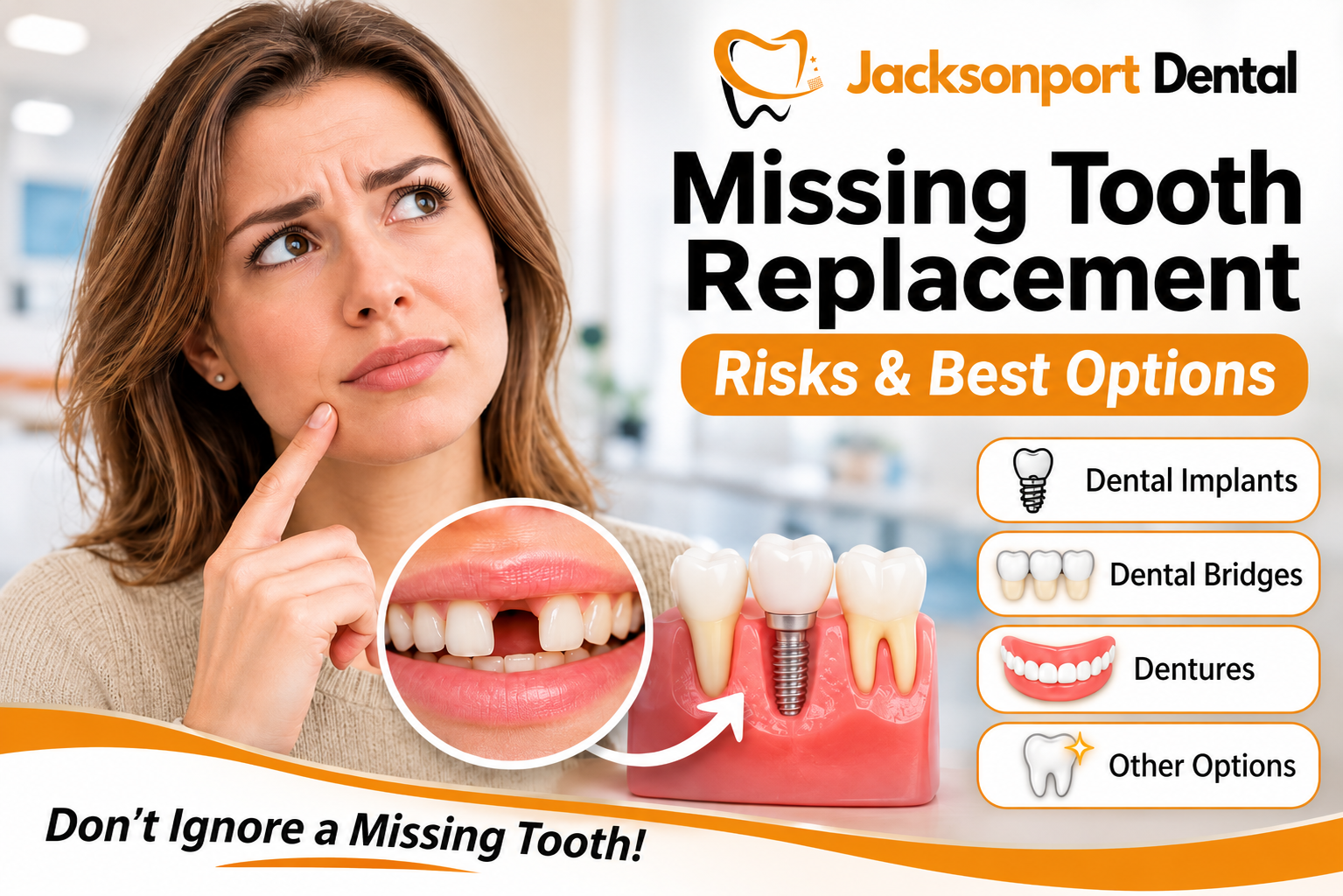
Missing tooth replacement is important for maintaining your oral health, chewing ability and natural smile. Leaving a missing tooth untreated can cause neighbouring teeth to shift, changes in your bite and gradual jawbone loss. Fortunately, several treatment options are available, including dental implants, bridges and affordable alternatives for replacing missing teeth.
Whether you have a front missing tooth, a missing molar or multiple missing teeth, understanding the risks of tooth loss can help you make informed decisions. Moreover, modern dentistry offers several solutions to restore your smile without necessarily undergoing implant surgery.
So, what happens if you don’t replace a missing tooth? Let’s explore the possible consequences, available treatments and ways to protect your remaining teeth.
What Happens Without Missing Tooth Replacement?
Leaving a missing tooth untreated can affect different parts of your mouth. Although complications vary between individuals, here are five important concerns.
1. Neighbouring Teeth May Shift
Your teeth naturally work together to maintain proper alignment. However, when one tooth is missing, neighbouring teeth may gradually move or tilt towards the empty space.
As a result, you may experience:
- Changes in your natural bite.
- Food getting trapped between teeth.
- Difficulty maintaining oral hygiene.
- Uneven pressure while chewing.
Therefore, appropriate missing tooth replacement may help maintain the alignment and function of your remaining teeth.
2. Jawbone Loss May Occur
Your natural tooth roots stimulate the surrounding jawbone during chewing. However, when a tooth is lost, this stimulation disappears in the affected area.
Consequently, the jawbone may gradually lose volume through a process called bone resorption. This can sometimes make future dental implant treatment more complicated.
Learn more about dental implants and how they can replace missing tooth roots.
3. Chewing May Become Difficult
Missing teeth can make biting and chewing less comfortable. For example, losing a molar may make it harder to grind certain foods.
You might start avoiding crunchy vegetables, nuts and other firm foods. Over time, these dietary changes could affect your nutritional choices.
4. Your Smile and Confidence May Suffer
A front missing tooth can be particularly noticeable because your front teeth play an important role in your appearance and speech.
You may feel uncomfortable smiling, speaking or appearing in photographs. Fortunately, treatments such as dental bridges and partial dentures can help restore your smile and confidence.
5. Your Bite May Change
When teeth are missing, the remaining teeth may experience different chewing forces. Consequently, changes in tooth positioning and bite alignment may develop.
However, these complications are not inevitable. A dental examination can help determine whether replacing your missing tooth is necessary.
Best Missing Tooth Replacement Options
Fortunately, there are several options for lost teeth, depending on your dental condition, budget and personal preferences.
Here are four popular teeth replacement options.
1. Dental Implants
Dental implants are a popular permanent tooth replacement option. A small titanium post is surgically placed into the jawbone to support a replacement crown.
Benefits:
- Look and function like natural teeth.
- Do not normally require reshaping neighbouring teeth.
- Provide support through the jawbone.
- Can replace individual or multiple teeth.
However, implants require surgery, sufficient bone support and a longer treatment process.
2. Dental Bridges
A dental bridge replaces a missing tooth by attaching an artificial tooth to supporting teeth on either side of the gap.
Benefits:
- Fixed and convenient.
- Restore chewing function.
- Improve smile appearance.
- Do not require implant surgery.
However, traditional bridges usually require reshaping the supporting teeth.
Explore our dental bridge treatment options to understand how this solution works.
3. Removable Partial Dentures
Partial dentures are removable appliances designed to replace one or several missing teeth.
Benefits:
- Often more affordable than implants.
- Suitable for multiple missing teeth.
- Do not usually require surgery.
- Can be removed for cleaning.
However, they may require adjustments and an adjustment period.
Find out more about partial dentures and their benefits.
4. Maryland Bridges
A Maryland bridge is a minimally invasive option often considered for replacing a missing front tooth.
It uses an artificial tooth attached to small supporting wings bonded to neighbouring teeth.
Benefits:
- Preserves more natural tooth structure.
- Does not require implant surgery.
- Provides an aesthetic replacement.
- Can be suitable for front teeth.
Nevertheless, it is not appropriate for every bite or dental condition.
Missing Tooth Replacement Without Implants
If you are wondering how to fix missing teeth without implants, there are several effective alternatives.
Dental bridges, Maryland bridges and removable partial dentures can all replace missing teeth without implant surgery.
The right treatment depends on the number of missing teeth, the condition of neighbouring teeth and your overall oral health.
Therefore, discuss the advantages, limitations and long-term maintenance of each option with your dentist before making a decision.
Affordable Missing Tooth Replacement Options
Dental treatment costs can be a concern, particularly when replacing several teeth. Fortunately, there are different cheap options for missing teeth worth discussing.
| Replacement option | General cost level |
|---|---|
| Acrylic partial denture | Lower |
| Metal partial denture | Moderate |
| Maryland bridge | Varies |
| Traditional dental bridge | Moderate to higher |
| Dental implant | Higher |
Actual prices depend on your location, dental clinic, materials and treatment requirements.
If affordability is your priority, ask about payment plans, insurance coverage and alternative materials. However, remember that the cheapest option may not always provide the best long-term value.
You can also explore our dental treatment costs and payment options to learn more.
How to Strengthen Teeth After Tooth Loss
Although a lost permanent tooth cannot naturally regrow, you can protect your remaining teeth through good oral hygiene and healthy lifestyle choices.
If you are researching how to strengthen teeth, consider these practical habits.
1. Brush Twice Daily
Use fluoride toothpaste and a soft-bristled toothbrush. Brush for two minutes, twice a day, to help protect your enamel.
2. Floss Every Day
Flossing removes plaque and food particles from areas your toothbrush cannot reach. Consequently, it helps maintain healthy gums and reduces the risk of tooth decay.
3. Eat Foods Good for Teeth
A balanced diet supports healthy teeth and gums. Some foods good for teeth include:
- Milk, cheese and yoghurt for calcium.
- Leafy green vegetables for essential nutrients.
- Eggs and fish for overall nutritional support.
- Nuts and seeds for minerals.
- Carrots and celery as crunchy vegetable choices.
- Water to maintain hydration and support oral health.
Additionally, limit sugary snacks and acidic drinks to reduce the risk of enamel damage.
For further guidance, read the American Dental Association’s advice on diet and dental health.
4. Visit Your Dentist Regularly
Routine dental checkups help identify cavities, gum problems and other concerns early. Your dentist can also monitor the area around your missing tooth.
Consider scheduling a professional dental checkup to assess your oral health.
How to Keep Teeth Healthy
Knowing how to keep teeth healthy is essential for protecting your natural smile.
Follow these simple habits:
- Brush twice daily with fluoride toothpaste.
- Clean between your teeth every day.
- Reduce sugary foods and drinks.
- Drink plenty of water.
- Avoid smoking and tobacco products.
- Schedule regular dental examinations.
- Treat dental pain and bleeding gums promptly.
Above all, maintaining consistent oral hygiene can help prevent future dental complications.
You can also explore these additional oral health tips to maintain healthy teeth and gums.
For more patient-friendly information, visit the Canadian Dental Association’s oral health basics.
Is Missing Tooth Replacement Always Necessary?
Not necessarily. Some missing teeth, particularly certain back teeth, may not require replacement if your chewing function and bite remain satisfactory.
However, the decision depends on several factors, including:
- The location of the missing tooth.
- The condition of neighbouring teeth.
- Your bite alignment.
- Your chewing ability.
- Your jawbone and gum health.
Therefore, consult a dentist before deciding to leave a gap untreated.
You can also explore the NHS guide to dental treatments to learn about restorative dental care.
Frequently Asked Questions
1. What happens if you don’t replace a missing tooth?
Neighbouring teeth may shift, your bite may change and jawbone loss may occur. You may also experience difficulty chewing or changes in speech.
2. Can I replace a missing tooth without implants?
Yes. Dental bridges, Maryland bridges and removable partial dentures are alternatives that do not require implant surgery.
3. What is the cheapest way to replace a missing tooth?
An acrylic partial denture is often among the more affordable options. However, the best treatment depends on your dental needs and budget.
4. Can a missing front tooth affect speech?
Yes. Front teeth help produce certain speech sounds. Therefore, losing one may affect pronunciation and speaking confidence.
5. What is the best permanent tooth replacement?
Dental implants and fixed dental bridges are common options. Your dentist can recommend an appropriate solution after examining your teeth and gums.
Final Thoughts
A missing tooth is more than a cosmetic concern. Over time, it may affect your bite, chewing ability, neighbouring teeth and jawbone health.
Fortunately, modern dentistry offers several missing tooth replacement solutions to suit different needs and budgets. Whether you choose dental implants, a dental bridge or removable dentures, selecting the right treatment can help restore your smile and improve oral function.
Don’t ignore a missing tooth simply because it doesn’t hurt. Schedule a dental consultation to explore your missing tooth replacement options and protect your long-term oral health.