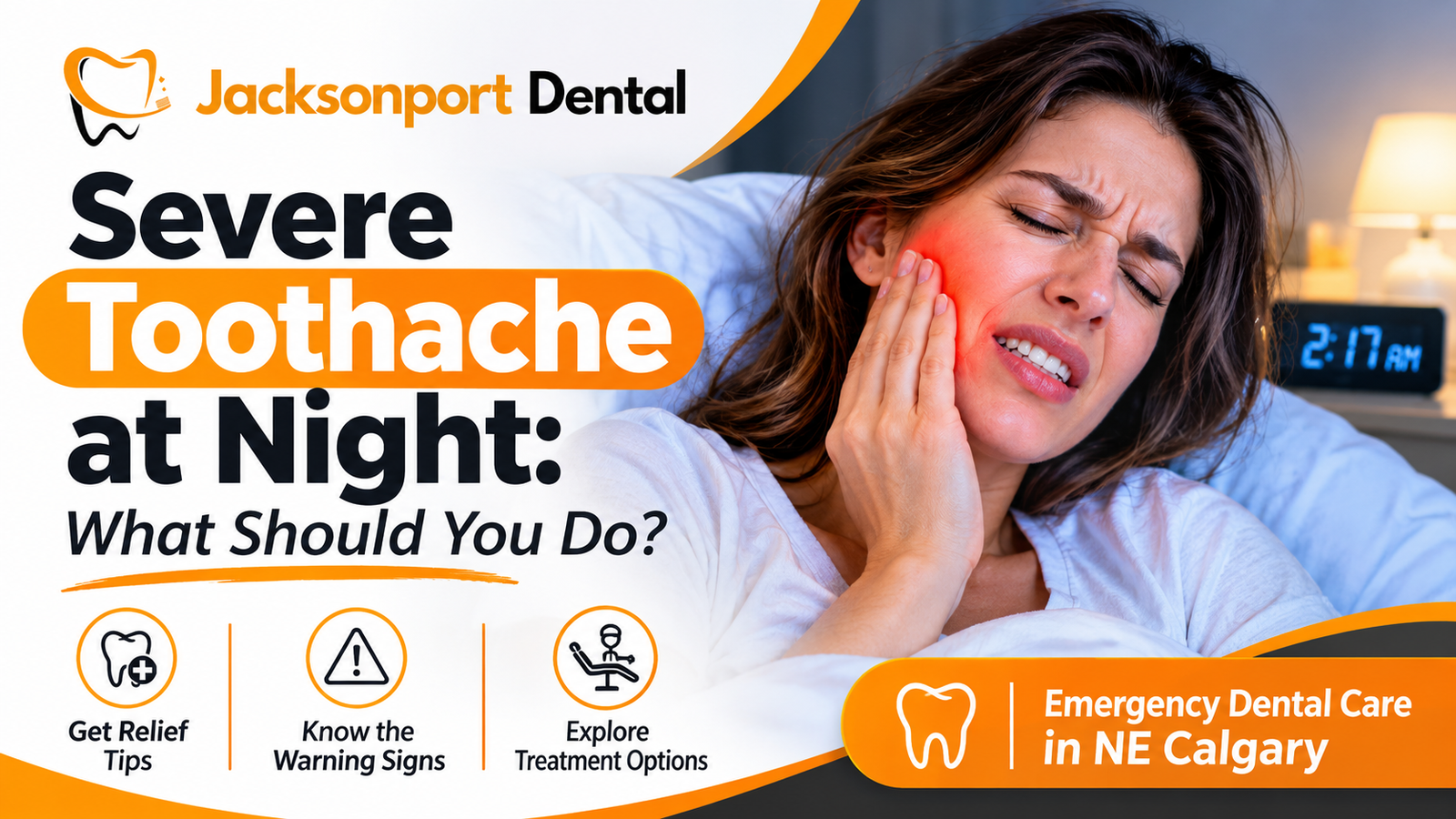
A sudden severe toothache at night can turn a peaceful evening into an uncomfortable experience. Whether you feel sharp, throbbing pain, sensitivity when drinking water, or pressure around your jaw, dental pain can make it difficult to sleep. Even worse, it may happen when most dental clinics are closed.
But what causes toothaches to become worse at night? Can you manage the pain at home? And when should you contact an emergency dentist in Calgary?
A severe toothache may indicate deep tooth decay, an inflamed dental nerve, a cracked tooth, or a dental infection. Although home remedies may provide temporary relief, identifying the underlying problem is essential.
At Jacksonport Dental, we understand that dental emergencies can happen unexpectedly. Our team provides emergency dental care in Northeast Calgary to help patients manage urgent dental concerns and receive appropriate treatment.
In this guide, we explain the causes of nighttime toothaches, effective temporary pain-relief methods, emergency warning signs, and available dental treatments.
Why Does a Severe Toothache Get Worse at Night?
Many people notice that their tooth pain becomes more intense when they lie down. Several factors may contribute to this experience:
- Changes in blood flow: Lying flat may make pressure-related discomfort around an inflamed tooth more noticeable.
- Fewer distractions: At night, when your surroundings are quiet, you may become more aware of existing dental pain.
- Dental inflammation: An irritated or infected dental pulp can cause persistent throbbing discomfort.
- Teeth grinding: Unconscious clenching or grinding during sleep can put additional pressure on your teeth and jaw.
If nighttime tooth pain repeatedly interrupts your sleep, consider arranging a dental examination instead of relying on painkillers.
What Causes Severe Toothache at Night?
Understanding the cause of your pain can help you recognize when professional dental treatment is necessary.
1. Deep Tooth Decay
Untreated cavities can reach the inner layers of your tooth and irritate the dental pulp, resulting in sensitivity and persistent pain.
Learn about our dental services in Calgary to explore available restorative treatment options.
2. Dental Abscess
A dental abscess is a pocket of pus caused by a bacterial infection. Symptoms may include severe throbbing pain, swollen gums, facial swelling, fever, and an unpleasant taste.
Read Alberta Health’s guide to an abscessed tooth to understand why prompt dental treatment is important.
3. Cracked or Broken Tooth
A cracked tooth may cause sharp pain when chewing or sensitivity to hot and cold foods. Depending on the damage, your dentist may recommend restorative treatment.
4. Wisdom Tooth Infection
Partially erupted or impacted wisdom teeth can cause gum inflammation, swelling, and discomfort.
Explore wisdom tooth extraction at Jacksonport Dental to learn about possible treatment options.
5. Tooth Nerve Inflammation
When decay or dental trauma damages the pulp, the resulting inflammation may cause intense, lingering pain. In some cases, root canal treatment may help preserve the natural tooth.
Learn more about root canal treatment in NE Calgary.
7 Ways to Get Toothache Relief at Night
If you experience a severe toothache at night, these measures may help reduce discomfort until you receive professional dental care.
1. Rinse with Warm Salt Water
Mix half a teaspoon of salt into a glass of warm water. Gently rinse your mouth and spit it out.
This may help clean the affected area and soothe irritated gums. However, it will not eliminate a dental infection.
2. Apply a Cold Compress
If your cheek is swollen, wrap an ice pack in a clean towel and apply it to the outside of your cheek for 10–20 minutes.
Avoid applying ice directly to your teeth or gums.
For more guidance, see Alberta Health’s toothache and gum pain instructions.
3. Keep Your Head Elevated
Use an extra pillow to keep your head slightly elevated while sleeping. This may help make throbbing discomfort more manageable.
4. Consider Over-the-Counter Pain Relief
Medications such as ibuprofen or acetaminophen may temporarily relieve dental pain.
Always follow the package instructions and consult a pharmacist if you are unsure which medication is appropriate for you.
The Canadian Dental Association’s pain management guide provides additional information about managing dental discomfort.
5. Avoid Foods That Trigger Pain
Stay away from very hot or cold drinks, sugary snacks, hard foods, and acidic beverages if they aggravate your toothache.
Choose soft foods and chew on the opposite side of your mouth.
6. Gently Floss Around the Affected Tooth
Food particles trapped between teeth can sometimes contribute to discomfort. Carefully floss around the affected area to remove debris.
Avoid aggressive flossing or using sharp objects.
7. Avoid Chewing on the Painful Side
Give the affected tooth a break by chewing on the opposite side. This is particularly important if you suspect a cracked or damaged tooth.
Remember: These remedies provide temporary relief. They cannot repair a damaged tooth or eliminate the source of a dental infection.
When Should You Visit an Emergency Dentist in Calgary?
Not every toothache requires hospital treatment, but certain symptoms should never be ignored.
Contact an emergency dentist promptly if you experience:
- Severe or persistent tooth pain.
- Swelling around your gums, cheek, or jaw.
- Pus or an unpleasant taste in your mouth.
- Fever associated with dental pain.
- Pain when biting or chewing.
- A cracked, broken, or damaged tooth.
- Pain that does not improve with appropriate pain medication.
If you experience difficulty breathing or swallowing, rapidly spreading swelling, or significant swelling involving your mouth or neck, seek emergency medical attention immediately.
For more information, read the Canadian Dental Association’s dental safety guidance.
Where Can You Get Emergency Dental Care in NE Calgary?
If you are experiencing a severe toothache, finding timely dental care is important.
Jacksonport Dental provides emergency dental assessments for concerns such as severe toothaches, dental infections, swelling, broken teeth, and other urgent dental problems.
Our emergency dental services include assessment and treatment planning to identify the cause of your discomfort.
Explore our Emergency Dentistry in Calgary page to learn more.
Contact Jacksonport Dental:
- Address: 124-3730 104 Ave NE, Calgary, AB T3N 0T1
- Phone: (403) 815-3040
- Website: Jacksonport Dental
We do our best to accommodate same-day emergency appointments, depending on availability.
How Can a Dentist Treat a Severe Toothache?
Treatment depends on the underlying cause of your pain. After examining your teeth and gums, your dentist may recommend one of the following:
Dental Fillings: If tooth decay has damaged your tooth without significantly affecting the pulp, a filling may restore the damaged area.
Root Canal Treatment: If the dental pulp is irreversibly inflamed or infected, root canal treatment may help remove the damaged tissue and preserve your natural tooth.
Wisdom Tooth Extraction: If an impacted or infected wisdom tooth causes pain, extraction may be recommended.
Dental Abscess Treatment: An abscess may require drainage and treatment of the source of infection. Antibiotics are appropriate in certain situations but do not replace necessary dental treatment.
How Can You Prevent Nighttime Toothaches?
Good oral hygiene and regular dental examinations can reduce your risk of unexpected dental emergencies.
Follow these preventive habits:
- Brush twice daily with fluoride toothpaste.
- Floss at least once a day.
- Limit sugary foods and beverages.
- Schedule regular dental examinations and professional cleanings.
- Treat cavities before they become severe.
- Avoid chewing ice and other hard objects.
- Consider a custom night guard if you grind your teeth.
For additional prevention advice, explore the Canadian Dental Association’s preventive care recommendations and Health Canada’s fluoride and oral health guide.
Frequently Asked Questions
1. Why is my toothache worse at night?
Lying flat may make existing dental inflammation or throbbing discomfort more noticeable. Reduced distractions can also make pain feel more intense.
2. How can I stop severe toothache pain immediately?
Try a warm saltwater rinse, cold compress, head elevation, and appropriate over-the-counter pain medication. These measures may provide temporary relief but cannot treat the underlying cause.
3. Can a tooth infection go away without treatment?
A dental abscess generally requires professional treatment. Even if the pain decreases temporarily, the infection may remain and spread.
Read the NHS guide to dental abscesses for additional information.
4. Can I get a same-day emergency dental appointment at Jacksonport Dental?
We do our best to accommodate same-day emergency appointments, depending on availability. Call (403) 815-3040 to discuss your symptoms and appointment options.
5. Does severe tooth pain always mean I need a root canal?
No. Treatment depends on the cause and severity of the problem. Your dentist may recommend a filling, root canal, extraction, or another treatment.
6. When should I go to the hospital for a toothache?
Seek emergency medical attention if you experience difficulty breathing or swallowing, rapidly spreading swelling, or significant swelling involving your mouth or neck.
Final Thoughts: Don’t Ignore a Severe Toothache at Night!
A severe toothache at night can be a warning sign of an underlying dental problem. Although home remedies may temporarily reduce discomfort, professional dental treatment is essential to address the actual cause.
If you are experiencing severe tooth pain, swelling, or signs of infection, don’t wait for the discomfort to become worse.
At Jacksonport Dental, we are committed to helping patients in Northeast Calgary maintain healthy smiles through comprehensive dental care.
Experiencing a dental emergency? Contact Jacksonport Dental at (403) 815-3040 to discuss your symptoms and arrange an appointment.
Visit Jacksonport Dental – Book Your Appointment
Disclaimer: This article is intended for general educational purposes and does not replace professional dental advice, diagnosis, or treatment.