
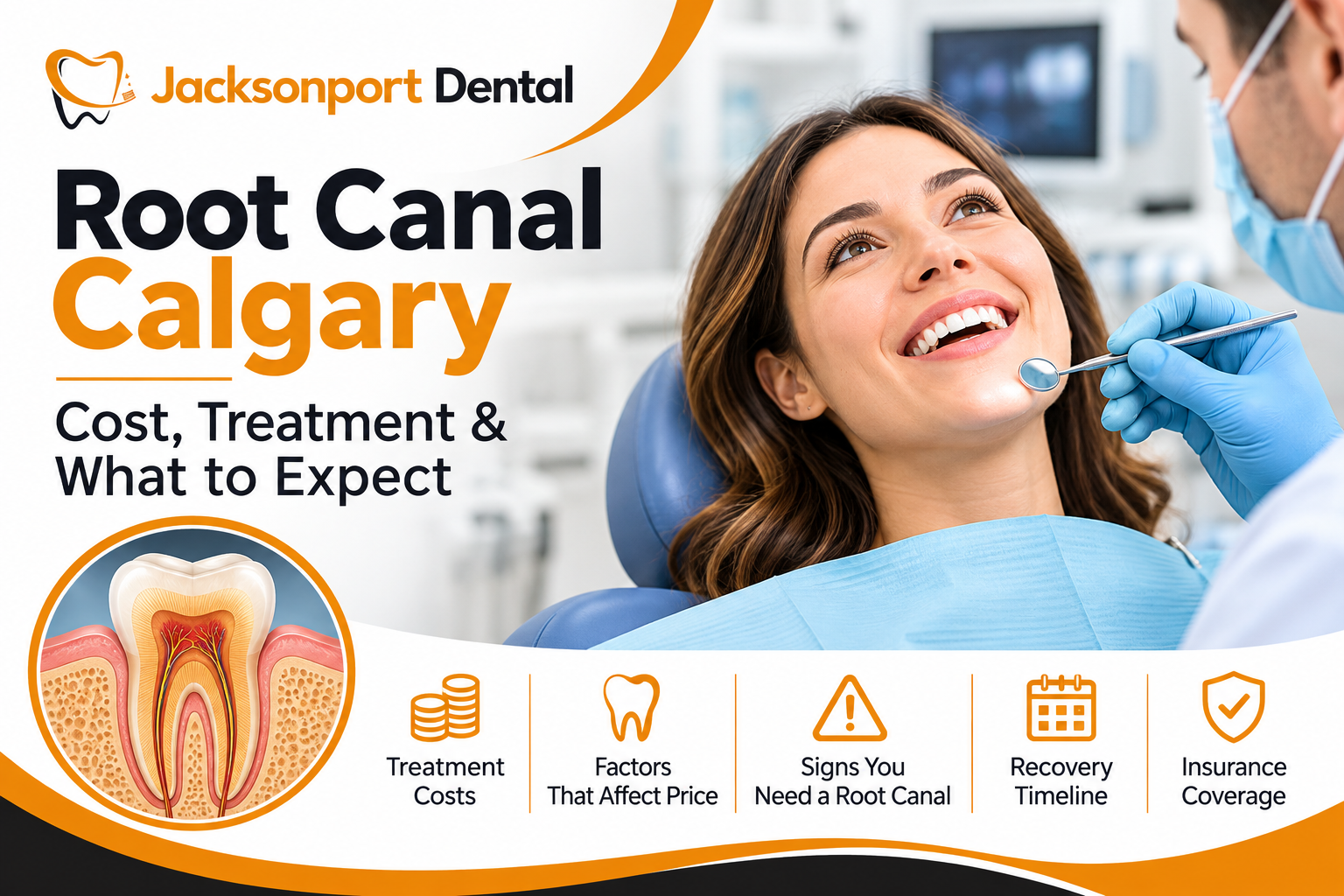
If you’re searching for root canal treatment in Calgary, the cost, procedure, and recovery process can help you make an informed decision about your dental health. A root canal is a common dental procedure that helps remove infected or damaged pulp, relieve discomfort, and preserve your natural tooth. At Jacksonport Dental, we understand that patients want to know what affects the price, whether dental insurance covers treatment, and how long recovery takes. In this guide, we’ll explore root canal costs in Calgary, common warning signs, treatment options, and factors that influence the final price.
How Much Does a Root Canal Cost in Calgary?
The cost of a root canal in Calgary depends on several factors, including the number of canals in the affected tooth, the complexity of the infection, and the type of restoration required afterward.
According to the 2026 Alberta Dental Association Suggested Fee Guide, the suggested fees for uncomplicated root canal treatment by a general dentist are:
| Root Canal Procedure | 2026 Suggested Fee |
|---|---|
| One canal | $795.45 |
| Two canals | $1,158.35 |
| Three canals | $1,354.65 |
These are suggested fees, not fixed prices charged by every dental clinic. They represent the root canal procedure itself and do not necessarily include all examinations, diagnostic imaging, or final restorations.
Your actual root canal cost in Calgary may differ depending on your dental condition and treatment requirements.
You can review the 2026 Alberta Dental Fee Guide to understand suggested dental procedure fees.
What Factors Affect Root Canal Cost in Calgary?
Not every root canal procedure is identical. Your dentist considers several factors before preparing a treatment plan and cost estimate.
1. Location of the Affected Tooth
The location of the tooth can influence the overall treatment cost.
- Front teeth: Usually have one root canal, making treatment relatively straightforward.
- Premolars: May have one or two canals and require additional treatment.
- Molars: Often have three or four canals and more complicated root structures.
Molars can require more time and attention because of their complex anatomy.
2. Number of Root Canals
The number of canals inside your tooth is another important pricing factor.
A tooth with one canal generally requires less treatment than a tooth with multiple canals. Your dentist will examine the tooth and use dental X-rays when needed to determine its internal structure.
The number of canals and the complexity of the procedure help determine the final treatment fee.
3. Severity of the Infection
The extent of infection can also affect root canal pricing.
If bacteria have spread beyond the tooth’s pulp, additional treatment may be necessary. Severe inflammation, dental abscesses, and complicated root anatomy may require more time and additional procedures.
Seeking dental treatment early can help prevent an infection from becoming more complicated.
4. Dental Crown After Root Canal Treatment
A root canal removes infected pulp, but the treated tooth may need additional protection.
Your dentist may recommend a dental crown to restore the tooth’s strength, shape, and chewing function. This is particularly common for molars because they experience significant chewing pressure.
A crown is a separate restorative procedure, so ask your dentist whether it is included in your treatment estimate.
Learn more about dental services at Jacksonport Dental.
5. General Dentist or Endodontist
A general dentist can perform many routine root canal procedures. However, complicated cases may require treatment from an endodontist, a dental specialist who focuses on conditions affecting the tooth pulp and root canals.
Specialist treatment may have different fees depending on the complexity of the case.
6. Root Canal Retreatment
Sometimes, a tooth that has already received root canal treatment develops another infection.
In these situations, retreatment may be necessary to remove infected material, clean the canals again, and reseal the tooth.
Retreatment is generally more complex than an initial root canal and may increase the overall cost.
When Is a Root Canal Necessary?
A root canal becomes necessary when the pulp inside a tooth is severely inflamed, infected, or damaged and cannot recover on its own.
The dental pulp contains nerves, blood vessels, and connective tissue. Deep cavities, tooth fractures, dental injuries, or repeated dental procedures can damage this tissue.
If the infection is left untreated, it may spread to surrounding tissues and cause an abscess or tooth loss.
Common reasons for root canal treatment include:
- Deep tooth decay reaching the pulp.
- Cracked or fractured teeth.
- Dental injuries or trauma.
- Persistent infection inside the tooth.
- Dental abscess formation.
- Severe inflammation of the tooth pulp.
Your dentist will examine the affected tooth and may recommend X-rays to determine whether root canal treatment is appropriate.
How Do I Know If I Need a Root Canal?
Recognizing the warning signs early can help you get treatment before the condition becomes more serious.
Here are some common signs you need a root canal.
1. Persistent Toothache
A toothache that continues for several days or repeatedly returns may indicate damage or infection inside the tooth.
The pain may become worse when chewing, biting, or lying down.
2. Lingering Sensitivity to Hot and Cold
Temporary tooth sensitivity is common. However, pain that continues long after drinking something hot or cold may indicate damage to the tooth pulp.
3. Swollen or Tender Gums
Swelling around a specific tooth can be a warning sign of an underlying infection.
You may also notice a small pimple-like bump on the gums, which can sometimes indicate an abscess.
4. Tooth Discolouration
A tooth that becomes darker or grey compared with surrounding teeth may have experienced internal damage or pulp death.
5. Pain When Chewing
Discomfort when biting or applying pressure to a particular tooth may indicate inflammation around its root or another dental problem.
6. Dental Abscess
An abscess may cause persistent pain, swelling, pus, an unpleasant taste, and sometimes fever.
Dental swelling accompanied by fever or spreading infection requires urgent assessment.
[IMAGE 2 – Suggested supporting image: A dental illustration showing a healthy tooth beside a tooth with infected pulp.]
Image ALT text: Signs you need a root canal Calgary dentist examining an infected tooth
If you experience these symptoms, arrange a dental examination rather than waiting for the pain to disappear.
If you’re experiencing severe tooth pain or swelling, explore emergency dental care at Jacksonport Dental.
How Long Does Root Canal Pain Last?
One of the most common concerns patients have is discomfort after treatment.
So, how long does root canal pain last?
Most patients experience mild tenderness or sensitivity for a few days following the procedure. This happens because the tissues surrounding the treated tooth may need time to recover.
The discomfort should generally improve gradually.
Some patients may experience mild tenderness for one or two weeks, particularly if the tooth was severely infected before treatment.
How Long After Root Canal Does Pain Last?
Recovery varies depending on the condition of the tooth and the complexity of the procedure.
Here is a general recovery timeline:
- First 24 hours: Mild tenderness may develop as the local anesthetic wears off.
- Days 2–3: Some sensitivity when biting or chewing may remain.
- Days 4–7: Discomfort should generally begin improving.
- After one week: Most patients feel significantly better, although some tenderness may occasionally continue.
If discomfort becomes worse, does not improve, or is accompanied by swelling or fever, contact your dentist for an evaluation.
For additional information, read the American Association of Endodontists’ Post-Treatment Care Guide.
Does a Root Canal Hurt After Treatment?
The answer is that some mild discomfort is normal, but severe or increasing pain should not be ignored.
Modern root canal treatment is performed using local anesthesia to numb the affected area. Most patients tolerate the procedure well and experience relief from the pain caused by the original infection.
After treatment, you may notice:
- Mild soreness around the treated tooth.
- Temporary sensitivity when biting.
- Tenderness in the surrounding gums.
- Minor jaw discomfort.
Following your dentist’s aftercare instructions can help support recovery.
What Happens During a Root Canal Procedure?
Understanding the treatment process can help reduce anxiety before your appointment.
A typical root canal procedure involves the following steps.
Step 1: Dental Examination
Your dentist examines the affected tooth and takes X-rays when necessary to identify the extent of the infection.
Step 2: Local Anesthesia
The area around the affected tooth is numbed to help keep you comfortable throughout the procedure.
Step 3: Removing Infected Pulp
A small opening is made in the tooth, allowing the dentist to remove the damaged or infected pulp.
Step 4: Cleaning and Disinfecting
The root canals are carefully cleaned, shaped, and disinfected to remove bacteria and infected tissue.
Step 5: Filling and Sealing
The cleaned canals are filled with a suitable dental material and sealed to help prevent reinfection.
Step 6: Final Restoration
A permanent filling or dental crown may be recommended to restore the tooth’s strength and function.
Many root canal procedures can be completed in one or two appointments, depending on the tooth’s condition.
For a detailed overview, visit the Canadian Dental Association’s Root Canal Treatment Guide.
Does Dental Insurance Cover Root Canal Treatment in Calgary?
Dental insurance may cover part of your root canal treatment, depending on your individual policy.
Before starting treatment, check:
- Your annual dental coverage limit.
- Whether root canal treatment is included.
- Your deductible and co-payment requirements.
- Whether a dental crown is covered separately.
- Whether preauthorization is required.
Can the Canadian Dental Care Plan Cover Root Canal Treatment?
The Canadian Dental Care Plan (CDCP) may help eligible Canadian residents pay for root canal treatment.
Root canal procedures are included among covered endodontic services, subject to the program’s eligibility requirements, clinical criteria, and applicable coverage rules.
Certain procedures, such as root canal retreatment, require preauthorization. Dental crowns also require preauthorization and must meet the program’s clinical requirements.
You may still have out-of-pocket expenses because of co-payments, differences between provider fees and CDCP reimbursement rates, or services that are not covered.
Jacksonport Dental welcomes eligible CDCP patients and can help explain available dental treatment options.
Learn more about CDCP coverage at Jacksonport Dental.
You can also review the official Government of Canada’s CDCP Coverage Guide.
How Can You Reduce the Risk of Needing a Root Canal?
Although root canal treatment can save an infected tooth, preventing dental problems is always preferable.
Here are some practical ways to protect your teeth:
- Brush twice daily using fluoride toothpaste.
- Floss every day to remove food particles and plaque.
- Visit your dentist regularly for examinations and professional cleanings.
- Treat cavities before they reach the inner pulp.
- Avoid chewing ice and extremely hard objects.
- Wear a mouthguard during contact sports.
- Seek dental attention if you experience persistent tooth sensitivity or pain.
Regular dental checkups can help identify problems early and reduce the risk of extensive dental treatment.
Why Choose Jacksonport Dental for Root Canal Treatment in Calgary?
When dealing with an infected or painful tooth, choosing a dental clinic that prioritizes patient comfort and appropriate treatment planning is important.
At Jacksonport Dental, we provide root canal treatment in Northeast Calgary with a focus on preserving natural teeth and helping patients maintain good oral health.
Our dental team offers:
- Individual dental examinations and treatment planning.
- Diagnostic X-rays when required.
- Patient-focused treatment recommendations.
- Modern dental techniques.
- Guidance on restorative options following treatment.
- Assistance understanding available dental benefits.
Whether you are experiencing persistent tooth pain or have been advised to undergo a root canal, our team can help you understand your treatment options.
Visit our Root Canal Treatment in Calgary page to learn more.
Frequently Asked Questions About Root Canal Calgary Treatment
1. How much does a root canal cost in Calgary?
The 2026 Alberta Dental Association suggested fees for uncomplicated root canal treatment by a general dentist are $795.45 for one canal, $1,158.35 for two canals, and $1,354.65 for three canals. Examinations, additional procedures, and final restorations may cost extra.
2. How long does root canal pain last?
Most patients experience mild soreness for a few days after treatment. Some tenderness may last one or two weeks, but it should gradually improve.
3. How do I know if I need a root canal?
Persistent toothaches, lingering hot and cold sensitivity, swollen gums, pain when chewing, tooth discolouration, and dental abscesses are common warning signs. A dentist must examine your tooth to confirm whether treatment is necessary.
4. Does a root canal hurt after the procedure?
Mild soreness and sensitivity are common following treatment. However, severe or worsening pain should be evaluated by your dentist.
5. Will I need a crown after a root canal?
Not every tooth requires a crown. However, crowns are frequently recommended for molars and significantly weakened teeth to protect them from fractures.
6. Can I eat normally after a root canal?
You can generally return to eating once the numbness wears off. However, avoid chewing hard or crunchy foods on the treated tooth until your dentist completes the permanent restoration.
7. Is root canal treatment better than tooth extraction?
When a tooth can be successfully restored, root canal treatment is often a good option because it preserves your natural tooth. Extraction may be necessary if the tooth is too damaged to save.
8. How many appointments are needed for a root canal?
Many straightforward root canal procedures can be completed in one or two appointments. More complicated cases may require additional visits.
Book Your Root Canal Consultation at Jacksonport Dental in Calgary
Tooth pain, lingering sensitivity, and swelling should never be ignored. Early diagnosis can help prevent dental infections from becoming more complicated and may allow you to save your natural tooth.
If you’re searching for professional root canal Calgary treatment, Jacksonport Dental is here to help.
Our clinic is conveniently located in Northeast Calgary:
Jacksonport Dental
124-3730 104 Avenue NE
Calgary, AB T3N 0T1, Canada
Phone: (403) 815-3040
Clinic Hours:
- Monday–Friday: 9:00 AM–7:00 PM
- Saturday–Sunday: 9:00 AM–6:00 PM
Contact our team today to arrange a dental examination and receive a personalized treatment estimate.
Book your appointment with Jacksonport Dental and take the first step toward a healthier smile.