
Oral Health & Diabetes · NE Calgary
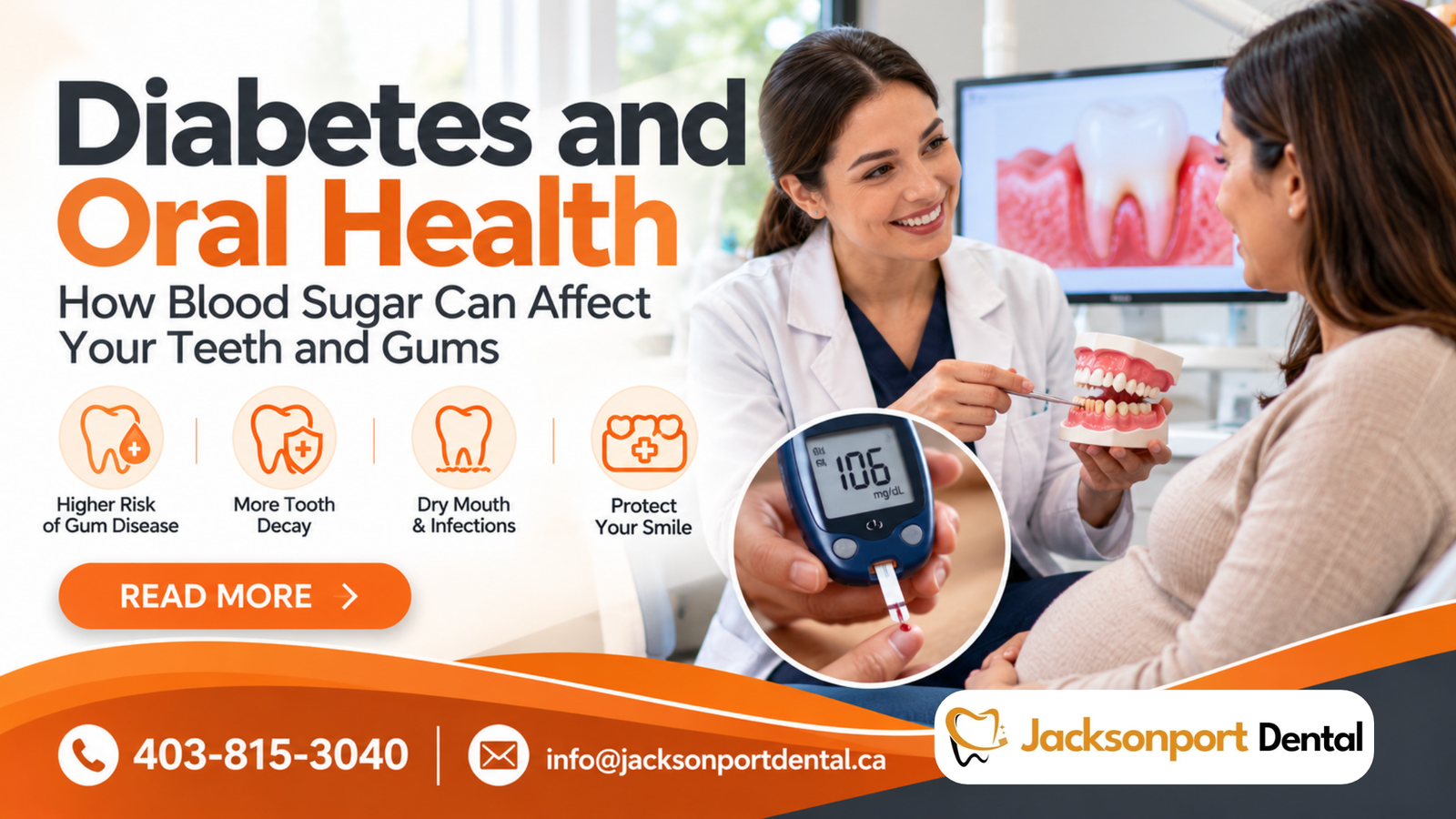
When you’re managing diabetes, blood sugar checks, medication, meals and appointments can take up a lot of attention. Your mouth deserves a place in that routine, too. Diabetes can increase the risk of gum disease, dry mouth, tooth decay and certain infections. The relationship goes both ways: inflamed gums and periodontal disease may make blood glucose harder to manage. The good news is that everyday oral care, regular dental visits and communication between your dental and diabetes care teams can help you protect your smile.
This article is for general education and does not replace personalised medical or dental advice. Follow your healthcare team’s recommendations for managing diabetes and planning treatment.
How does diabetes affect your teeth and gums?
Diabetes can raise the risk of gum disease, tooth decay, dry mouth, oral fungal infections and slower healing—particularly when blood glucose levels are frequently above your target range. High blood sugar can affect the body’s ability to fight infection and can contribute to changes in saliva. Gum inflammation may also make blood glucose management more difficult, so looking after your mouth is an important part of overall diabetes care.
Having diabetes does not mean you will inevitably lose teeth or develop serious gum disease. Risk varies with blood glucose management, oral hygiene, smoking, medications, other health conditions and access to preventive care. Regular dental checkups help identify problems early, including gum disease that may not hurt at first.
Understanding the connection between blood sugar and oral health
Your mouth contains bacteria that form a sticky film called plaque on teeth and around the gumline. If plaque is not removed regularly, it can irritate the gums and contribute to tooth decay. Diabetes—especially when blood glucose is not well controlled—can make it harder for the body to manage infection and inflammation.
Why high blood sugar can affect the gums
Elevated blood glucose can impair some of the body’s infection-fighting responses and influence inflammation and healing. As a result, people with diabetes may be more likely to develop periodontal disease, and gum infections may be more difficult to control. Plaque remains the immediate trigger for gum inflammation, which is why daily cleaning and professional care matter.
Why gum disease can affect diabetes management
Periodontitis is a chronic inflammatory condition that damages the tissues and bone supporting teeth. Research shows an association between diabetes and periodontal disease in both directions. Inflammation from advanced gum disease may contribute to poorer blood glucose control, while higher glucose levels can increase the risk or severity of gum disease. Treating periodontal disease supports oral health and may help some people improve glycaemic measures, but it is not a replacement for prescribed diabetes treatment.
If your gums are bleeding, swollen or pulling away from your teeth, tell your dentist. You do not need to wait until a tooth becomes loose or painful to seek an assessment.
Oral health problems that are more common with diabetes
1. Gingivitis and periodontitis
Gingivitis is an early form of gum disease. Gums may look red or puffy and bleed during brushing or flossing. With continued plaque buildup, gum disease can progress to periodontitis, which damages the supporting tissues and bone around teeth. Possible signs include persistent bad breath, gum recession, spaces developing between teeth, changes in how teeth fit together, or loose teeth.
Early gingivitis can often be improved with effective plaque removal and professional cleaning. Periodontitis may require a detailed gum assessment and treatment such as scaling and root planing (a deep cleaning beneath the gumline), followed by ongoing maintenance.
2. Dry mouth
Some people with diabetes experience dry mouth, also called xerostomia. High blood glucose, dehydration and certain medications can contribute. Saliva helps wash away food particles, neutralise acids and protect oral tissues. When there is less saliva, chewing and swallowing may feel uncomfortable, breath can become unpleasant, and cavities or mouth irritation may become more likely.
Tell your dentist if your mouth often feels sticky or dry, if you wake up needing water, or if you have trouble eating dry foods. Sip water regularly and ask your dental or medical team about suitable saliva substitutes or sugar-free products. Do not change prescribed medication on your own.
3. Tooth decay and cavities
Dry mouth, frequent exposure to sugary drinks or snacks, and changes in oral bacteria can contribute to cavities. Decay can develop on chewing surfaces, between teeth and near the gumline. Brush twice a day with fluoride toothpaste, clean between teeth daily, and ask whether additional fluoride protection is appropriate for your cavity risk.
4. Oral thrush and other infections
Oral thrush is a fungal infection that may cause creamy white patches, soreness, redness or a burning sensation. Diabetes can increase the risk, particularly when blood glucose is high or the mouth is dry. White patches or persistent mouth soreness can have other causes, so arrange an assessment instead of trying to diagnose or treat the problem yourself.
5. Slower healing after dental treatment
Diabetes that is not well controlled can make it harder for the body to fight infection and heal after some procedures, including extractions or gum surgery. This does not mean necessary dental treatment should automatically be avoided. Your dentist may need to review your health history, medicines, glucose-management plan and the urgency of the problem, and may coordinate with your physician for more complex care.
Warning signs to discuss with your dentist
Arrange a dental appointment if you notice:
- Gums that bleed repeatedly when brushing or flossing.
- Red, tender, swollen or receding gums.
- Persistent bad breath or a bad taste that does not improve with cleaning.
- New tooth sensitivity, pain when chewing, or a suspected cavity.
- Dry mouth that affects speaking, eating or sleeping.
- White patches, mouth sores or burning that persist.
- Loose teeth, changes in your bite or pus around the gums.
- A wound that does not seem to be healing as expected after treatment.
Contact a dentist promptly for facial or gum swelling, severe tooth pain, pus or signs of infection. Seek urgent medical care if swelling spreads rapidly or you have trouble breathing or swallowing, or feel severely unwell.
How to care for your teeth and gums when you have diabetes
A realistic routine is more useful than a complicated one you cannot maintain. Start with the basics and ask your dentist to tailor the plan to your gum health, cavity risk, dexterity and medical history.
- Brush twice a day for two minutes. Use a soft-bristled toothbrush and fluoride toothpaste. Angle the bristles gently toward the gumline and clean every surface.
- Clean between your teeth daily. Floss, interdental brushes or another recommended cleaner can remove plaque a toothbrush may miss. If you have dexterity challenges, ask about easier-to-hold tools or a water flosser.
- Keep your mouth hydrated. Drink water regularly unless your healthcare provider has given you fluid restrictions. Ask about sugar-free gum or saliva substitutes if dry mouth persists.
- Choose drinks and snacks thoughtfully. Limit frequent sipping of sugary drinks and repeated sugary snacks. Follow your diabetes meal plan; do not make major dietary changes that conflict with your glucose-management advice.
- Do not smoke or vape tobacco. Smoking increases the risk of gum disease and can make treatment less successful. Ask your healthcare team for help quitting if needed.
- Check your mouth regularly. Look for changes in gum colour, swelling, sores, white patches or loose teeth. Report persistent changes rather than waiting for pain.
- Keep dental appointments. Your dentist can recommend how often you need exams and cleanings based on your periodontal health, cavity risk and medical history.
How often should someone with diabetes visit the dentist?
There is no single appointment interval that is right for every person with diabetes. Many people benefit from routine examinations and professional cleanings once or twice a year, while people with active gum disease, dry mouth, frequent cavities or other risk factors may need more frequent visits. Your dentist will recommend a schedule based on your needs and response to treatment.
Tell the dental team that you have diabetes when booking and again at the appointment if your medical history has changed. Share your current medications, allergies, relevant complications and any concerns about blood glucose fluctuations. If a procedure is planned, ask whether you should follow your usual meal and medication routine. Do not skip food or change medication unless your treating healthcare professional has advised you to do so.
What should I tell my dentist before treatment?
- Whether you have type 1 diabetes, type 2 diabetes or another form of diabetes.
- Your current medicines, including insulin and other glucose-lowering medication.
- Any recent episodes of low blood sugar or difficulty keeping glucose within your target range.
- Relevant complications, allergies, recent medical changes or instructions from your physician.
- Whether you have noticed gum bleeding, dry mouth, sores or delayed healing.
For complex procedures or when glucose control is unstable, the dentist may coordinate with your physician. The goal is to plan care safely—not to delay treatment that is needed to manage pain or infection.
Can treating gum disease improve blood sugar levels?
Research suggests that treating periodontitis can lead to a modest improvement in blood glucose measures for some people with type 2 diabetes, particularly over the months following periodontal treatment. Results vary, and periodontal treatment should be viewed as one part of coordinated health care rather than a substitute for medication, nutrition, physical activity or medical follow-up.
If you have diabetes and gum disease, let both your dentist and diabetes care provider know. They can help coordinate your care and discuss how to monitor progress. Continue taking medicines as prescribed and follow your own blood glucose targets.
Diabetes and oral health in NE Calgary
If you live in NE Calgary—including Savanna, Skyview Ranch or Cornerstone—regular dental care can help you identify gum inflammation, cavities and dry mouth before they become more difficult to manage. Jacksonport Dental Clinic serves patients in the local community from 124-3730 104 Ave NE, Calgary, AB T3N 0T1.
When you contact the clinic, mention that you have diabetes and describe any symptoms you have noticed. The team can help you request an appointment and discuss the next steps. Bring your medication list and share any relevant instructions from your medical team, especially if you are planning a procedure.
Make your oral health part of your diabetes care
Have questions about gum health, dry mouth or a dental checkup? Contact Jacksonport Dental Clinic to discuss an appointment.
Call 403-815-3040 Request an Appointment
Jacksonport Dental Clinic · 124-3730 104 Ave NE, Calgary, AB T3N 0T1
Frequently asked questions about diabetes and oral health
How does diabetes affect your teeth and gums?
Diabetes, particularly when blood glucose is frequently above target, can increase the risk of gum disease, tooth decay, dry mouth, oral thrush and slower healing. Regular dental care and daily plaque removal help reduce risk.
Can high blood sugar cause gum disease?
High blood sugar can weaken aspects of the body’s infection response and contribute to inflammation, increasing the risk of gum disease. Plaque buildup is still a key cause, so brushing, interdental cleaning and professional care remain important.
Can gum disease make diabetes harder to control?
Periodontitis is a chronic inflammatory condition associated with poorer blood glucose control. Treating gum disease may help some people improve glucose measures, but it does not replace prescribed diabetes treatment.
Are dental cleanings safe for people with diabetes?
Routine professional cleaning is generally appropriate and important for people with diabetes. Tell your dentist about your medical history and medicines so the visit can be planned for your needs.
How often should people with diabetes get a dental checkup?
Many people attend once or twice a year, but the ideal interval depends on gum health, cavity risk, dry mouth and other factors. Your dentist may recommend more frequent visits if you have active periodontal disease or higher risk.
Why do people with diabetes get dry mouth?
High blood glucose, dehydration and certain medicines can contribute to dry mouth. Because saliva helps protect teeth and oral tissues, persistent dryness should be discussed with your dentist or physician.
When should someone with diabetes seek urgent dental care?
Seek prompt dental assessment for severe tooth pain, swelling, pus, suspected infection or a wound that is not healing as expected. Difficulty breathing or swallowing, rapidly spreading swelling or severe illness requires emergency medical care.
Can I visit Jacksonport Dental from Savanna, Skyview Ranch or Cornerstone?
Jacksonport Dental Clinic is located in NE Calgary at 124-3730 104 Ave NE. Call 403-815-3040 or use the clinic’s contact page to ask about an appointment.