
By Dr. Richa Bhatnagar, Jacksonport Dental – NE Calgary
Looking for preventive dental care in Calgary?
Book your appointment with Jacksonport Dental today.
Introduction
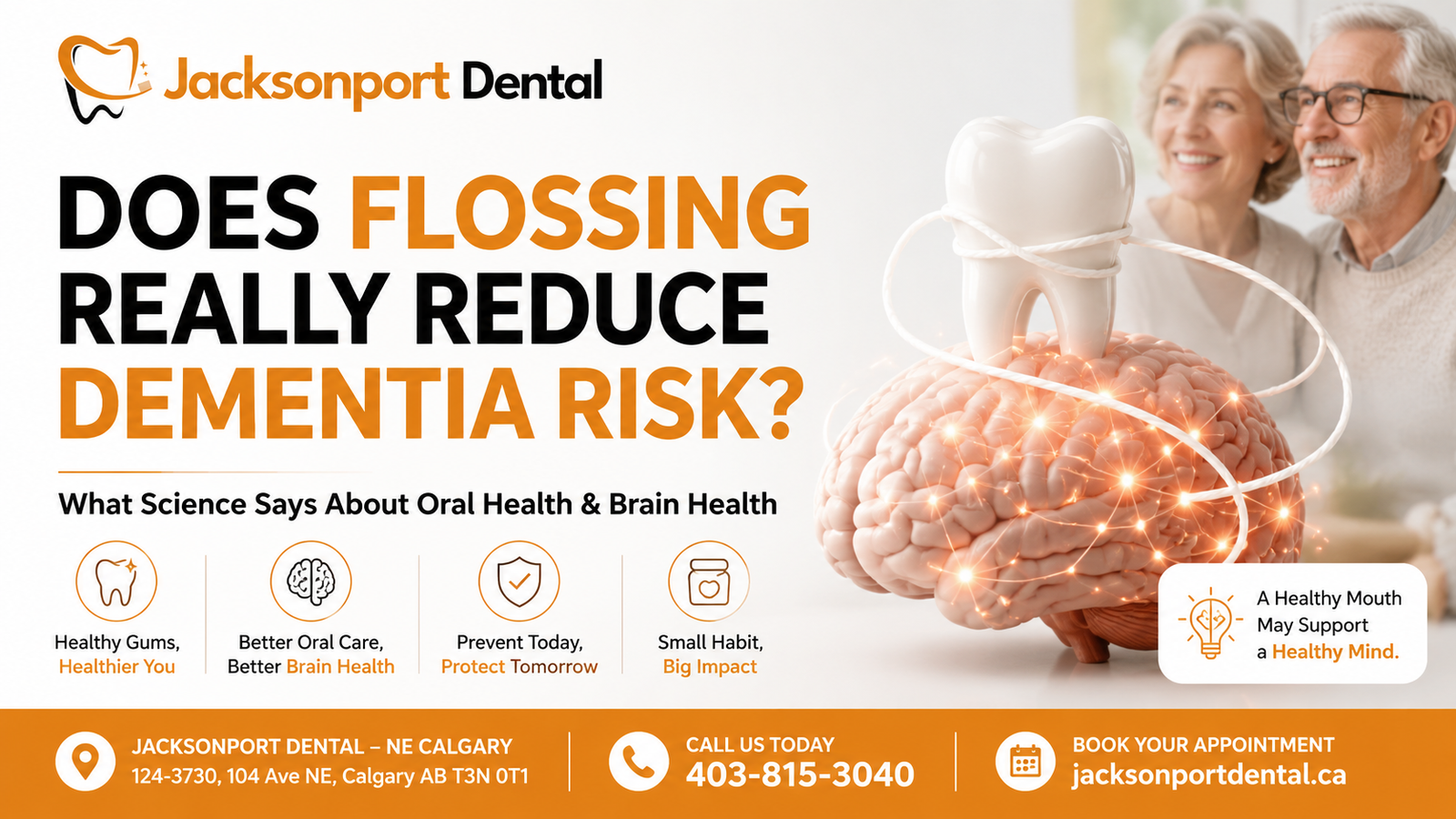
Most people think flossing is only about preventing cavities or keeping their gums healthy. But over the last few years, researchers have started exploring something much bigger:
Can your oral health affect your brain health?
It may sound surprising, but growing evidence suggests there could be a connection between gum disease, chronic inflammation, and conditions like dementia and Alzheimer’s disease.
At Jacksonport Dental in NE Calgary, many patients ask:
“Does flossing really prevent dementia?”
The honest answer is this:
Flossing alone is not a guaranteed way to prevent dementia or Alzheimer’s. However, maintaining good oral hygiene — especially preventing gum disease and chronic inflammation — may help reduce certain risk factors linked to cognitive decline.
And that makes oral care far more important than many people realize.
In this article, we’ll break down:
- The possible connection between flossing and brain health
- What current research says
- How gum disease affects the body
- Whether not flossing can increase dementia risk
- Simple ways to protect both your smile and your overall health
The Connection Between Oral Health and Brain Health
Your mouth is not separate from the rest of your body.
In fact, your oral health can influence:
- Heart health
- Diabetes
- Immune function
- Pregnancy health
- And potentially even brain function
This happens because the mouth contains millions of bacteria. When oral hygiene is neglected, harmful bacteria can build up around the gums and teeth, leading to inflammation and infection.
Over time, this chronic inflammation may spread beyond the mouth.
Researchers are now studying whether these inflammatory processes could contribute to:
- Memory decline
- Cognitive impairment
- Alzheimer’s disease
- Other forms of dementia
This is why the topic of flossing brain health has become increasingly important in medical and dental research.
Learn more about the connection between oral and overall health here:
The Vital Link Between Oral Health and Overall Well-Being
Does Flossing Prevent Dementia?
The Short Answer
No, flossing does not directly “prevent” dementia in the way a vaccine prevents disease.
However, flossing may help reduce risk factors associated with cognitive decline by:
- Reducing gum inflammation
- Lowering harmful oral bacteria
- Preventing periodontal disease
- Supporting overall systemic health
In other words:
Healthy gums may contribute to a healthier body — including the brain.
What Research Says About Gum Disease and Dementia
Several studies have explored the relationship between periodontal disease and cognitive decline.
Researchers have discovered that:
- People with severe gum disease may have higher rates of dementia
- Chronic inflammation may affect brain tissue over time
- Certain oral bacteria have been found in the brains of Alzheimer’s patients
One bacteria often discussed is Porphyromonas gingivalis, commonly linked to advanced gum disease.
Scientists believe these bacteria may:
- Travel through the bloodstream
- Trigger inflammatory responses
- Potentially contribute to neurological damage
While researchers are still studying cause and effect, the association is strong enough that many healthcare professionals now emphasize oral hygiene as part of overall wellness.
Can Not Flossing Lead to Dementia?
This is one of the most searched questions online.
Here’s the reality:
Not flossing itself does not directly cause dementia.
But poor oral hygiene can lead to:
- Gum disease
- Chronic inflammation
- Increased bacterial buildup
- Tooth loss
- Systemic health complications
These conditions may contribute to higher dementia risk over time.
Think of flossing as one small but important habit that supports long-term health.
Just like:
- Eating healthy
- Exercising
- Sleeping well
- Managing stress
- Avoiding smoking
Daily flossing is part of a bigger preventive care picture.
Why Gum Disease Matters More Than You Think
Many people ignore early signs of gum disease because they seem minor.
Common symptoms include:
- Bleeding gums
- Bad breath
- Redness
- Swelling
- Gum tenderness
- Receding gums
But untreated gum disease can become serious.
Advanced periodontal disease may eventually lead to:
- Bone loss
- Tooth mobility
- Tooth loss
- Chronic inflammation throughout the body
At Jacksonport Dental, we often remind patients:
“Bleeding gums are not normal.”
Healthy gums should not bleed during brushing or flossing.
Read more here:
Understanding Gum Disease: Signs, Prevention and Treatment
Protect Your Oral & Overall Health
Regular cleanings and preventive dental visits can help identify gum disease early and support long-term wellness.
📞 Call Jacksonport Dental: 403-815-3040
📅 Book Your Preventive Checkup
How Flossing Helps Protect Your Health
Flossing removes plaque and bacteria from areas your toothbrush cannot reach.
Daily flossing helps:
- Prevent plaque buildup
- Reduce gum inflammation
- Lower bacteria levels
- Improve breath freshness
- Protect gum tissue
- Reduce risk of periodontal disease
When combined with regular dental cleanings and checkups, flossing becomes one of the simplest preventive habits you can maintain.
Related reading:
Professional Teeth Cleaning in Calgary
The Inflammation Link: Why Scientists Are Concerned
One major reason researchers are studying oral health and dementia is inflammation.
Chronic inflammation has already been linked to:
- Heart disease
- Diabetes
- Stroke
- Arthritis
- Alzheimer’s disease
When gum disease remains untreated, the body stays in a constant inflammatory state.
Over years or decades, this may place extra stress on various organs — including the brain.
This doesn’t mean gum disease automatically causes dementia.
But reducing inflammation is widely considered beneficial for long-term health.
Read more:
Oral Health & Heart Health: Why You Shouldn’t Skip Regular Cleanings
Signs You Should See a Dentist Soon
If you experience any of these symptoms, it’s important to book a dental visit:
- Bleeding while flossing
- Persistent bad breath
- Swollen gums
- Loose teeth
- Tooth sensitivity
- Gum recession
- Pain when chewing
Early treatment can prevent more serious complications later.
At Jacksonport Dental in NE Calgary, we focus heavily on preventive care because catching small problems early is always easier than treating advanced disease.
Oral Hygiene Tips to Support Long-Term Health
1. Floss Every Day
Even flossing once daily can make a major difference.
Consistency matters more than perfection.
2. Brush Twice Daily
Use a fluoride toothpaste and soft-bristled toothbrush.
Brush gently for at least two minutes.
Helpful guide:
How to Choose the Right Toothbrush & Toothpaste
3. Schedule Regular Dental Cleanings
Professional cleanings remove tartar that brushing and flossing cannot eliminate.
Most patients benefit from visits every six months.
4. Eat a Balanced Diet
Limit:
- Sugary foods
- Acidic beverages
- Excess processed foods
Focus on:
- Vegetables
- Lean proteins
- Calcium-rich foods
- Water
5. Don’t Ignore Gum Bleeding
Bleeding gums are often an early warning sign of gingivitis or gum disease.
Early treatment is highly effective.
6. Stay Hydrated
Dry mouth increases bacterial growth.
Water helps protect your oral environment naturally.
Why Preventive Dentistry Matters in Calgary
At Jacksonport Dental, we see many patients from:
- Skyview
- Cityscape
- Savanna
- Redstone
- Cornerstone
- Saddleridge
- Taradale
- Martindale
- Country Hills
- Panorama
One thing we consistently notice is this:
Patients who stay consistent with preventive care usually avoid larger dental problems later.
Regular dental checkups can help identify:
- Gum disease
- Tooth decay
- Oral infections
- Inflammation
- Early warning signs before symptoms worsen
Preventive care is always less stressful — and usually less expensive — than emergency treatment.
Related reading:
The Importance of Regular Dental Checkups
A Word from Dr. Richa
As a family dentist in NE Calgary, I believe education is one of the most important parts of healthcare.
When patients understand the connection between oral health and overall wellness, they become more empowered to take care of themselves.
Flossing may seem like a tiny daily habit.
But over years, small habits shape long-term health outcomes.
So if you’ve been wondering:
“Does flossing prevent Alzheimer’s or dementia?”
The best answer is:
Flossing supports healthier gums, lower inflammation, and better overall wellness — all of which may play a role in protecting long-term brain health.
And that’s absolutely worth paying attention to.
Final Thoughts
While scientists are still learning more about the connection between oral bacteria and cognitive decline, one message is already clear:
Good oral hygiene matters far beyond your teeth.
Daily flossing, healthy gums, regular dental visits, and preventive care may help support not just your smile — but your overall health and quality of life as you age.
At Jacksonport Dental in NE Calgary, we’re here to help families stay proactive, informed, and healthy.
If it’s been a while since your last dental cleaning or gum evaluation, now is a great time to take the next step toward better oral health.
Book Your Dental Checkup in NE Calgary
Jacksonport Dental provides preventive dental care, professional cleanings, gum health evaluations, and family dentistry in Calgary NE.
📍 Jacksonport Dental – NE Calgary
📞 403-815-3040
🌐 Visit Our Website
📅 Book an Appointment Online
Frequently Asked Questions
Does flossing really help prevent dementia?
Flossing does not directly prevent dementia, but it may help reduce inflammation and gum disease, which researchers believe could be linked to cognitive decline.
Can gum disease affect brain health?
Research suggests chronic gum disease may contribute to inflammation associated with conditions like Alzheimer’s disease and dementia.
Does flossing prevent Alzheimer’s disease?
There is no proof that flossing alone prevents Alzheimer’s, but maintaining good oral hygiene may support overall health and reduce certain risk factors.
Can not flossing lead to dementia?
Not flossing does not directly cause dementia. However, poor oral hygiene may increase gum disease and inflammation, which researchers are studying for possible links to cognitive decline.
Why are bleeding gums dangerous?
Bleeding gums may indicate gingivitis or periodontal disease. Untreated gum disease can lead to tooth loss and chronic inflammation.
How often should I floss?
Most dentists recommend flossing once daily to remove plaque and bacteria between teeth.
What are signs of gum disease?
- Bleeding gums
- Bad breath
- Swelling
- Gum recession
- Tooth sensitivity
- Loose teeth
Where can I get preventive dental care in NE Calgary?
Jacksonport Dental provides preventive dental care, professional cleanings, family dentistry, and gum health evaluations in NE Calgary.