
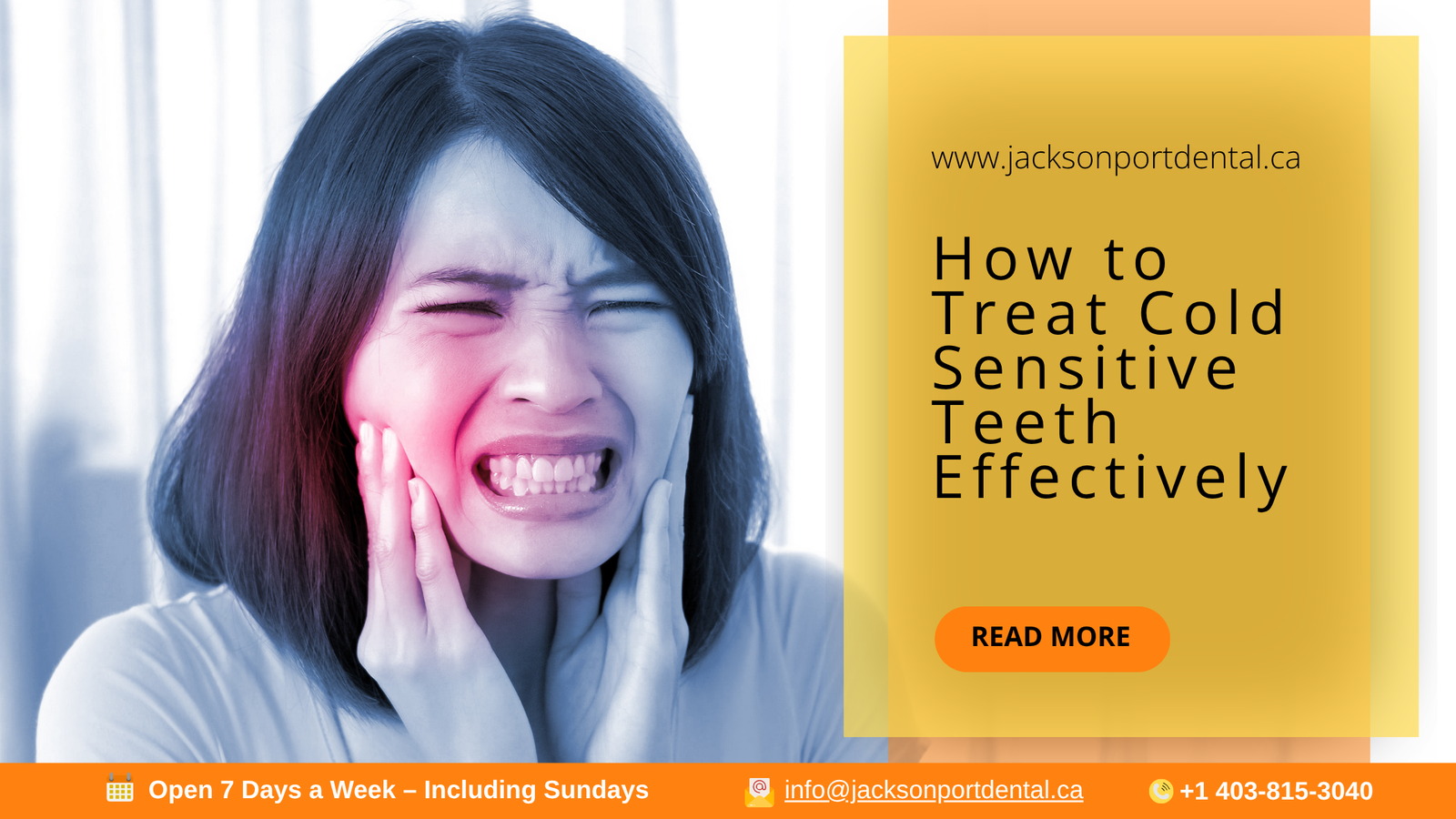
Experiencing sharp pain when drinking cold water or eating ice cream? At Jacksonport Dental, we help Calgary patients find the root cause of tooth sensitivity and provide personalized treatment solutions.
Need relief from tooth sensitivity? Request an appointment today or call 403-815-3040.
Understanding Why Sensitive Teeth Hurt
Have you ever felt that sharp twinge when sipping on an iced coffee or breathing in the chilly Calgary air? You’re not alone! Many patients at Jacksonport Dental visit me asking, “Dr. Richa, why is my tooth sensitive to cold?”
Tooth sensitivity to cold happens when the protective layers of your teeth — enamel or gum tissue — wear away, or due to tooth decay, cracked tooth exposing the underlying dentin. This layer contains tiny nerve-filled tubules that react strongly to cold, heat, or even sweet foods.
If you’re experiencing discomfort regularly, a comprehensive dental exam can help identify the underlying cause early.
What Causes Cold Tooth Sensitivity?
Let’s break down the most common culprits behind your discomfort:
- Enamel Erosion – From acidic foods, soda, or aggressive brushing.
- Gum Recession – Often due to gum disease or overbrushing, exposing tooth roots.
- Cavities or Tooth Decay – Small holes in the enamel let cold reach the nerves.
- Cracked or Worn Fillings – Can allow cold stimuli to reach deeper tooth layers.
- Recent Dental Treatment – Temporary sensitivity after fillings or cleanings.
- Teeth Grinding (Bruxism) – Gradual enamel loss leads to sensitivity.
If you’re constantly wondering “why does my tooth hurt when I drink cold water?” — it’s time for a dental check-up. The cause can vary, and early diagnosis is key.
Related resources:
How to Treat Cold Sensitive Teeth
Now that we know the causes, let’s look at how to treat cold sensitive teeth effectively.
1. Switch to a Desensitizing Toothpaste
Specially formulated toothpaste (like Sensodyne) helps block pain signals from the nerves inside your teeth. Use it consistently for a few weeks for the best results.
2. Maintain Gentle Brushing Habits
Use a soft-bristled toothbrush and avoid brushing too hard. Remember — harder brushing doesn’t mean cleaner teeth; it means more enamel loss.
Learn more about proper oral hygiene in our guide: How to Choose the Right Toothbrush & Toothpaste.
3. Avoid Acidic Foods & Beverages
Cut down on soda, citrus, wine, and vinegar-based foods. Rinse your mouth with water after consuming anything acidic.
4. Treat Underlying Dental Issues
If decay, cracks, or gum disease are causing your sensitivity, professional treatment such as fillings, fluoride varnish, or root canal therapy may be necessary.
Explore treatment options:
5. Fluoride Treatments at the Clinic
At Jacksonport Dental, we offer professional fluoride treatments that strengthen enamel and reduce sensitivity.
Read more: Benefits of Fluoride Toothpaste and Water Fluoridation in Calgary.
6. Custom Mouthguards for Grinding
If you grind your teeth at night, a custom mouthguard can protect enamel and relieve sensitivity over time.
Learn more about bite guards and splints for teeth grinding and clenching.
When Should You See a Dentist?
If you’ve tried at-home remedies and the discomfort persists for more than a week or two, book an appointment. Persistent tooth sensitivity can be a symptom of a more serious issue — such as a cracked tooth, cavity, infection, or gum recession that needs immediate attention.
At Jacksonport Dental, I personally assess the cause, discuss treatment options, and help you regain comfort and confidence in your smile.
Concerned about worsening symptoms? Visit our emergency dental services page for urgent dental care support.
Book your dental assessment today through our online appointment request page.
Preventing Tooth Sensitivity in the Future
- Brush twice daily with a fluoride toothpaste
- Floss once daily to prevent plaque buildup
- Maintain regular professional check-ups/ cleanings every six months
- Wear a nightguard if you clench or grind your teeth
Small habits go a long way in protecting your enamel and keeping sensitivity away for good!
Regular professional teeth cleaning and hygiene visits help prevent gum recession, plaque buildup, and enamel damage.
Frequently Asked Questions (FAQ)
1. Why is my tooth suddenly sensitive to cold?
Sudden sensitivity may result from enamel wear, cavity, cracked tooth or gum exposure. It’s best to have a dental exam to identify the exact cause.
2. How long does cold sensitivity last after dental work?
Mild sensitivity after cleanings or fillings can last a few days to a week. If it persists longer, contact your dentist for evaluation.
3. Can teeth whitening make my teeth more sensitive?
Yes, whitening can temporarily increase sensitivity. Using a desensitizing toothpaste before and after treatment helps minimize discomfort.
Read more: Is Teeth Whitening Safe? Myths vs Facts and Professional Teeth Whitening Services.
4. Is cold tooth sensitivity a sign of a cavity?
Often, yes — cavities or cracks can expose dentin, making your tooth react to cold. A quick dental check can confirm and treat the issue early.
5. What is the best treatment for cold-sensitive teeth in Calgary?
At Jacksonport Dental, treatments like fluoride varnish, desensitizing gels, bonding, gum grafting are customized to your specific cause of sensitivity.
Final Thoughts from Dr. Richa
Cold sensitivity isn’t something you need to live with! With personalized care and modern solutions, we can make sure your smile stays strong and comfortable year-round.
If you’re experiencing tooth sensitivity, visit us at Jacksonport Dental, 124-3730, 104 Ave NE, Calgary AB T3N 0T1, and let’s restore your comfort and confidence together.
Contact our team through our contact page or call 403-815-3040.