Preventive Dentistry | NE Calgary
A routine dental visit is about more than checking for cavities. Your dentist can also examine the tissues of your mouth, lips, jaw and neck for changes that may need a closer look. Knowing what happens during an oral cancer screening can help you feel prepared and understand when to seek advice.
What happens during an oral cancer screening at the dentist?
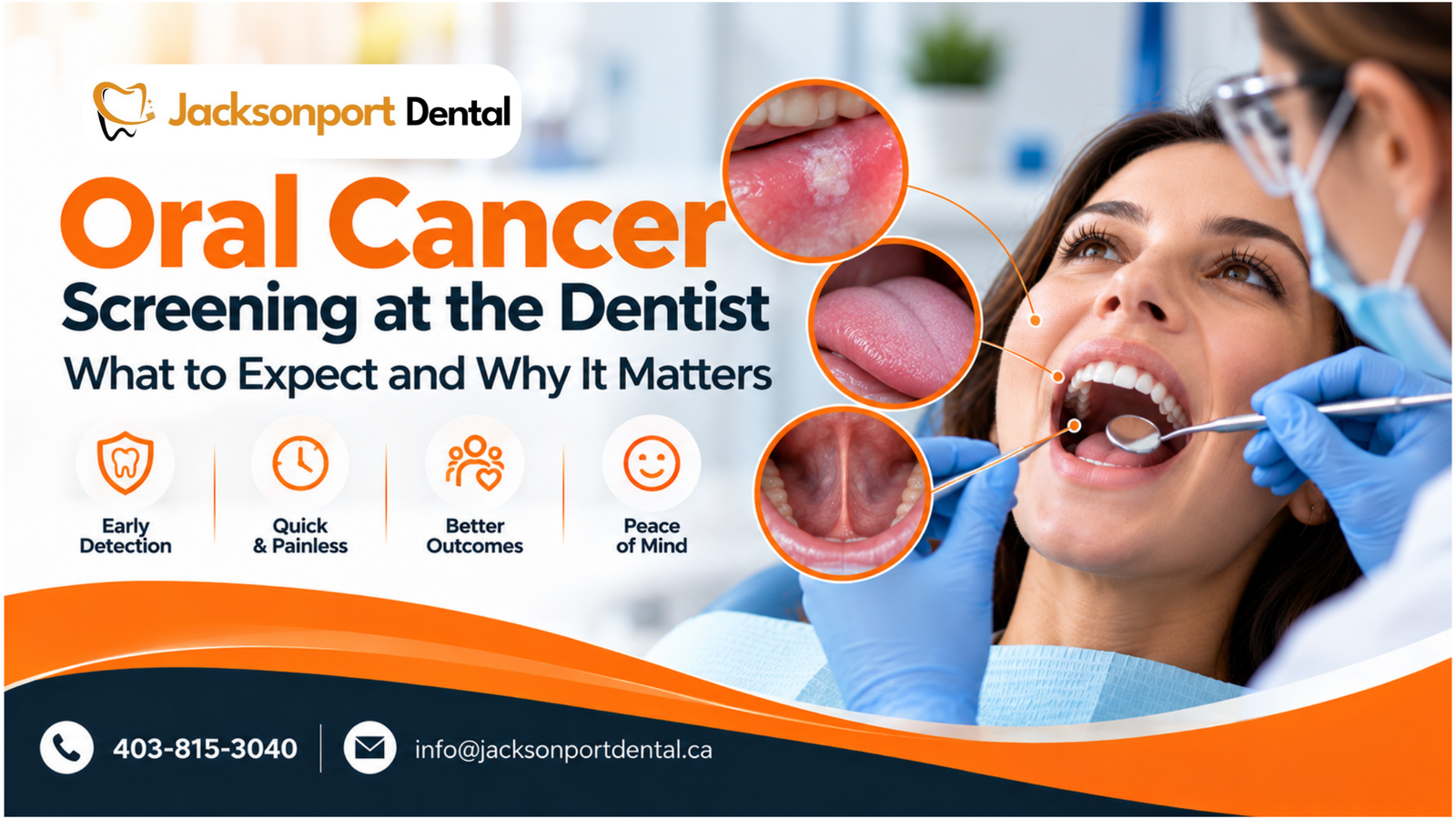
During an oral cancer screening, a dentist visually checks the lips, cheeks, gums, tongue, floor and roof of the mouth, and other accessible oral tissues. They may also gently feel areas of the mouth, jaw and neck for unusual lumps or changes. If something looks concerning, the dentist may recommend follow-up, further testing or referral. A screening alone cannot confirm or rule out cancer.
Why is an oral cancer screening important?
Some changes in the mouth can be subtle, and early abnormalities may not cause pain. A clinical examination gives your dentist an opportunity to identify unusual tissue changes and decide whether they need further assessment. Oral cancer can affect the lips, tongue, gums, inner cheeks, floor or roof of the mouth, and areas toward the throat.
Regular dental appointments and telling your dentist about changes you notice are important parts of looking after your oral health. Read the Canadian Dental Association’s oral cancer information.
What happens during an oral cancer screening?
The examination is usually straightforward and does not require special preparation. Depending on your visit and clinical needs, your dentist may:
- Ask about your health and symptoms. You may be asked about your medical and dental history, tobacco or alcohol use, and symptoms such as persistent sores, pain, numbness or difficulty swallowing.
- Look at your lips and mouth. The dentist checks the cheeks, gums, tongue, floor and roof of the mouth for unusual patches, sores, swelling or texture changes.
- Check different surfaces of the tongue. You may be asked to move your tongue or lift it so the dentist can see more clearly.
- Feel the jaw and neck where appropriate. Gentle palpation can help identify unusual lumps, swelling or tissue changes.
- Explain next steps. If an area needs attention, the dentist may recommend a recheck, further investigation or referral.
If you have concerns about a particular area, point it out rather than waiting for the dentist to notice it.
Warning signs you should not ignore
Contact a dentist or healthcare professional if you notice an unexplained change in your mouth, especially if it persists for around two weeks or longer. Signs that deserve assessment include:
- A sore or ulcer that does not heal.
- Red, white or dark patches on the tongue, gums, lips or inner cheeks.
- A lump, thickened area, rough patch or persistent swelling.
- Unexplained bleeding, tenderness, pain or numbness.
- Difficulty chewing, swallowing, speaking or moving your tongue or jaw.
- A persistent sore throat, hoarseness, or a feeling that something is caught in your throat.
- A new lump in the neck or under the jaw.
These symptoms can have causes other than cancer, but do not self-diagnose or ignore them. Seek prompt professional advice, especially if a symptom is persistent or worsening. For a patient-friendly overview, read MouthHealthy’s guide to oral cancer.
Who may have a higher risk of oral cancer?
Risk can be influenced by factors including tobacco use, heavy alcohol consumption, and certain infections associated with cancers in the back of the mouth and throat. Prolonged sun exposure can also increase the risk of cancers affecting the lips. Oral cancer can occur in people without obvious risk factors, so symptoms should be assessed regardless of age or lifestyle.
If you use tobacco or alcohol, ask your dentist or healthcare provider about practical support to reduce risk. Health Canada provides additional information about oral cancer and checking for changes.
What if your dentist notices something unusual?
An unusual spot does not automatically mean cancer. Your dentist will consider its appearance, location, history and whether it changes over time. Depending on the findings, the next step may be a follow-up examination, referral, or a biopsy or other investigation arranged by an appropriate clinician. A biopsy with laboratory assessment is used to establish a definitive diagnosis when indicated.
Ask what was noticed, what the recommended next step is, and when you should follow up. If a spot persists or changes after an initial review, contact your dental or healthcare provider again.
Oral cancer screening in NE Calgary
Jacksonport Dental welcomes patients from NE Calgary communities including Cityscape, Cornerstone, Skyview Ranch, Savanna and nearby neighbourhoods. During a dental examination, ask the team about an oral cancer evaluation and discuss any changes you have noticed in your mouth, lips, jaw or neck.
Learn more about comprehensive dental exams, explore dental services at Jacksonport Dental, or read why regular dental checkups matter.
Frequently asked questions
Is an oral cancer screening painful?
A routine visual examination and gentle feeling of the tissues are generally straightforward and should not be painful. Tell your dentist if an area is sore or you feel discomfort.
Can a dentist diagnose oral cancer during a screening?
No. A screening can identify changes that need further investigation, but it cannot confirm cancer. A biopsy and laboratory assessment may be needed to establish a diagnosis.
Should I wait for my next checkup if I have a mouth sore?
No. If a sore, patch, lump or other unexplained change persists for around two weeks, or sooner if it is worsening or concerning, contact a dentist or healthcare professional.
Have a concern about a change in your mouth?
Do not wait for your next routine visit if you have a persistent sore, patch, lump or unexplained symptom. Contact Jacksonport Dental to discuss an examination or ask your healthcare provider for guidance.
Request an AppointmentCall 403-815-3040
Email: info@jacksonportdental.ca
Jacksonport Dental
124-3730 104 Ave NE, Calgary, AB T3N 0T1