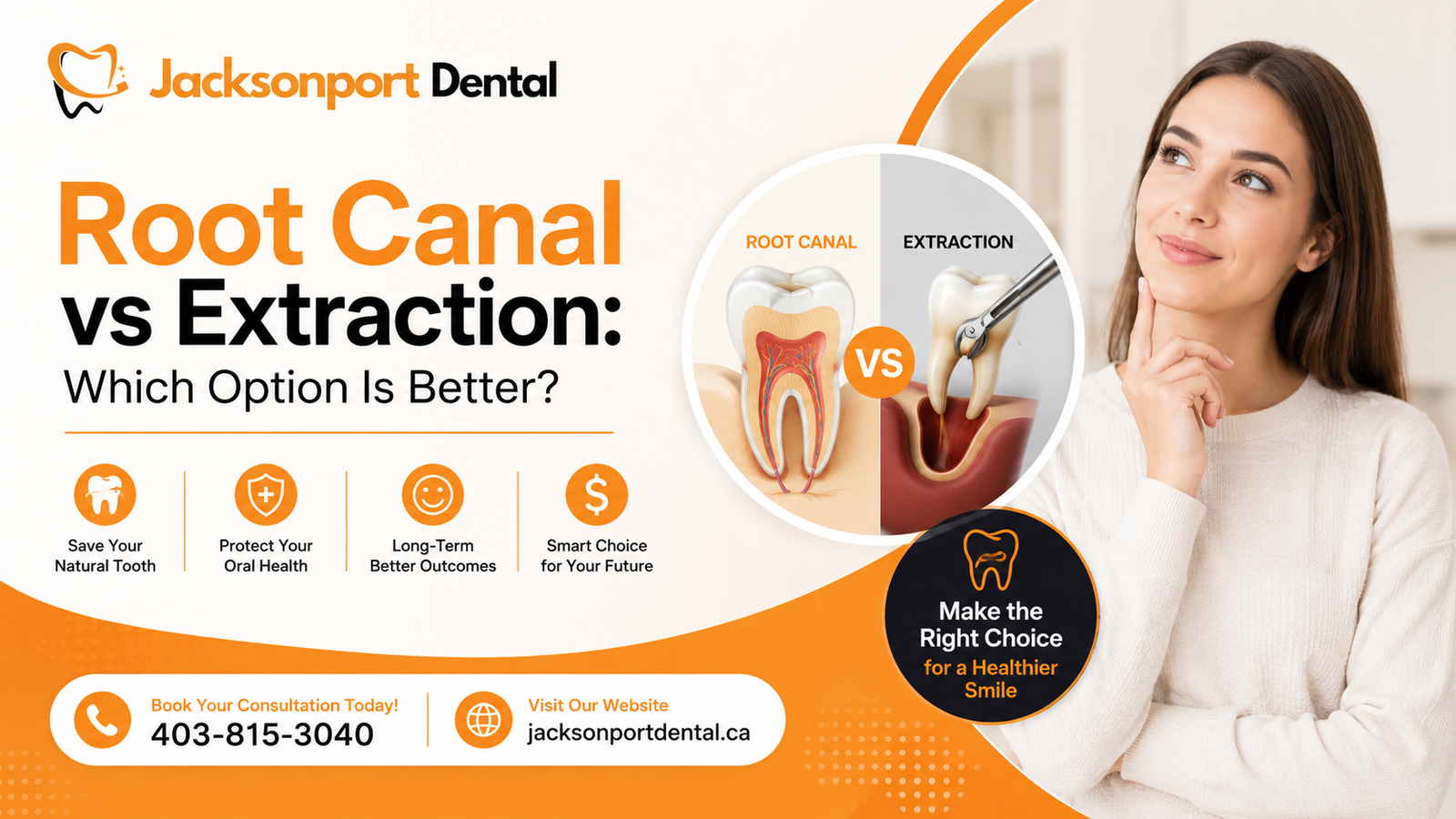
Should You Get a Root Canal or Extraction?
For many patients, this decision feels overwhelming. You want the pain gone quickly — but you also want to make the best long-term choice for your oral health, comfort, and budget.
At Jacksonport Dental in NE Calgary, we often help patients understand the difference between a root canal vs tooth extraction so they can make informed decisions with confidence.
The truth is: In many cases, saving your natural tooth is the best option. However, there are situations where removing the tooth may be necessary.
This guide will help you understand:
- What each procedure involves
- Which option is less painful
- The long-term costs
- Recovery expectations
- When extraction is unavoidable
- How dentists decide the best treatment
Let’s break it down clearly.
Book an Appointment or call 403-815-3040 to discuss your treatment options with our NE Calgary dental team.
What Is a Root Canal?
A root canal is a dental procedure designed to save an infected or severely damaged tooth.
Inside every tooth is soft tissue called the pulp, which contains nerves and blood vessels. When this pulp becomes infected due to:
- Deep cavities
- Cracks
- Trauma
- Repeated dental procedures
- Severe decay
…the infection can spread and cause intense pain.
During a root canal procedure:
- The infected pulp is removed
- The inside of the tooth is cleaned and disinfected
- The canals are sealed
- A dental crown is often placed afterward for protection
The goal is simple: Save your natural tooth whenever possible.
Learn more about root canal treatment in Calgary.
What Is a Tooth Extraction?
A tooth extraction involves completely removing the tooth from the mouth.
Dentists may recommend extraction when:
- The tooth is too damaged to save
- Severe fractures extend below the gumline
- Advanced infection has destroyed the tooth structure
- Bone loss is significant
- Wisdom teeth are impacted
- Orthodontic treatment requires space
While extraction removes the source of infection and pain, it also leaves a gap in your smile that may eventually require replacement.
Read more about when tooth extraction may be necessary.
Root Canal vs Extraction: What’s the Main Difference?
Root Canal
- Saves your natural tooth
- Maintains chewing function
- Prevents shifting teeth
- Usually requires a crown afterward
- Better long-term oral health outcomes
Extraction
- Removes the tooth completely
- Faster initial procedure
- May require implant, bridge, or denture later
- Can lead to bone loss over time
- Nearby teeth may shift
In general, dentists prefer preserving natural teeth whenever possible.
Is a Root Canal Better Than an Extraction?
In many situations yes. A root canal is usually considered the better long-term option because it preserves your natural tooth structure.
Benefits of saving your natural tooth include:
- Better chewing efficiency
- Natural appearance
- Reduced jawbone loss
- No gap in your smile
- Less shifting of surrounding teeth
- Lower long-term restorative costs
However, this depends entirely on whether the tooth can realistically be saved.
If the tooth has:
- Severe cracks
- Extensive decay below the gumline
- Advanced bone loss
- Structural instability
…then extraction may be the healthier option.
Which Procedure Is More Painful?
One of the biggest myths in dentistry is that root canals are extremely painful.
Modern root canal procedures are typically no more uncomfortable than getting a filling. In fact, many patients report that extraction recovery is more uncomfortable than root canal recovery.
Root Canal Recovery
You may experience:
- Mild soreness
- Tenderness for a few days
- Temporary sensitivity
Most patients return to normal activities quickly.
Extraction Recovery
Tooth extraction recovery may involve:
- Swelling
- Bleeding
- Soreness
- Dietary restrictions
- Risk of dry socket
Healing can take longer depending on the complexity of the extraction.
Related reading: What to Expect During and After a Tooth Extraction
Cost Comparison: Root Canal vs Extraction
Many patients initially think extraction is cheaper.
While the upfront cost may sometimes be lower, extraction often becomes more expensive long-term if you replace the missing tooth.
Root Canal Costs Typically Include:
- Root canal treatment
- Dental crown
- Follow-up restoration
Extraction Costs May Later Include:
- Tooth replacement
- Dental implant
- Bone grafting
- Bridge or denture
A missing tooth can also create additional dental problems over time.
That’s why many dentists recommend preserving the tooth whenever possible.
Explore restorative options:
What Happens If You Don’t Replace an Extracted Tooth?
This is something many patients don’t realize.
When a tooth is removed and not replaced:
- Adjacent teeth can shift
- Bite alignment changes
- Jawbone shrinkage begins
- Chewing efficiency decreases
- Facial structure may gradually change
Over time, these changes can create more complex and expensive dental problems.
When Is Extraction the Better Option?
Although dentists try to save teeth whenever possible, extraction may be recommended if:
The Tooth Is Cracked Beyond Repair
A deep fracture below the gumline often cannot be restored successfully.
Severe Bone Loss Exists
Advanced gum disease may weaken the tooth’s support structure.
Infection Is Too Advanced
Some infections destroy too much healthy tooth structure.
The Tooth Cannot Support a Crown
If too little tooth remains, long-term restoration may fail.
Wisdom Teeth Are Impacted
Extraction is often the safest option.
Signs You May Need a Root Canal
You should see a dentist immediately if you notice:
- Persistent tooth pain
- Sensitivity to hot or cold
- Swollen gums
- Pain while chewing
- Darkening of the tooth
- Gum abscesses
- Facial swelling
Ignoring these symptoms can allow the infection to spread.
If you’re experiencing severe pain or swelling, visit our emergency dental services page.
Can a Root Canal Fail?
Yes — although modern root canals are highly successful.
A root canal may fail due to:
- New decay
- Cracked teeth
- Delayed crown placement
- Missed canals
- Reinfection
The good news is many failed root canals can often be retreated successfully.
Related article: Root Canal Myths You Should Stop Believing
Root Canal vs Extraction: Which Lasts Longer?
A properly treated and restored tooth can last decades — sometimes even a lifetime.
The longevity depends on:
- Oral hygiene
- Regular dental visits
- Proper crown placement
- Avoiding tooth grinding
- Gum health
Dental implants are also durable, but preserving a natural tooth is generally preferable when possible.
How Dentists Decide Between Root Canal or Extraction
Dentists evaluate several factors:
- Extent of decay
- Tooth structure remaining
- Infection severity
- Gum and bone health
- Patient budget
- Long-term prognosis
At Jacksonport Dental, we take a conservative approach focused on preserving healthy natural teeth whenever possible.
Root Canal vs Extraction in Calgary: What Patients Should Know
Many Calgary patients delay treatment because they fear pain, cost, or complicated procedures.
Unfortunately, waiting usually makes the problem worse.
A small infection can quickly become:
- Severe pain
- Swelling
- Facial infection
- Emergency dental treatment
- Tooth loss
Early diagnosis gives you more treatment options and often helps save the tooth.
If you’re experiencing tooth pain in NE Calgary, getting evaluated early is the best decision.
Serving families across:
Cityscape, Skyview Ranch, Cornerstone, Redstone, Saddleridge, Savanna, and surrounding NE Calgary communities.
What Is the Best Long-Term Option?
For most patients:
Saving the natural tooth is usually the healthiest long-term choice.
A root canal allows you to:
- Maintain natural function
- Preserve jawbone
- Avoid shifting teeth
- Keep your smile intact
However, every case is different.
The best treatment is the one that:
- Removes infection
- Protects long-term oral health
- Fits your needs and goals
Final Thoughts
Choosing between a root canal vs extraction can feel stressful, especially when you’re in pain.
The good news is you don’t have to decide alone.
A proper dental evaluation can determine:
- Whether your tooth can be saved
- Which option offers the best long-term outcome
- What treatment fits your health and budget
At Jacksonport Dental in NE Calgary, we help patients make informed, comfortable decisions every day.
If you’re dealing with tooth pain, infection, or swelling, early treatment can often save your tooth and prevent more serious complications later.
Book an appointment today to discuss your options with our caring dental team.
You can also call us directly at 403-815-3040.