
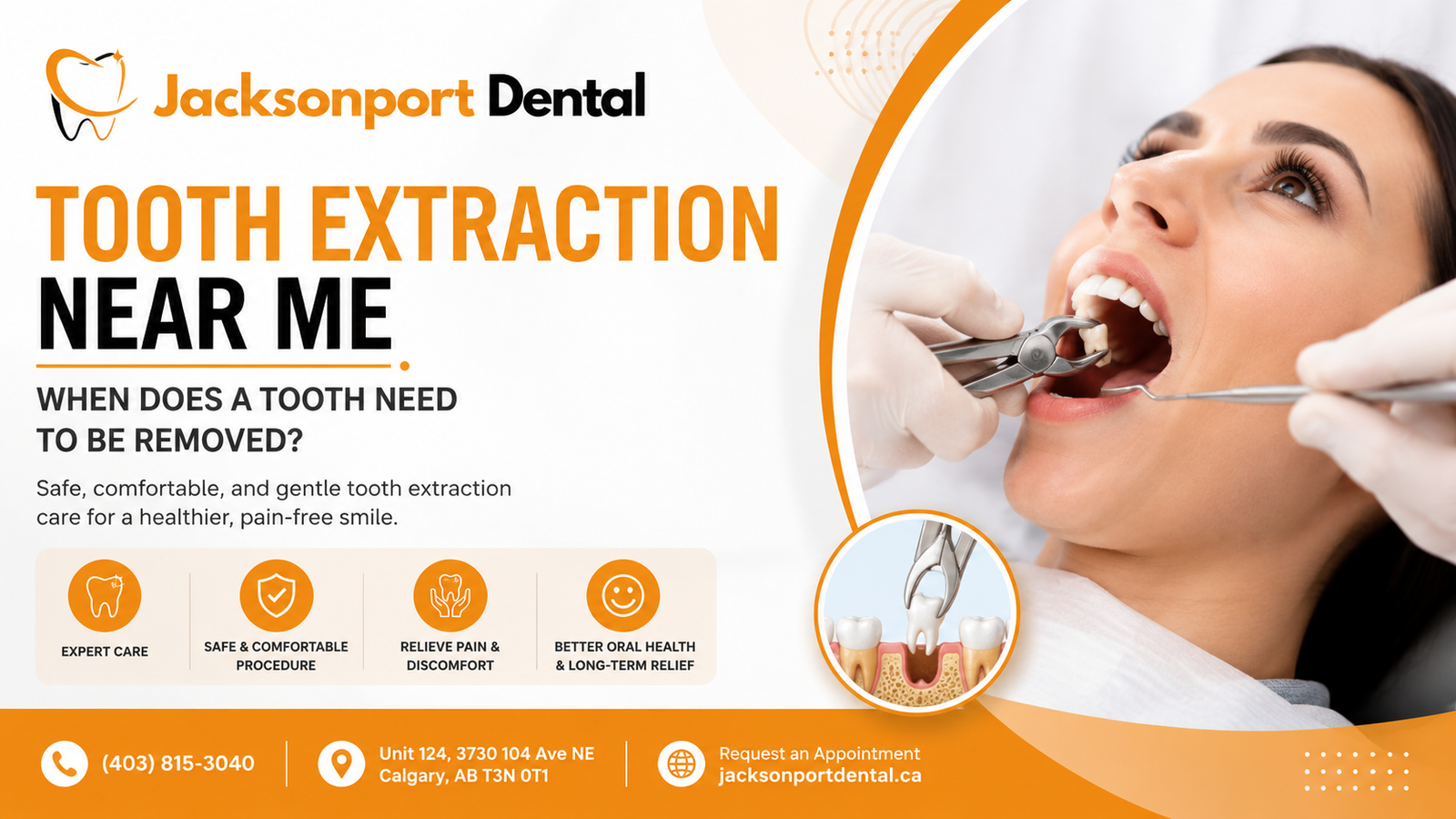
Experiencing persistent tooth pain, swelling, or a damaged tooth can leave you wondering whether the problem can be fixed—or whether removal is the best option.
If you’ve been searching for tooth extraction near me, you’re not alone. Tooth extractions remain one of the most common dental procedures and are often necessary to protect your overall oral health when a tooth can no longer be saved.
At Jacksonport Dental Clinic NE Calgary, Dr. Richa Bhatnagar and our team always prioritize preserving natural teeth whenever possible. However, there are situations where removing a tooth is the healthiest and safest long-term solution.
Need a Tooth Extraction Consultation?
If you’re experiencing severe tooth pain, swelling, infection, or wisdom tooth discomfort, our team is here to help.
How Do I Know If I Need a Tooth Extraction?
A tooth may need to be extracted if it is severely decayed, extensively damaged, infected beyond repair, loosened by advanced gum disease, impacted, or creating problems for surrounding teeth. A dental examination and X-rays are required to determine whether the tooth can be saved or should be removed.
Many patients assume that any painful tooth automatically requires extraction.
In reality, dentists often have multiple treatment options available, including fillings, crowns, root canal therapy, and periodontal treatment. Extraction is usually recommended only when preserving the tooth is no longer predictable or beneficial for long-term oral health.
Why Would a Tooth Need to Be Removed?
Modern dentistry focuses heavily on saving natural teeth. However, certain conditions may make extraction the most appropriate treatment option.
Common reasons for tooth extraction include:
- Severe tooth decay
- Advanced gum disease
- Dental infections
- Broken or fractured teeth
- Impacted wisdom teeth
- Orthodontic treatment planning
- Dental trauma or injury
- Overcrowding of teeth
Let’s explore these situations in greater detail.
1. Severe Tooth Decay
Tooth decay is one of the leading causes of tooth loss worldwide.
When cavities are detected early, they can usually be treated with fillings or crowns. However, if decay progresses deep into the tooth and destroys a significant portion of its structure, restoration may no longer be possible.
A severely decayed tooth may:
- Cause chronic pain
- Develop infection
- Fracture easily
- Threaten neighboring teeth
- Compromise chewing function
In these situations, extraction may prevent more serious complications and pave the way for a healthier long-term solution such as a dental implant or bridge.
Related Service: Tooth Extraction Services in Calgary
2. Advanced Tooth Infection
A tooth infection develops when bacteria reach the inner pulp chamber of the tooth.
Many infections can be successfully treated with root canal therapy. However, some infections become too extensive or cause structural damage that cannot be repaired.
Signs of a serious tooth infection may include:
- Severe toothache
- Facial swelling
- Sensitivity to pressure
- Pus near the gums
- Persistent bad taste in the mouth
- Fever
If an infection is left untreated, it may spread into surrounding tissues and become a more serious health concern.
Whenever possible, root canal therapy is considered before extraction.
Learn more: Root Canal Treatment
3. Advanced Gum Disease
Periodontal disease is another common cause of tooth loss.
As gum disease progresses, it gradually damages the tissues and bone that support the teeth.
When severe bone loss occurs, teeth may become loose and unstable.
Signs of advanced gum disease include:
- Bleeding gums
- Persistent bad breath
- Receding gums
- Loose teeth
- Pain while chewing
- Changes in bite alignment
In some cases, extraction may be necessary to eliminate infection and protect neighboring teeth and bone.
4. Teeth That Are Cracked or Broken Beyond Repair
Not every broken tooth requires removal.
Many damaged teeth can be restored using fillings, crowns, or other restorative procedures.
However, extraction may become necessary when:
- A fracture extends below the gumline
- The root is severely damaged
- Insufficient healthy tooth structure remains
- The tooth cannot support a restoration
A comprehensive examination helps determine whether a damaged tooth can be saved or requires extraction.
Related Reading:
Understanding the Need for Tooth Extraction: When and Why It’s Necessary
Not Sure Whether Your Tooth Can Be Saved?
Dr. Richa Bhatnagar and the team at Jacksonport Dental can evaluate your tooth and discuss all available treatment options before recommending extraction.
5. Impacted Wisdom Teeth
One of the most common reasons patients seek a tooth extraction near me is because of problematic wisdom teeth.
Wisdom teeth are the last molars to emerge, usually appearing between the ages of 17 and 25.
Unfortunately, many people do not have enough space in their mouths to accommodate these teeth properly.
When wisdom teeth become trapped beneath the gums or grow at improper angles, they are considered impacted.
Impacted wisdom teeth can cause:
- Pain and pressure
- Swelling of the gums
- Jaw discomfort
- Infection
- Damage to neighboring teeth
- Crowding and shifting of teeth
- Difficulty cleaning the area
If you are experiencing discomfort from wisdom teeth, our team can evaluate whether removal is necessary through a comprehensive examination and diagnostic imaging.
Learn more about wisdom tooth removal in our article: Wisdom Tooth Extraction in Calgary: What to Expect.
Experiencing Wisdom Tooth Pain?
Don’t wait for the pain to worsen. Book an examination today to determine whether your wisdom teeth require removal.
6. Orthodontic Treatment and Tooth Removal
In some orthodontic cases, tooth extraction may be recommended to create adequate space for proper tooth alignment.
Although modern orthodontics often minimizes the need for extractions, certain patients with severe crowding may benefit from removing specific teeth before treatment begins.
Extraction may help:
- Improve alignment outcomes
- Create space for crowded teeth
- Reduce bite problems
- Enhance overall smile aesthetics
Your dentist or orthodontic provider will carefully evaluate whether extraction is necessary as part of your treatment plan.
7. Dental Trauma and Emergency Extractions
Accidents happen unexpectedly.
Sports injuries, falls, vehicle accidents, and other traumatic events can cause severe damage to teeth.
While many injured teeth can be saved, extraction may become necessary if:
- The tooth is fractured beyond repair
- The root is severely damaged
- The supporting bone is compromised
- Infection develops following trauma
Emergency dental care is critical following any significant injury.
Delaying treatment can reduce the chances of saving the tooth.
If you are experiencing a dental emergency, visit our Emergency Dental Services page for immediate assistance.
When Is a Tooth Extraction Considered an Emergency?
Not every extraction requires same-day treatment.
However, some situations require urgent dental attention.
Emergency extraction situations may include:
- Severe infection with facial swelling
- Dental abscess causing significant pain
- Uncontrolled bleeding
- Traumatic tooth fracture
- Severe wisdom tooth infection
- Rapidly spreading oral infection
If you experience swelling that affects breathing or swallowing, seek emergency medical care immediately.
Signs You Should Never Ignore
Many patients postpone treatment because symptoms seem manageable initially.
Unfortunately, dental problems rarely improve on their own.
Schedule an evaluation if you experience:
- Persistent tooth pain
- Throbbing discomfort
- Pain when chewing
- Swelling of the gums or face
- Pus around a tooth
- Bad taste in the mouth
- Loose adult teeth
- Difficulty opening your mouth
- Persistent sensitivity
Early diagnosis often allows for more treatment options and better outcomes.
Unsure Whether Your Tooth Can Be Saved?
Dr. Richa Bhatnagar and the team at Jacksonport Dental can assess your condition and explain all available treatment options.
Can a Tooth Be Saved Instead of Extracted?
One of the most important questions patients ask is:
“Do I really need my tooth removed?”
In many cases, the answer is no.
Modern dentistry offers numerous treatments designed to preserve natural teeth whenever possible.
Alternatives to Tooth Extraction
- Dental fillings
- Root canal treatment
- Dental crowns
- Periodontal therapy
- Dental bonding
- Onlays and inlays
- Splinting loose teeth
Root canal therapy is one of the most common alternatives to extraction when infection reaches the inner pulp of a tooth.
Learn more about treatment options here: Root Canal Treatment in Calgary.
The goal is always to save healthy tooth structure whenever clinically possible.
What Happens If You Delay a Necessary Extraction?
Many patients attempt to live with tooth pain for months—or even years.
Unfortunately, delaying treatment often allows problems to become more severe.
Potential consequences include:
- Increased pain
- Spread of infection
- Bone loss
- Damage to neighboring teeth
- Higher treatment costs
- Greater risk of emergency treatment
- Difficulty chewing
Addressing dental problems early often results in simpler and more affordable care.
What Happens During a Tooth Extraction?
Many patients feel anxious when they hear they may need a tooth removed.
Fortunately, modern dental techniques and local anesthesia make extractions far more comfortable than most people expect.
The process typically includes:
1. Comprehensive Examination
Your dentist will perform a detailed examination and take digital X-rays to evaluate the tooth, roots, surrounding bone, and nearby structures.
2. Local Anesthesia
The area around the tooth is thoroughly numbed to ensure comfort throughout the procedure.
3. Tooth Removal
Depending on the condition of the tooth, the extraction may be:
- Simple Extraction – performed when the tooth is fully visible above the gumline.
- Surgical Extraction – required for impacted teeth, broken teeth, or complex cases.
4. Post-Operative Care
After the extraction, detailed instructions are provided to support healing and reduce the risk of complications.
Related Reading:
What to Expect During and After a Tooth Extraction
Recovery After a Tooth Extraction
Healing times vary depending on the complexity of the extraction and the patient’s overall health.
Most patients experience:
- Mild soreness for a few days
- Minor swelling
- Gradual improvement within 48–72 hours
- Significant healing within one to two weeks
Recovery Tips
- Follow your dentist’s instructions carefully
- Avoid smoking
- Rest during the first 24 hours
- Avoid drinking through a straw
- Eat soft foods initially
- Maintain good oral hygiene
- Attend follow-up appointments if recommended
For additional recovery guidance, read: After a Tooth Extraction: Caring for Your Mouth
Should You Replace a Tooth After Extraction?
In many cases, yes.
While some extracted teeth may not require replacement, many missing teeth can create long-term oral health problems if left untreated.
Missing teeth may lead to:
- Shifting of neighboring teeth
- Bite problems
- Difficulty chewing
- Speech changes
- Jawbone loss
- Changes in facial appearance
After extraction, your dentist may recommend one of several replacement options.
Dental Implants
Dental implants are widely considered the gold standard for tooth replacement because they replace both the tooth root and crown.
Benefits include:
- Excellent stability
- Natural appearance
- Long-term durability
- Jawbone preservation
Learn more: Dental Implants
Dental Bridges
Bridges replace missing teeth by anchoring a replacement tooth to neighboring teeth.
Learn more: Crowns, Bridges & Veneers
Dentures
Dentures remain an effective option for replacing multiple missing teeth or full arches.
Learn more: Denture Solutions
Why Patients in NE Calgary Choose Jacksonport Dental for Tooth Extractions
At Jacksonport Dental Clinic NE Calgary, patient comfort and long-term oral health are our priorities.
Patients trust Dr. Richa Bhatnagar and our team because we provide:
- Comprehensive evaluations
- Gentle extraction techniques
- Modern digital imaging technology
- Personalized treatment planning
- Emergency dental care availability
- Convenient Northeast Calgary location
- Family-focused dental care
Most importantly, we always explore options to save a tooth before recommending extraction whenever clinically appropriate.
Need a Professional Assessment?
If you’re experiencing tooth pain, swelling, infection, or dental trauma, our team can help determine whether extraction is necessary.
Serving Families Throughout NE Calgary
Jacksonport Dental Clinic proudly serves patients throughout Northeast Calgary, including:
- Cityscape
- Cornerstone
- Skyview Ranch
- Redstone
- Savanna
- Saddleridge
- Martindale
- Taradale
- Monterey Park
- Country Hills
- NE Calgary
Final Thoughts
If you’re searching for tooth extraction near me, it’s important not to ignore persistent tooth pain, infection, swelling, or dental trauma.
While dentists always aim to preserve natural teeth whenever possible, extraction may sometimes be the healthiest solution to protect your oral health and prevent more serious complications.
The sooner a dental problem is evaluated, the more treatment options may be available.
Whether you need an emergency extraction, wisdom tooth evaluation, or second opinion regarding a damaged tooth, professional assessment is the best first step.
Frequently Asked Questions
How do I know if I need a tooth extraction?
You may need an extraction if a tooth is severely decayed, extensively damaged, infected beyond repair, loosened by gum disease, or causing complications such as impacted wisdom teeth.
Can a tooth infection require extraction?
Yes. If an infection cannot be successfully treated with root canal therapy or restoration, extraction may be necessary.
Is tooth extraction painful?
Modern local anesthesia and dental techniques make extractions significantly more comfortable than most patients expect.
How long does it take to recover from a tooth extraction?
Most patients begin feeling significantly better within a few days, with healing continuing over one to two weeks.
Do wisdom teeth always need to be removed?
No. Wisdom teeth are only removed when they create problems such as impaction, infection, crowding, or damage to neighboring teeth.
What happens if I delay a needed extraction?
Delaying treatment can allow infection, pain, bone loss, and damage to surrounding teeth to worsen.
Can I replace a tooth after extraction?
Yes. Dental implants, bridges, and dentures are common tooth replacement options following extraction.
Do I need an emergency dentist for severe tooth pain?
Persistent or severe tooth pain should be evaluated promptly, especially if accompanied by swelling, infection, or trauma.
Where can I get a tooth extraction in NE Calgary?
Jacksonport Dental Clinic NE Calgary provides comprehensive tooth extraction services, wisdom tooth evaluations, emergency dental care, and restorative treatment options.
Book Your Tooth Extraction Consultation Today
Don’t let tooth pain, infection, or dental damage affect your quality of life.
Our experienced team can evaluate your condition, discuss treatment options, and help restore your oral health.
Jacksonport Dental Clinic NE Calgary
3730 104 Ave NE Unit 124
Calgary, AB T3N 0T1
Related Articles
- Understanding the Need for Tooth Extraction: When and Why It’s Necessary
- What to Expect During and After a Tooth Extraction
- After a Tooth Extraction: Caring for Your Mouth
- Wisdom Tooth Extraction in Calgary: What to Expect
- The Role of Dentists in Tooth Extraction
- Emergency Dental Services: What To Do and Where To Go in Calgary