Dental Health | Jacksonport Dental | Dr. Richa Bhatnagar
👉 Experiencing tooth sensitivity? Book your appointment today or call +1-403-815-3040 for expert care.
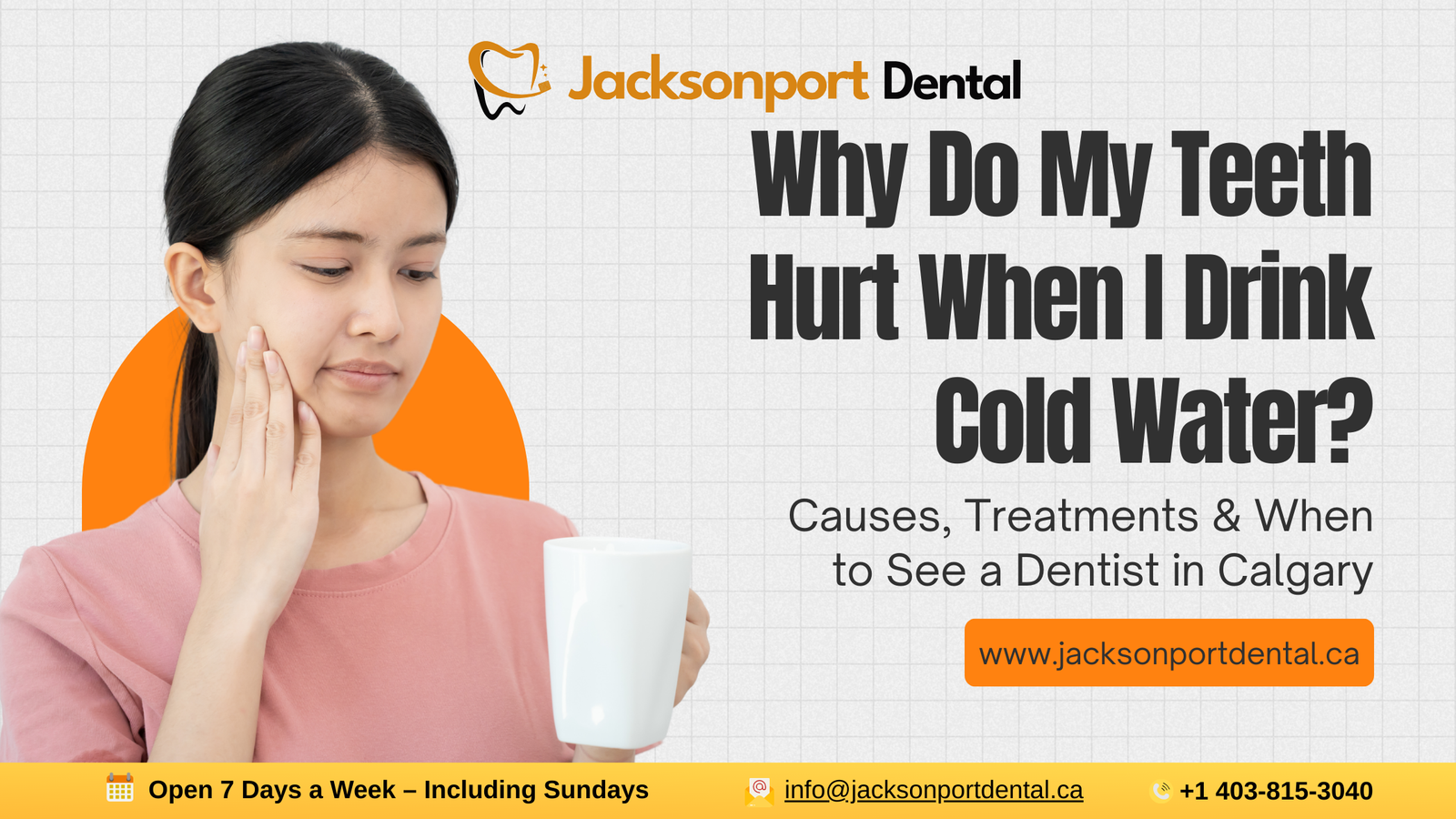
Have you ever taken a sip of cold water or enjoyed ice cream and suddenly felt a sharp, shooting pain in your teeth? If your immediate reaction is to stop drinking or switch to room-temperature water, you’re not alone. Many patients visiting our clinic in NE Calgary tell me the same thing: “Doctor, my teeth feel fine normally — but cold drinks really hurt.”
This condition is known as cold-sensitive teeth, and while it’s very common, it should never be ignored. Tooth sensitivity is often your body’s way of telling you that something needs attention.
The good news? In most cases, it’s highly treatable once we identify the cause. Let’s walk through why this happens and what you can do to find lasting relief.
What Does Cold Tooth Sensitivity Feel Like?
Cold sensitivity usually appears as:
- A sharp, sudden pain when drinking cold water
- Discomfort while eating ice cream or cold foods
- Sensitivity when breathing in cold winter air (very common in Calgary winters)
- Pain localized to one tooth or several teeth
- Temporary discomfort that disappears after a few seconds
Some patients describe it as a “zing” or electric sensation — and that description is actually quite accurate.
Why Do Teeth Hurt When You Drink Cold Water?
Your teeth are protected by a hard outer layer called enamel. Beneath that is dentin, which contains tiny microscopic channels connected to the tooth’s nerve.
When enamel wears down or gums recede, cold temperatures travel through these channels and stimulate the nerve — causing pain.
👉 Learn more about sensitivity triggers: Why is my tooth sensitive to cold?
1. Worn or Thinning Enamel
Enamel can gradually wear away due to:
- Brushing too aggressively
- Using hard-bristled toothbrushes
- Acidic foods and beverages
- Teeth grinding (often during sleep)
Once enamel becomes thinner, cold sensations reach the nerve much faster.
👉 Many patients are surprised to learn that brushing harder does not clean better — it actually increases sensitivity.
2. Gum Recession (Exposed Tooth Roots)
As gums recede, the roots of your teeth become exposed. Unlike the crown of the tooth, roots do not have protective enamel. This makes molars especially sensitive to cold water or cold air.
Gum recession can occur due to:
- Gum disease
- Overbrushing
- Natural aging
- Improper brushing technique
3. Cavities or Early Tooth Decay
Sometimes sensitivity is an early warning sign of decay. A small cavity may not cause constant pain yet, but cold drinks can trigger discomfort because bacteria have weakened the enamel barrier.
👉 Read more: How to prevent cavities
4. Cracked or Damaged Teeth
Tiny cracks in teeth can allow cold liquids to reach the inner nerve. Patients often notice:
- Pain when drinking cold beverages
- Sensitivity while chewing
- Discomfort that comes and goes
Cracks are common in people who grind their teeth or chew ice frequently.
5. Recent Dental Treatment (Temporary Sensitivity)
If you recently had:
- A filling
- Crown placement
- Teeth cleaning
- Whitening treatment
You may experience temporary sensitivity. This usually improves within a few weeks as the tooth settles.
How to Treat Cold-Sensitive Teeth
Need professional help? Schedule a dental consultation today.
Treatment depends on the underlying cause, but many cases improve with simple changes.
Use Toothpaste Designed for Sensitive Teeth
Desensitizing toothpaste helps block nerve pathways inside the tooth. Consistency is key — most patients notice improvement after 2–4 weeks of regular use.
Switch to a Soft-Bristled Toothbrush
Gentle brushing protects enamel and gums. Think of brushing as massaging your teeth, not scrubbing them.
Reduce Acidic Foods and Drinks
Frequent exposure to acids weakens enamel over time. Try limiting:
- Soda
- Citrus juices
- Sports drinks
- Vinegar-heavy foods
Rinse with water afterward to neutralize acids.
Fluoride Treatments for Enamel Strengthening
Professional fluoride treatments available at our Calgary clinic strengthen enamel and reduce sensitivity significantly.
👉 Learn more: Teeth cleaning & hygiene services
Dental Bonding or Sealants
If roots are exposed or enamel loss is significant, we can apply protective materials that shield sensitive areas.
👉 Explore: Dental sealants
Treat Underlying Dental Problems
If sensitivity is caused by decay, cracks, or infection, treatment may include:
How Calgary’s Winter Weather Makes Sensitivity Worse
Living in Calgary, we often see increased tooth sensitivity during winter months. Cold air exposure combined with dry conditions can intensify nerve reactions.
👉 Related read: How winter affects your teeth
How to Prevent Cold Sensitivity in the Future
- Brushing twice daily with fluoride toothpaste
- Using a soft toothbrush
- Flossing regularly
- Wearing a nightguard if you grind your teeth
- Visiting your dentist for regular check-ups and cleanings
👉 Learn more: Importance of dental checkups
When Should You See a Dentist?
- Sensitivity lasts more than a few days
- Pain is sharp or worsening
- Only one tooth feels sensitive
- Sensitivity interferes with eating or drinking
- Home remedies are not helping
A Personal Note from Dr. Richa Bhatnagar
One of the most common things patients tell me is: “I thought sensitivity was normal, so I ignored it.”
But sensitivity is not something you have to live with. In most cases, we can identify the cause quickly and provide comfortable, effective solutions.
At Jacksonport Dental, our goal is to help you enjoy everyday moments — even something as simple as drinking cold water — without discomfort.
Book Your Sensitivity Assessment at Jacksonport Dental
If cold drinks are causing tooth pain, don’t wait for it to worsen.
📞 Call now: +1-403-815-3040
📅 Or book online: Request an appointment
👉 You can also explore our complete dental services for comprehensive care.