A Dentist’s Guide to Protecting Your Smile During Alberta Winters
❄️ Protect your smile this winter. Book your dental check-up or call +1-403-815-3040.
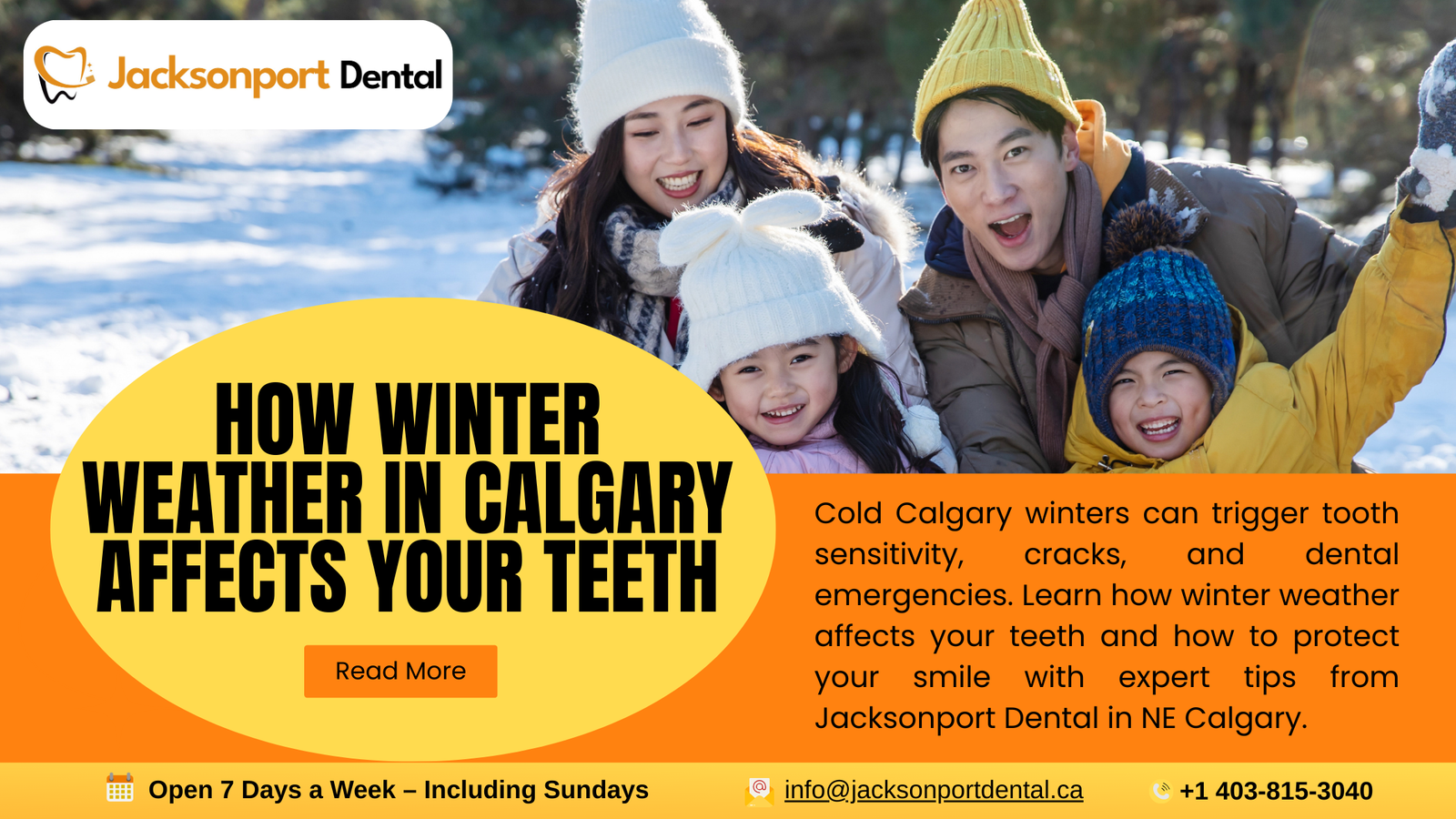
Winter in Calgary is beautiful—but it can be tough on your teeth. As a dentist practicing in NE Calgary, I see a clear pattern every winter: more patients coming in with tooth sensitivity, cracked teeth, jaw pain, and unexpected dental emergencies.
Many don’t realize that cold weather, dry air, and winter habits directly affect oral health. In this guide, I’ll explain why winter impacts your teeth, what symptoms to watch for, and how you can protect your smile all season long—especially if you live or work in Calgary’s colder northeast communities.
Why Does Cold Weather Affect Your Teeth?
1. Temperature Changes Stress Your Teeth
Teeth expand and contract when exposed to temperature changes. During Calgary winters, this happens constantly:
- Stepping outside into freezing air
- Drinking hot coffee, then cold water
- Breathing cold air through your mouth
Over time, this repeated expansion and contraction can create microscopic cracks in enamel, leading to sensitivity or even fractures.
2. Cold Air Triggers Tooth Sensitivity
If you’ve ever felt a sharp pain when breathing in cold air, you’re not alone.
👉 Related: Why teeth hurt with cold water
Cold temperatures can irritate the nerves inside your teeth, especially if you have:
- Worn enamel
- Gum recession
- Existing fillings or crowns
This is one of the most common winter complaints we see at Jacksonport Dental.
3. Dry Winter Air Increases Oral Health Risks
Calgary winters are dry, and indoor heating makes it worse. Dry air reduces saliva production, which is a problem because saliva:
- Washes away bacteria
- Neutralizes acids
- Protects enamel
Less saliva = higher risk of cavities, bad breath, and gum irritation.
👉 Learn more: Prevent cavities effectively
4. Gum Recession Feels Worse in Winter
Cold air can make exposed tooth roots feel extremely sensitive. Patients with gum recession often notice:
- Pain when brushing
- Sensitivity to cold drinks
- Aching teeth during outdoor activities
Winter tends to amplify symptoms that may already exist.
5. Teeth Grinding Increases in Cold Weather
Many people clench or grind their teeth more in winter due to:
- Stress
- Cold-induced jaw tension
- Poor sleep
Grinding (bruxism) can lead to:
- Cracked teeth
- Jaw pain
- Headaches
- Worn enamel
👉 Explore protection: Bite guards & splints
Common Winter Dental Problems We See in NE Calgary
- Tooth sensitivity to cold air or drinks
- Cracked or chipped teeth
- Broken fillings or crowns
- Jaw pain or TMJ flare-ups
- Dry mouth and bad breath
- Gum inflammation
Ignoring these symptoms can turn a minor issue into an emergency dental visit.
👉 Learn what qualifies: What is a dental emergency?
How to Protect Your Teeth During Calgary Winters
1. Switch to a Desensitizing Toothpaste
If cold triggers pain, a toothpaste designed for sensitive teeth can help block nerve signals over time.
Tip from our clinic: Use it twice daily and avoid rinsing immediately after brushing for better results.
2. Protect Your Teeth from Cold Air
When outdoors:
- Cover your mouth with a scarf
- Avoid mouth breathing in cold weather
This simple habit can significantly reduce sensitivity.
3. Stay Hydrated (Even in Winter)
People drink less water in winter—but hydration is critical for saliva production.
- Regular water intake
- Sugar-free gum to stimulate saliva
4. Avoid Using Teeth as Tools
Winter emergencies often happen because people:
- Bite ice
- Tear packaging with teeth
- Crunch hard foods
Cold makes enamel more brittle—avoid unnecessary stress.
5. Don’t Skip Your Dental Cleaning
Regular professional cleanings:
- Strengthen enamel
- Reduce bad breath
- Reduce gum inflammation
👉 Book now: Teeth cleaning & hygiene
Winter is actually one of the most important times to stay consistent with dental visits.
When Cold Sensitivity Is a Warning Sign
Occasional sensitivity can be normal—but see a dentist if you experience:
- Sharp pain that lingers
- Sensitivity in one specific tooth
- Pain when biting
- Swelling or gum tenderness
These may indicate:
- A cracked tooth
- Decay
- Infection
- Failing dental work
👉 Schedule an evaluation: Dental consultation
Early treatment prevents bigger problems.
How We Help at Jacksonport Dental (NE Calgary)
At our NE Calgary dental clinic, we take a preventive, patient-focused approach:
- Identify the cause of sensitivity
- Recommend personalized treatments
- Offer long-term solutions—not just quick fixes
👉 Learn more about our approach: Why choose Jacksonport Dental
Winter dental care is about protecting your smile before problems escalate.
Frequently Asked Questions (FAQ)
Why do my teeth hurt more in winter?
Cold air stimulates tooth nerves, especially if enamel is worn or gums have receded. Temperature changes also stress teeth.
Is winter tooth sensitivity normal?
Mild sensitivity can be common, but ongoing or sharp pain is not and should be evaluated by a dentist.
Can cold weather crack teeth?
Yes. Repeated expansion and contraction, combined with brittle enamel, can cause small cracks to form.
Does dry mouth get worse in winter?
Yes. Dry indoor air and reduced hydration lower saliva levels, increasing cavity risk.
Should I see a dentist for winter tooth pain?
Absolutely—early diagnosis prevents emergencies and costly treatments later.
Final Thoughts: Winter Doesn’t Have to Hurt Your Smile
Calgary winters are tough, but your teeth don’t have to suffer.
With the right habits, early care, and regular dental visits, you can stay comfortable and healthy all winter long.
If you’re experiencing tooth sensitivity, jaw pain, or discomfort this season, don’t wait—we’re here to help.
📅 Book your visit: Request appointment
📞 Call: +1-403-815-3040
Jacksonport Dental 📍 NE Calgary 🦷 Family-focused, preventive dental care