What Causes Gums to Recede?
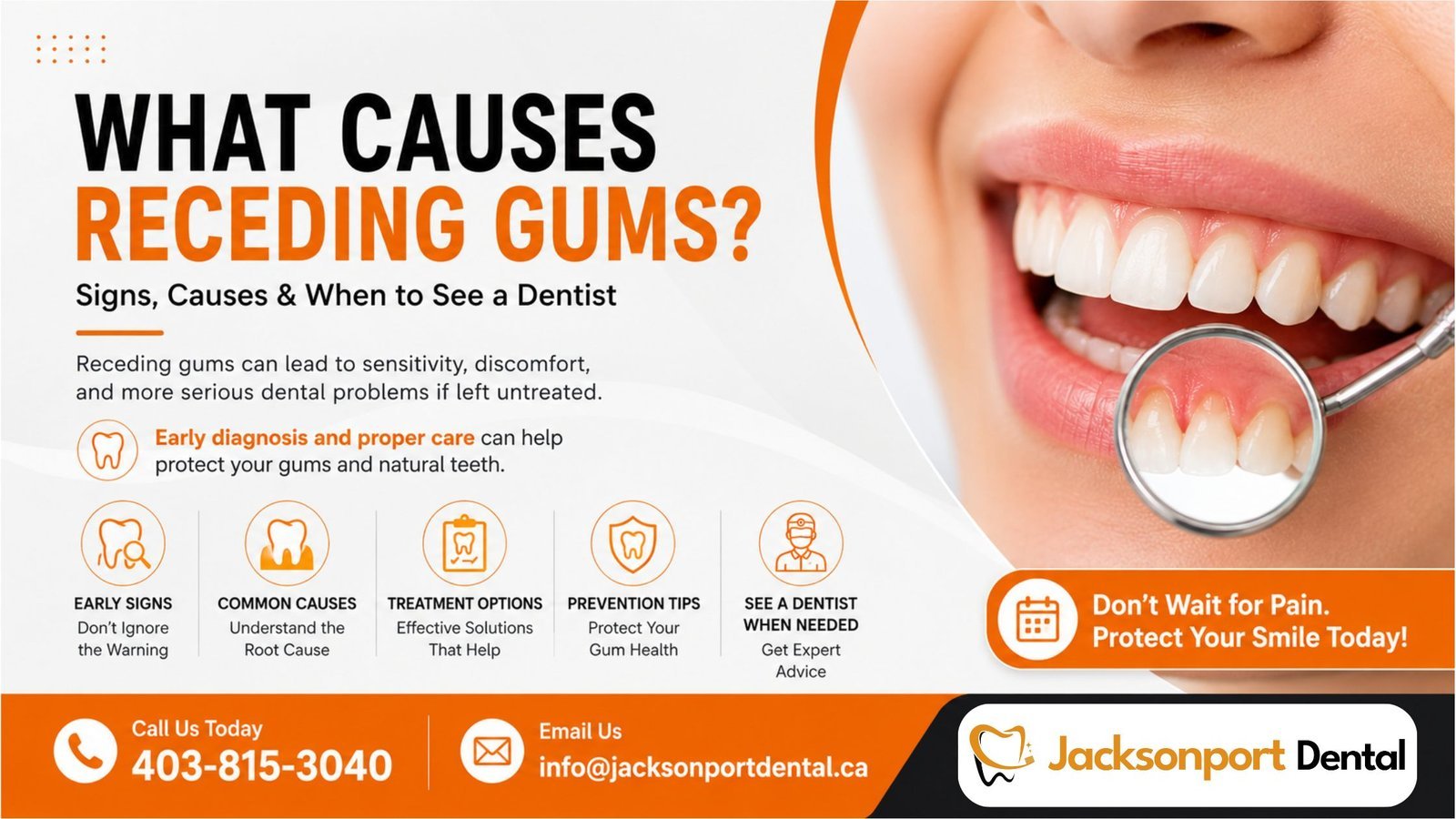
Gums can recede for several reasons, including gum disease, aggressive brushing, poor oral hygiene, teeth grinding, tobacco use, naturally thin gum tissue, and pressure caused by tooth positioning.
Gum recession does not always have one obvious cause. A dental professional can assess your gums, teeth, bite, and oral hygiene habits to determine what may be contributing to the change.
- Gum disease: Bacterial plaque can cause inflammation and damage to the tissues supporting your teeth. Advanced periodontal disease can involve gum recession and loss of supporting structures.
- Aggressive brushing: Brushing with excessive pressure or using a hard-bristled toothbrush can irritate the gum tissue. A gentle brushing technique is an important part of maintaining healthy gums.
- Poor oral hygiene: Plaque and tartar buildup can contribute to inflammation around the gums and increase the risk of periodontal problems.
- Teeth grinding or clenching: Repeated pressure on the teeth can place additional stress on the teeth and surrounding tissues.
- Tobacco use: Tobacco use can negatively affect gum health and increase the risk of periodontal problems.
- Naturally thin gum tissue: Some people naturally have thinner gum tissue and may be more susceptible to gum recession.
- Tooth positioning: Teeth that sit outside their ideal position can sometimes have less protective gum tissue around them.
What Does Gum Recession Look and Feel Like?
Gum recession can develop gradually, which means you may not notice it immediately. In some cases, the first sign is increased sensitivity rather than an obvious change in the gum line.
Common signs of receding gums include:
- Teeth appearing longer than they previously did
- Increased sensitivity to hot or cold foods and drinks
- A noticeable change in the position of the gum line
- Exposed tooth roots
- Small notches or indentations near the gum line
- Red, swollen, or bleeding gums
- Persistent bad breath
- Discomfort while brushing or eating
Tooth sensitivity can have several causes, so it does not automatically mean that your gums are receding. A professional examination can help determine what is actually happening.
Why Should You Take Receding Gums Seriously?
Your gums help protect the areas around your teeth and support overall oral health. When gum tissue recedes, areas that are normally protected can become exposed.
This may increase the risk of problems such as:
- Tooth sensitivity
- Root decay
- Plaque accumulation around exposed areas
- Continued gum irritation
- Further gum recession
When gum recession is associated with periodontal disease, untreated disease can also affect the structures supporting the teeth. The American Dental Association notes that periodontitis can cause loss of tooth-supporting tissues and may eventually contribute to tooth loss.
This is why identifying the cause early is an important part of maintaining long-term gum health in Calgary.
When Should You Have Your Gums Checked?
If you notice a visible change in your gum line, persistent sensitivity, bleeding, swelling, or exposed tooth roots, it is worth having your gums professionally evaluated.
A comprehensive dental examination can help your dental team assess your teeth, gums, and overall oral health and determine whether further treatment is appropriate.
Can receding gums grow back?
Receding gums generally do not grow back on their own once gum tissue has been lost. However, professional treatment can help control the underlying cause, protect exposed areas, and prevent further recession.
The appropriate approach depends on why the recession developed and how advanced it is.
Your dentist may recommend:
- Improving brushing technique and oral hygiene.
- Professional teeth cleaning to remove plaque and tartar.
- Treatment for gum disease when necessary.
- A mouthguard if grinding or clenching is contributing to the problem.
- Treatment to protect sensitive or exposed tooth surfaces.
- Referral for specialized gum treatment in more advanced cases.
For patients looking for receding gums treatment in Calgary, the first step is determining what is causing the recession rather than simply treating the visible change.
How can you prevent gum recession?
You cannot prevent every case of gum recession, but good daily habits can reduce your risk.
Brush gently
Use a soft-bristled toothbrush and gentle pressure. Brushing harder does not necessarily clean your teeth better.
Keep plaque under control
Brush twice a day and clean between your teeth regularly. Consistent oral hygiene helps reduce the buildup that can contribute to gum problems.
Schedule regular dental visits
Professional examinations and cleanings can help identify changes in your gums before they become more difficult to manage. Jacksonport Dental Clinic provides professional teeth cleaning services as part of preventive dental care.
Protect your teeth from grinding
If you frequently clench or grind your teeth, speak with your dentist. A properly designed bite guard may help protect your teeth and surrounding structures.
Don’t ignore bleeding gums
Bleeding during brushing or flossing should not simply be dismissed as normal. It can be a sign of gum inflammation or other oral health concerns.
When should you see a dentist about receding gums?
You should arrange a dental examination if you notice visible gum recession, persistent sensitivity, bleeding gums, swelling, exposed tooth roots, or changes in the position of your gum line.
You should also seek professional advice if symptoms are getting worse despite improving your oral hygiene routine.
For families in NE Calgary, Cityscape, and Cornerstone, early assessment can make it easier to identify potential gum problems and determine an appropriate treatment plan.
A comprehensive dental examination can help your dental team evaluate your teeth, gums, and overall oral health.
Frequently Asked Questions
What causes gums to recede?
Gums may recede due to gum disease, aggressive brushing, poor oral hygiene, teeth grinding, tobacco use, naturally thin gum tissue, or pressure caused by tooth positioning.
Can gum recession be reversed?
Lost gum tissue generally does not grow back naturally. However, treatment can address the underlying cause and help prevent further recession.
Is gum recession painful?
Not always. Some people experience no pain, while others notice tooth sensitivity, especially when consuming hot or cold foods and drinks.
Is gum recession a sign of gum disease?
It can be. Gum disease is one possible cause of gum recession, but recession can also occur for other reasons. A dental examination is needed to determine the cause.
How can I protect my gums from recession?
Use a soft toothbrush, brush gently, clean between your teeth, maintain regular dental visits, and address problems such as teeth grinding or gum inflammation early.
Protect Your Gum Health
Receding gums are not something you should ignore, especially when changes to your gum line are accompanied by sensitivity, bleeding, or inflammation. Finding the cause early can help protect your teeth and support healthier gums over time.
If you are concerned about receding gums in Calgary, speak with a dental professional for an assessment and personalized recommendations. Jacksonport Dental Clinic can help patients in NE Calgary, Cityscape, and Cornerstone understand their gum health and determine the next appropriate step.