Restorative Dentistry | NE Calgary
A dental crown can help protect a weakened tooth and restore comfortable chewing, but it is not designed to last forever. Everyday habits and regular dental care can help you get the most from your restoration.
How long does a dental crown usually last?
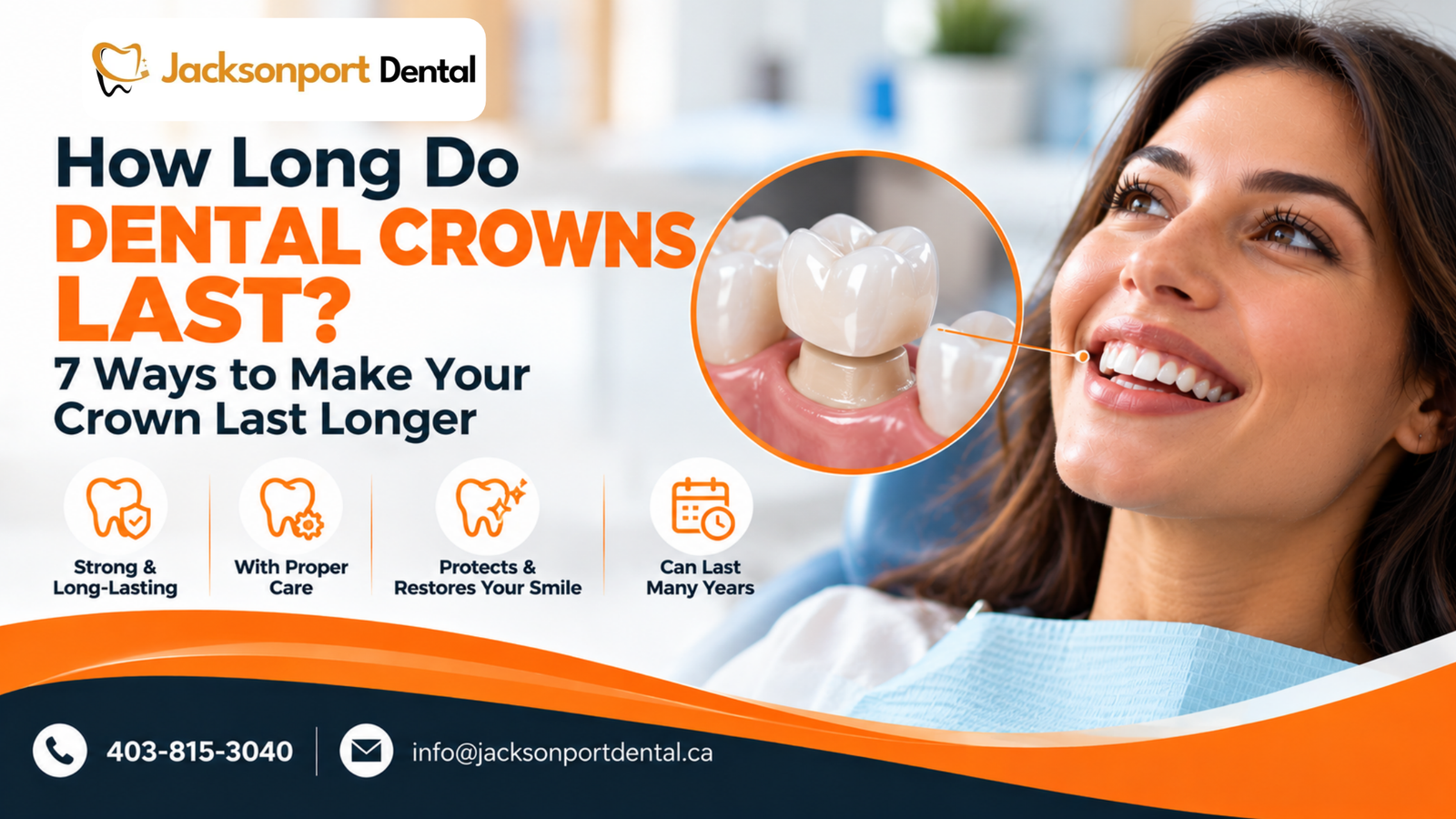
A dental crown commonly lasts around 5 to 15 years, and some crowns last considerably longer with good care. Its lifespan depends on the material, location, bite forces, oral hygiene, and the health of the natural tooth underneath. No crown has a guaranteed lifespan, so regular dental examinations are important.
What affects dental crown lifespan?
A crown covers and protects a tooth that is weakened, heavily filled, broken, or treated with a root canal. Crowns may be made from ceramic, zirconia, porcelain-fused-to-metal, or metal alloys. Each material has different strengths and limitations, and your dentist considers the tooth’s position, bite, appearance, and clinical needs when recommending one.
Chewing pressure, teeth grinding, crown damage, and decay around the crown’s edge can all affect longevity. A crown itself cannot develop a cavity, but the natural tooth around or beneath it can still decay.
Learn more about dental crowns, bridges and veneers or read when crowns and bridges may be needed and how long they can last.
7 ways to make your dental crown last longer
1. Brush twice a day with fluoride toothpaste
Brush for two minutes, morning and night, using a soft-bristled toothbrush and fluoride toothpaste. Pay attention to the gumline where the crown meets the natural tooth. Plaque left around this edge can contribute to gum inflammation and decay near the crown margin.
2. Clean between your teeth every day
Floss or use an interdental cleaner daily to remove plaque and food debris from the sides of the crowned tooth. Clean gently rather than snapping floss forcefully against the gum. Ask your dental team to demonstrate a technique if you are unsure.
See our information on professional teeth cleaning and oral hygiene.
3. Avoid chewing ice and very hard objects
Ice, hard candy, popcorn kernels, pens, and other hard objects can chip or crack some crown materials. Do not use your teeth to open packaging or bite non-food items. Follow any food advice specific to your crown.
4. Be careful with sticky or very chewy foods
Very sticky sweets and chewy foods can sometimes pull at a crown, particularly if it is already loose or the cement has weakened. If a crown feels unstable, avoid chewing on that side and arrange a dental assessment.
5. Address teeth grinding or clenching
Grinding and clenching can place excessive force on a crown and the tooth underneath. If you wake with jaw soreness or notice worn teeth, discuss it with your dentist. A professionally fitted night guard may be appropriate for some patients. Learn about bite guards and splints.
6. Keep up with dental exams and professional cleanings
Routine visits allow your dentist to check the crown’s edges, stability, bite, surrounding gums, and the natural tooth underneath. Your recommended recall schedule depends on your oral health and risk factors.
Explore comprehensive dental exams and why regular dental checkups matter.
7. Get a damaged or loose crown checked promptly
Do not ignore a crown that feels different, catches food, has a rough or sharp edge, or moves when you bite. Do not use household glue or attempt a permanent repair at home. If the crown comes off, keep it safe and contact your dentist for instructions.
If you have significant pain, swelling, or a sudden dental problem, contact a dentist promptly. Learn more about emergency dental services.
Signs your dental crown may need attention
A crown does not automatically need replacing because it is several years old. Arrange an examination if you notice:
- A crack, chip, or visible damage to the crown.
- A loose crown or a change in how your teeth fit together.
- New or persistent sensitivity, pain, or discomfort when chewing.
- Food repeatedly catching around the crown or gumline.
- Swollen, tender, or bleeding gums around the restored tooth.
- An unpleasant taste or odour that persists around the area.
These symptoms can have different causes and do not always mean the crown must be replaced. Your dentist can assess whether it can be monitored, repaired, or needs replacement. You can also read more about extending the life of a dental crown.
Can a dental crown last 20 years?
Yes, some crowns remain functional for 20 years or longer, but that is not guaranteed. Material, crown design, the condition of the original tooth, bite pressure, grinding habits, oral hygiene, and regular professional care all influence longevity. Its age alone does not determine whether replacement is necessary.
If you are comparing restoration options, read dental crowns vs. veneers.
Dental crown care in NE Calgary
If you live in NE Calgary—including Cityscape, Cornerstone, Skyview Ranch, Savanna, or nearby communities—Jacksonport Dental can assess a crown that feels uncomfortable, looks damaged, or needs a routine review. The right recommendation depends on the crown, the tooth underneath, and your oral health.
Meet our dental team or learn why patients choose Jacksonport Dental.
Frequently asked questions
How often should a dental crown be checked?
Your dentist can check your crown during routine dental examinations. The timing depends on your oral health, gum condition, and risk of decay or other problems.
Can a tooth under a crown still get a cavity?
Yes. Decay can develop around the crown’s edge or in exposed natural tooth structure. Brushing, daily interdental cleaning, and regular examinations help reduce risk.
Should I replace a crown if it is more than 10 years old?
Not necessarily. Age alone does not determine whether a crown needs replacing. Your dentist will assess its fit, condition, the surrounding gums, and the tooth underneath.
What should I do if my crown comes loose?
Avoid chewing on that side, keep the crown safe if it comes off, and contact your dentist. Do not use household glue or try to permanently cement it yourself.
Protect your crown with the right dental care
Have a damaged, loose, or uncomfortable crown—or simply due for a checkup? The team at Jacksonport Dental can assess your tooth and discuss the next steps.
Request an AppointmentCall 403-815-3040
Email: info@jacksonportdental.ca
Jacksonport Dental
124-3730 104 Ave NE, Calgary, AB T3N 0T1