
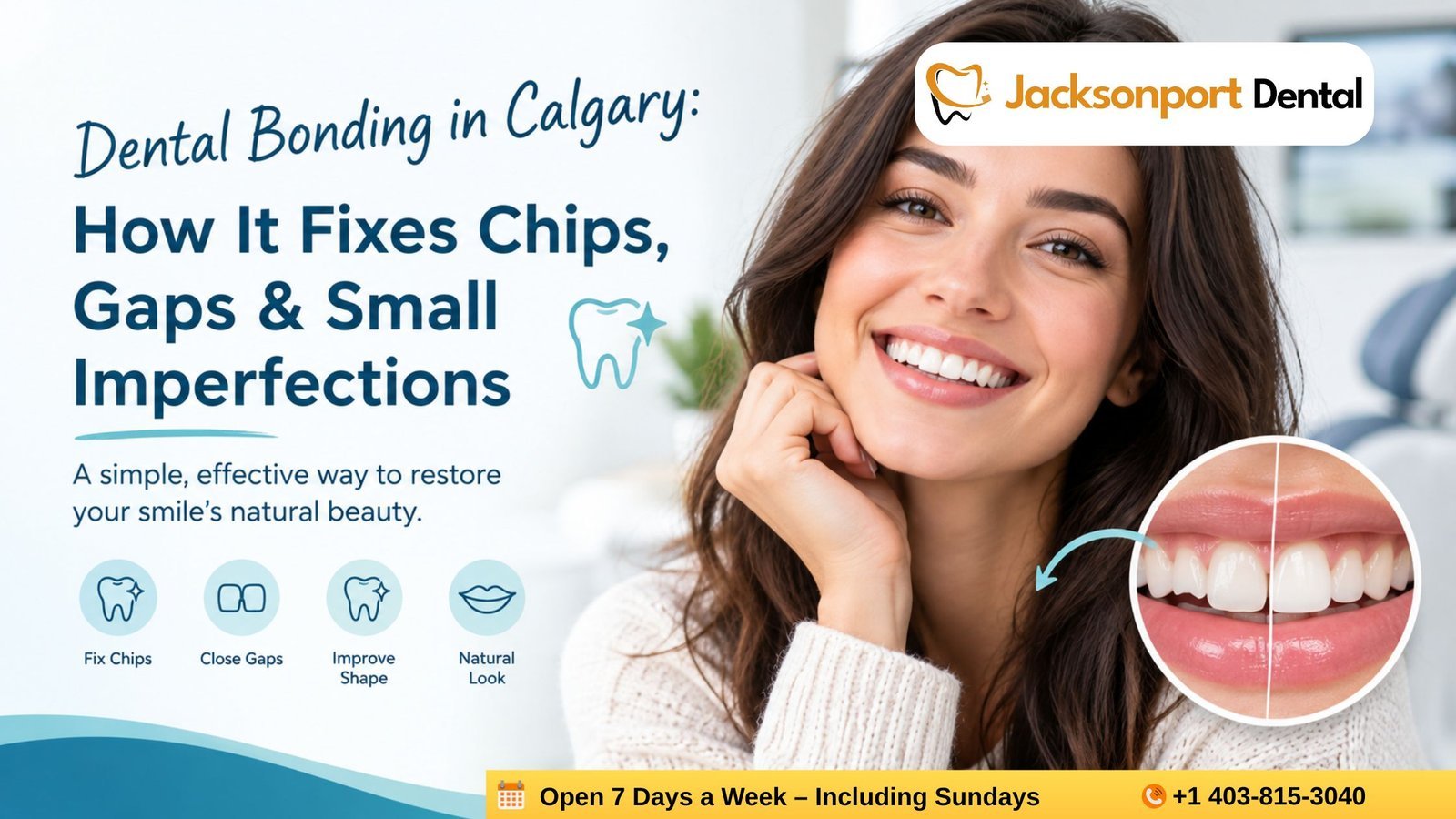
A chipped front tooth, a small gap between your teeth, or an uneven tooth edge can affect more than just your smile. Even a minor imperfection can make you feel hesitant to smile, speak confidently, or appear in photos.
The good news is that some of these concerns can be corrected with a relatively conservative cosmetic treatment called dental bonding.
For patients considering dental bonding in Calgary, tooth bonding may be an option for improving the appearance of teeth with small chips, gaps, discoloration, or changes in shape. The treatment uses a tooth-coloured composite resin that is carefully applied, shaped, and bonded to the tooth.
But is dental bonding right for you? Let’s look at what the treatment can fix, how it works, how long it may last, and when another treatment may be a better choice.
What Is Dental Bonding and What Can It Fix?
Dental bonding is a cosmetic and restorative dental procedure in which a tooth-coloured composite resin is applied, shaped, and hardened on a tooth to improve its appearance or repair minor damage.
Depending on the condition of the tooth, cosmetic dental bonding may help address:
- Small chips or worn tooth edges
- Minor gaps between teeth
- Slightly uneven tooth shapes
- Small surface imperfections
- Certain areas of discoloration
- Minor changes in tooth length or contour
- Some areas of exposed tooth structure
However, bonding is not the right solution for every dental concern. The size and location of the problem, the health of the tooth, your bite, and the amount of tooth structure involved all need to be considered.
If a tooth is painful, significantly fractured, or affected by decay, your dentist may recommend a different treatment after examining it.
How Does Tooth Bonding Work?
One reason patients consider tooth bonding is that it can often provide a relatively straightforward way to improve the appearance of a tooth without requiring an extensive restoration.
The exact process varies depending on your dental needs, but a typical bonding appointment involves several steps.
1. Examination and Treatment Planning
Your dentist first examines the tooth and surrounding teeth. This helps determine whether bonding is appropriate and whether there are underlying concerns that need to be addressed first.
For example, a tooth that appears chipped may have a deeper fracture that requires more than cosmetic repair. Identifying the cause and extent of the problem is an important part of treatment planning.
2. Selecting the Tooth Shade
If tooth-coloured composite resin is being used, the shade is selected to blend as naturally as possible with the surrounding teeth.
This is particularly important when bonding is being performed on a visible front tooth, where even small differences in colour or shape can affect the overall appearance of your smile.
3. Preparing the Tooth
The tooth surface is carefully prepared so that the bonding material can adhere properly. Your dentist works to maintain a clean and controlled treatment area throughout the procedure.
4. Applying the Composite Resin
A tooth-coloured composite material is placed onto the tooth. The dentist carefully shapes the material to restore the tooth’s contour, improve its appearance, or repair the affected area.
5. Hardening the Material
A curing light is generally used to harden the composite resin. Light-activated resin composites are commonly used in direct restorative dentistry.
6. Shaping and Polishing
Once the material has hardened, the dentist refines its shape and bite relationship before polishing the surface. The goal is to create a result that looks natural and functions comfortably with your surrounding teeth.
Dental Bonding for Chipped Teeth
A small chip can happen surprisingly easily. An accidental impact, biting into something hard, sports, or everyday wear can all contribute to a chipped tooth.
For a chipped tooth repair, dental bonding may be considered when the damage is relatively minor and the underlying tooth remains healthy.
Before recommending bonding, your dentist may consider:
- How much tooth structure has been lost
- Whether the tooth is painful or sensitive
- Whether the nerve or deeper tooth structure is affected
- Where the chip is located
- How much biting pressure the tooth receives
- Whether there are signs of decay
- Whether the tooth has a larger crack or fracture
A small chip and a significantly fractured tooth are very different problems. While bonding may work well for some minor damage, a larger fracture may require a more durable restoration.
If you have recently chipped a tooth and are unsure what to do next, an examination can help identify the most appropriate treatment before the damage becomes more complicated.
For additional information about restorative treatment options, you can explore dental fillings at Jacksonport Dental.
Can Dental Bonding Close Gaps Between Teeth?
Small spaces between teeth can sometimes be improved with cosmetic dental bonding. Instead of moving the teeth, your dentist adds tooth-coloured composite resin to carefully change the shape and proportions of the teeth.
The resin can be shaped along the sides of selected teeth to make a small gap appear less noticeable and create a more balanced smile.
However, bonding is not necessarily the best solution for every gap. The cause and size of the space matter. A gap may be related to tooth position, missing teeth, bite concerns, or other underlying factors.
If the space is primarily an orthodontic concern, treatments such as Invisalign or other orthodontic options may be more appropriate.
A dental examination allows your dentist to assess the gap and discuss which approach is most suitable for your individual smile.
How Long Does Composite Bonding Last?
One of the most common questions patients have about composite bonding in Calgary is how long the result will last.
There is no single lifespan that applies to every bonded tooth. The durability of bonding depends on several factors, including where the bonding is placed, how much material is used, your bite, and your everyday habits.
Factors that can affect the longevity of dental bonding include:
- The location of the bonded tooth
- The size of the restoration
- Your natural bite and chewing forces
- Teeth grinding or clenching
- Eating habits
- Oral hygiene and regular dental care
- The condition of the underlying tooth
- Exposure to staining foods and beverages
Composite resin can experience wear, staining, chipping, or fracture over time, particularly when it is exposed to significant biting forces.
Taking care of your bonded teeth and maintaining regular dental examinations can help your dentist monitor the restoration and identify any changes early.
How Can You Protect Dental Bonding?
Good daily habits can help protect your bonded teeth and maintain their appearance.
- Brush twice a day with fluoride toothpaste.
- Clean between your teeth every day.
- Avoid using your teeth to open packages or bite hard objects.
- Be mindful of biting very hard foods with bonded front teeth.
- Tell your dentist if you grind or clench your teeth.
- Attend regular dental examinations and professional cleanings.
If you already have bonding and notice a chip, rough edge, change in colour, or discomfort, have the area evaluated rather than attempting to repair it yourself.
Dental Bonding vs. Veneers: Which Is Better?
Dental bonding and veneers can both improve the appearance of teeth, but they are different treatments and are not interchangeable.
Dental bonding uses composite resin that is applied and shaped directly on the tooth. It can be useful for relatively small cosmetic changes and minor repairs.
Dental veneers are custom-made restorations designed to cover the front surface of a tooth. They may be considered when a patient wants to address broader cosmetic concerns.
Your dentist may consider several factors when comparing the two options:
- How much tooth structure needs to be changed
- Whether the tooth has existing damage
- The desired cosmetic result
- Your natural bite
- The location of the tooth
- Long-term maintenance requirements
- Your treatment preferences and budget
The most extensive treatment is not automatically the best treatment. When appropriate, a conservative option that addresses the specific concern may be preferable.
If you’re exploring broader cosmetic treatment options, visit our page about crowns, bridges and veneers to learn more.
Is Dental Bonding Right for You?
You may be a candidate for dental bonding if you have a relatively small cosmetic or structural concern and the affected tooth and surrounding gums are healthy.
However, bonding may not be appropriate when there is significant underlying damage or when the tooth requires more substantial support.
Your dentist may recommend another treatment if you have:
- Extensive tooth damage
- Significant tooth decay
- A major fracture
- Severe bite problems
- Heavy grinding or clenching
- A need for substantial structural reinforcement
In some situations, a dental filling, crown, veneer, orthodontic treatment, or another restorative approach may provide a more appropriate solution.
The first step is an examination. Your dentist can evaluate the tooth, understand what you want to change, and explain the advantages and limitations of the available options.
Dental Bonding in NE Calgary
If you’re searching for dental bonding in Calgary, location and convenience can be important—especially when you need follow-up care or want to maintain regular dental visits.
Jacksonport Dental provides general, restorative, and cosmetic dental care for patients in NE Calgary and surrounding communities, including Cityscape, Cornerstone, Skyview Ranch, and Savanna.
Whether you’re interested in repairing a small chip, improving the appearance of a minor gap, or exploring options for an uneven tooth, a consultation can help you understand what treatment makes sense for your smile.
Frequently Asked Questions About Dental Bonding
Does dental bonding hurt?
Dental bonding is generally considered a minimally invasive procedure. Whether local anesthetic is needed depends on the tooth being treated and the type of work required. Your dentist can explain what you can expect before treatment begins.
Is dental bonding good for chipped teeth?
Dental bonding can be an effective option for repairing certain minor chips. The dentist will first assess the extent of the damage and determine whether the tooth is healthy enough for bonding. Larger fractures or teeth with deeper damage may require a different restoration.
Can dental bonding close a gap between teeth?
Yes. Dental bonding can sometimes improve the appearance of a small gap by adding tooth-coloured composite resin to the sides of the teeth. However, larger spaces or gaps caused by tooth positioning, bite concerns, or missing teeth may require orthodontic or restorative treatment.
Does dental bonding look natural?
When properly matched, shaped, and polished, tooth-coloured composite resin can blend naturally with the surrounding teeth. The final appearance depends on factors such as the condition of the tooth, the location of the bonding, and the treatment technique.
Can dental bonding stain?
Composite resin can become discoloured over time. How noticeable staining becomes can depend on the material, location of the bonding, oral hygiene, and exposure to staining foods and beverages. Your dentist can recommend ways to help maintain the appearance of your bonded teeth.
How do I know whether I need bonding, veneers, or a crown?
The appropriate treatment depends on the amount of tooth structure involved, the condition of the tooth, your bite, and your cosmetic goals. A dental examination allows your dentist to assess the tooth and explain which option is most appropriate.
How long does dental bonding take?
The time required depends on how many teeth are being treated and the complexity of the procedure. Minor bonding treatments can often be completed relatively quickly, while more involved cosmetic work may require additional planning or appointments.
Can dental bonding be repaired if it chips?
In some cases, chipped or damaged bonding can be repaired or replaced. Your dentist should examine the area to determine whether the composite can be repaired or whether a different restoration would provide a more predictable result.
When Should You See a Dentist About a Chipped or Damaged Tooth?
Not every small chip is an emergency, but you shouldn’t ignore a tooth that has suddenly changed.
Arrange a dental assessment if you notice:
- Persistent tooth pain
- New or worsening sensitivity
- A large piece of tooth has broken off
- A visible crack extending through the tooth
- Pain when biting or chewing
- Swelling around the tooth or gums
- A sharp edge that repeatedly cuts your tongue or cheek
- A change in the appearance or position of the tooth after an injury
Prompt assessment can help determine the extent of the problem and prevent a minor concern from becoming more complicated.
If you experience significant dental pain, swelling, trauma, or other urgent symptoms, contact a dental professional promptly. For urgent dental concerns, you can also learn more about emergency dental services at Jacksonport Dental.
Improve Your Smile With a Treatment That Fits Your Needs
A small imperfection doesn’t necessarily mean you need an extensive cosmetic procedure. For the right patient, dental bonding can provide a conservative way to repair minor chips, improve tooth shape, and address certain small gaps.
The most important step is determining whether bonding is actually the right treatment for your teeth. A professional assessment can identify underlying problems and help you compare bonding with alternatives such as veneers, crowns, fillings, or orthodontic treatment.
If you’re looking for dental bonding in Calgary, Jacksonport Dental can help you explore your options and develop a treatment approach based on your individual smile and oral health needs.
Jacksonport Dental serves patients throughout NE Calgary, including nearby communities such as Cityscape, Cornerstone, Skyview Ranch, and Savanna.
Helpful Dental Resources
If you’re researching cosmetic or restorative dental treatment, these resources may also be helpful: