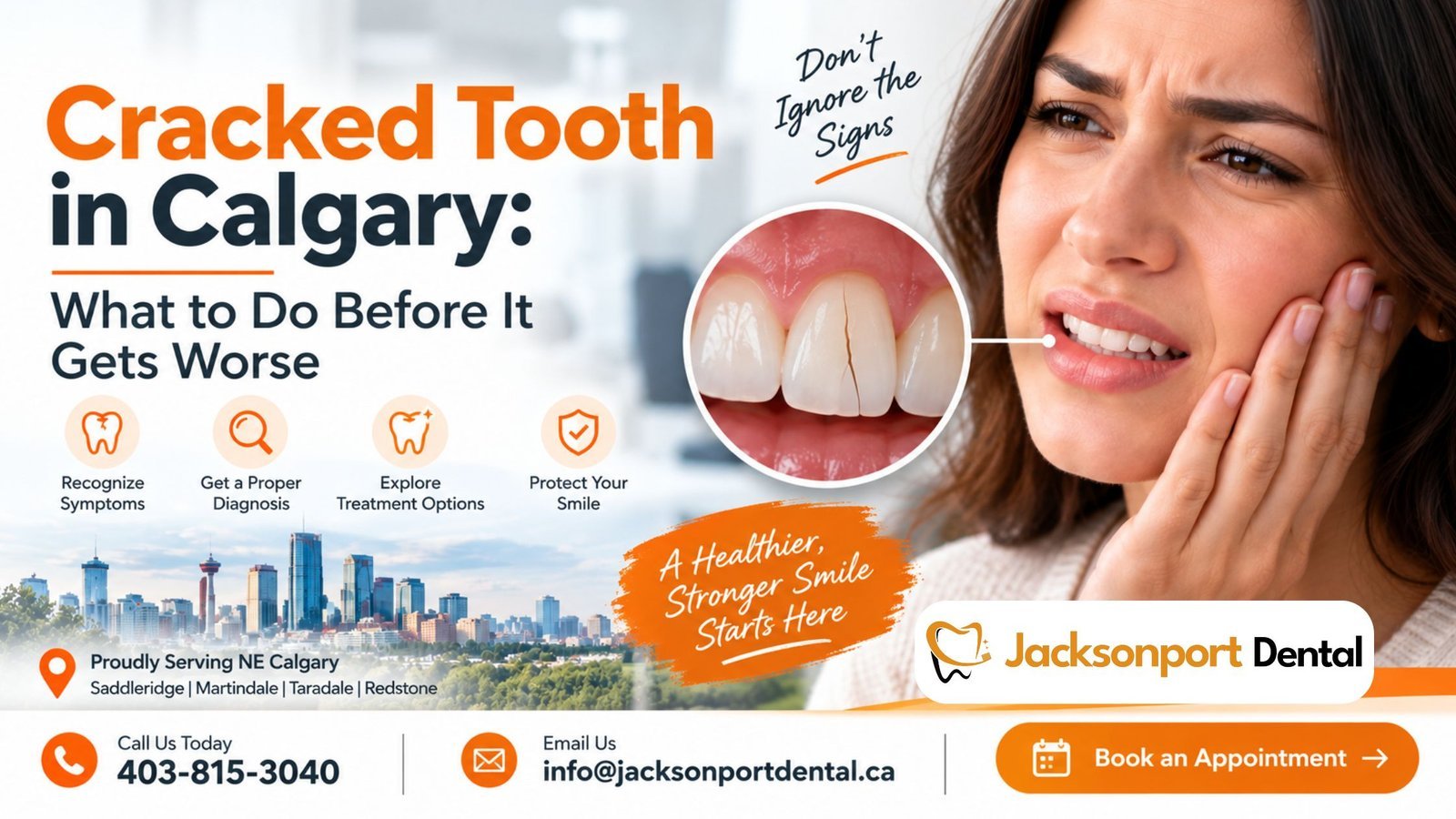
A cracked tooth can start with something as simple as a sharp sensation when you bite into food. Sometimes, there is no obvious pain at all. That can make it tempting to ignore the problem and hope it goes away.
Unfortunately, a cracked tooth does not usually repair itself. Depending on the location and severity of the crack, delaying treatment can allow the damage to progress and potentially make the tooth more difficult to restore.
If you’re experiencing cracked tooth symptoms in Calgary, understanding what to do next can help protect your tooth and avoid unnecessary complications.
What Should You Do If You Have a Cracked Tooth?
If you suspect you have a cracked tooth, avoid chewing on the affected side, keep the area clean, and arrange a dental examination as soon as possible. Do not try to glue or repair the tooth yourself.
If you have severe pain, swelling, bleeding, or significant dental trauma, seek urgent dental care.
Until you can see a dentist:
- Avoid chewing on the affected tooth, especially hard or crunchy foods.
- Rinse your mouth gently with water to help keep the area clean.
- Continue brushing carefully around the affected tooth.
- Avoid very hot or cold foods and drinks if they trigger sensitivity.
- If a piece of tooth has broken off, save it and bring it to your dental appointment.
- If the tooth was injured, follow your dentist’s advice about protecting the area.
- Arrange a dental examination promptly, even if the pain seems to disappear.
A crack can be difficult to see at home, and the absence of pain does not necessarily mean the tooth is healthy.
What Causes a Cracked Tooth?
Teeth are strong, but they are exposed to repeated biting forces every day. Over time, certain factors can increase the risk of cracks.
Common causes of a cracked tooth include:
- Biting down on hard foods or objects
- Teeth grinding or clenching
- An injury or blow to the mouth
- Large or older dental restorations
- Normal wear over time
- Sudden changes in biting forces
- Using your teeth to open packages or bite non-food objects
A tooth can also develop a crack without one obvious event. You may simply notice discomfort one day while eating or biting down.
Cracked Tooth Symptoms to Watch For
Cracked tooth symptoms can vary significantly from person to person. Some cracks cause obvious discomfort, while others are difficult to detect without a professional dental examination.
Possible warning signs include:
- Pain when biting or chewing
- Pain that occurs when you release your bite
- Sensitivity to cold or hot foods and drinks
- Intermittent tooth pain
- A sharp sensation when chewing
- Pain that seems difficult to locate
- Swelling around the affected tooth
- A visible crack or line on the tooth
- A piece of the tooth breaking away
- Discomfort that comes and goes
One particularly frustrating feature of a cracked tooth is that symptoms may not be constant.
You might feel completely comfortable for several hours and then experience a sudden sharp sensation while eating. That inconsistency can make it easy to postpone an appointment.
Are All Tooth Cracks the Same?
No. The type, location, depth, and direction of a crack can make a significant difference to diagnosis and treatment.
Craze Lines
Small surface lines, sometimes called craze lines, can occur in teeth and may not cause symptoms. They are different from deeper structural cracks.
Fractured Cusp
A portion of the chewing surface can break away, sometimes around a large filling. Depending on the extent of the damage, the tooth may still be restorable.
Cracked Tooth
A crack can extend from the chewing surface toward the root. The prognosis and treatment options depend on how far the crack extends and whether important internal structures are involved.
Split Tooth
A tooth that has separated into distinct segments has more extensive damage and may require complex treatment or extraction depending on the circumstances.
This is why simply looking at a tooth in the mirror cannot reliably tell you how serious the problem is.
What Is the Treatment for a Cracked Tooth?
There is no single tooth crack treatment that works for every patient. Your dentist will assess the tooth and determine the extent of the damage before recommending treatment.
Depending on the situation, treatment may include dental fillings or bonding, a dental crown, root canal treatment, or tooth extraction.
Dental Filling or Bonding
For certain minor areas of damage, a tooth-coloured restoration may be appropriate. Your dentist will determine whether the remaining tooth structure can support this type of restoration.
Learn more about dental fillings at Jacksonport Dental .
Dental Crown
A crown may be recommended when a tooth requires additional protection and structural support. The appropriate restoration depends on the extent and location of the damage.
You can learn more about crowns, bridges and veneers at Jacksonport Dental .
Root Canal Treatment
If the crack has affected the inside of the tooth and the dental pulp is damaged or infected, root canal treatment may be considered before restoring the tooth.
The appropriate treatment depends on the condition of the tooth and the extent of the damage.
Tooth Extraction
If a crack extends too deeply or the tooth cannot be predictably restored, extraction may be necessary.
The goal is not simply to treat the visible line. Your dentist needs to determine why the tooth is cracked, how extensive the damage is, and whether the tooth can be saved.
Need to Have a Cracked Tooth Checked?
Don’t wait for a cracked tooth to become more painful. An early dental examination can help determine the extent of the damage and what treatment options may be available.
Request an Appointment Online Or call Jacksonport Dental at 403-815-3040 .
Can a Cracked Tooth Be Repaired?
Sometimes, yes. However, whether a cracked tooth can be repaired depends on the location, depth, direction, and severity of the crack.
A minor damaged area may be treatable with a restoration, while a deeper crack extending toward or below the gum line may have a much less predictable outcome.
This is why early cracked tooth repair can be important. If you notice a new crack or develop unexplained pain when biting, don’t wait for severe symptoms before seeking professional advice.
A dental examination gives your dentist an opportunity to evaluate the tooth and explain whether it can be restored and which treatment may provide the best result.
What Happens During a Cracked Tooth Examination?
When you visit a dentist because you suspect a cracked tooth, the examination will focus on identifying the location and extent of the damage.
Your dentist may:
- Ask when your symptoms started and what triggers them.
- Examine the affected tooth and surrounding gums.
- Check your bite and how the tooth responds to pressure.
- Look for visible cracks, fractures, or damaged areas.
- Assess existing fillings, crowns, or other restorations.
- Take dental X-rays when clinically appropriate.
- Determine whether additional testing or treatment is needed.
Not every crack is visible on a standard dental X-ray. Your dentist may therefore consider your symptoms, clinical examination, bite response, and other diagnostic findings when evaluating the tooth.
The sooner the problem is assessed, the sooner you can understand what is happening and what options may be available.
Why You Shouldn’t Ignore a Cracked Tooth
A cracked tooth can sometimes feel manageable at first. You may only notice a brief twinge when eating or occasional sensitivity to cold drinks.
That doesn’t necessarily mean the problem is minor.
Every time you bite down, pressure is placed on the tooth. Depending on the type of crack, repeated chewing forces may cause the damaged areas to move or allow the crack to progress.
A deeper crack can also potentially allow bacteria to reach the inner structures of the tooth, which may contribute to inflammation or infection.
This is why it is better to have a suspected crack assessed rather than waiting for the tooth to become severely painful.
When Is a Cracked Tooth a Dental Emergency?
Not every cracked tooth requires emergency treatment. However, certain symptoms indicate that you should seek dental care promptly.
Contact a dentist as soon as possible if you experience:
- Severe or increasing tooth pain
- Significant sensitivity that does not settle
- Swelling around the tooth or gums
- A large portion of the tooth breaking off
- A tooth becoming loose after an injury
- Bleeding that does not stop
- Signs that may indicate infection
- Trauma involving the tooth, jaw, or surrounding tissues
If you are experiencing urgent dental symptoms, Jacksonport Dental provides emergency dental services for patients who need prompt assessment.
How to Protect Your Teeth From Cracks
While not every cracked tooth can be prevented, a few everyday habits can help reduce unnecessary stress on your teeth.
- Avoid chewing ice or very hard objects.
- Do not use your teeth to open packages or containers.
- Wear an appropriate mouthguard when participating in contact or high-impact sports.
- Tell your dentist if you grind or clench your teeth.
- Maintain regular dental examinations.
- Address damaged or worn restorations when your dentist recommends treatment.
- Seek dental advice if you notice unexplained sensitivity or pain when biting.
Protecting your teeth is particularly important if you already have large restorations, a history of tooth fractures, or habits that place additional pressure on your teeth.
Cracked Tooth Care in NE Calgary
If you’re looking for help with a cracked tooth in Calgary, getting an assessment close to home can make it easier to receive timely care and follow-up treatment.
Jacksonport Dental serves patients throughout NE Calgary and surrounding communities, including Saddleridge, Martindale, Taradale, and Redstone.
If you live in Martindale, you can learn more about dental care in the area through our Martindale dental clinic page.
Choosing a dental clinic is about more than location. You want a team that takes the time to understand your concerns and explain your treatment options clearly.
Learn more about why patients choose Jacksonport Dental or meet our dental professionals on the Jacksonport Dental team page.
What Should You Do While Waiting for Your Appointment?
If your suspected cracked tooth is not causing severe symptoms but you are waiting for an appointment, the priority is to avoid placing additional stress on it.
- Chew on the opposite side of your mouth.
- Choose softer foods if chewing causes discomfort.
- Avoid foods that are extremely hard, sticky, hot, or cold if they trigger symptoms.
- Keep the area clean with gentle brushing.
- Do not attempt to repair or glue the tooth yourself.
- Monitor your symptoms and contact your dentist if they become worse.
If swelling, severe pain, significant bleeding, or other urgent symptoms develop, don’t continue to wait for a routine appointment. Contact a dental professional promptly.
Need to Have a Cracked Tooth Checked?
If you have noticed a crack, broken tooth, sensitivity when biting, or unexplained tooth pain, an examination can help determine what is happening and whether treatment is needed.
Request an Appointment Online Or call Jacksonport Dental at 403-815-3040 .
Frequently Asked Questions About Cracked Teeth
Can a cracked tooth heal on its own?
A structural crack in a tooth does not normally heal like a broken bone. Depending on the type and severity of the crack, dental treatment may be needed to protect the tooth and prevent the damage from progressing.
Is a cracked tooth always painful?
No. Some cracked teeth cause intermittent pain or sensitivity, while others may have very few noticeable symptoms. A lack of pain does not necessarily mean that a cracked tooth is healthy.
Can I wait to treat a cracked tooth?
It is better to have a suspected crack assessed promptly. Continued chewing pressure can potentially worsen certain types of cracks, and treatment options depend on how extensive the damage is.
Can a dentist save a cracked tooth?
Some cracked teeth can be restored, depending on the location and severity of the damage. A deeper or extensive fracture may make the tooth difficult or impossible to save. Your dentist can assess the tooth and explain the available options.
Should I chew on a cracked tooth?
It is best to avoid chewing on the affected side until the tooth has been examined. Hard, crunchy, or sticky foods can place additional stress on a damaged tooth.
Can a cracked tooth cause an infection?
A deeper crack can potentially allow bacteria to reach the inner structures of the tooth. This may lead to inflammation or infection. Pain, swelling, sensitivity, or other changes should be assessed by a dentist.
What happens if a cracked tooth is left untreated?
An untreated crack may become more extensive depending on its location and the forces placed on the tooth. In some cases, what starts as a relatively small problem can eventually require more complex treatment.
How do I know if I have a cracked tooth or just sensitivity?
Tooth sensitivity can have many causes, including worn enamel, gum recession, decay, or a cracked tooth. Pain when biting, pain when releasing your bite, or intermittent symptoms may be associated with a crack, but only a dental examination can determine the cause.
Protect Your Tooth Before a Small Crack Becomes a Bigger Problem
A cracked tooth can be easy to dismiss, particularly when the discomfort comes and goes. But waiting for severe pain isn’t a reliable way to determine whether the tooth is safe.
Early assessment gives your dentist an opportunity to evaluate the damage and determine whether the tooth can be restored. Depending on the situation, treatment may involve a filling or bonding, crown, root canal treatment, or extraction.
The sooner the cause and extent of the crack are understood, the sooner you can make an informed decision about your dental care.
If you’re experiencing cracked tooth symptoms in Calgary, Jacksonport Dental can help you understand what’s happening and discuss the appropriate treatment options.
Jacksonport Dental serves patients throughout NE Calgary, including Saddleridge, Martindale, Taradale, and Redstone.
Ready to Have a Cracked Tooth Checked?
Don’t wait until a small dental concern becomes a bigger problem. If you have noticed a crack, broken tooth, pain when biting, or unexplained sensitivity, schedule an examination with the Jacksonport Dental team.
Request an Appointment Online Prefer to speak with our team? Call 403-815-3040 .
Jacksonport Dental is located at 124-3730 104 Ave NE, Calgary, AB T3N 0T1.
Helpful Dental Resources
If you’re researching treatment options for a damaged or painful tooth, these Jacksonport Dental resources may also be helpful: