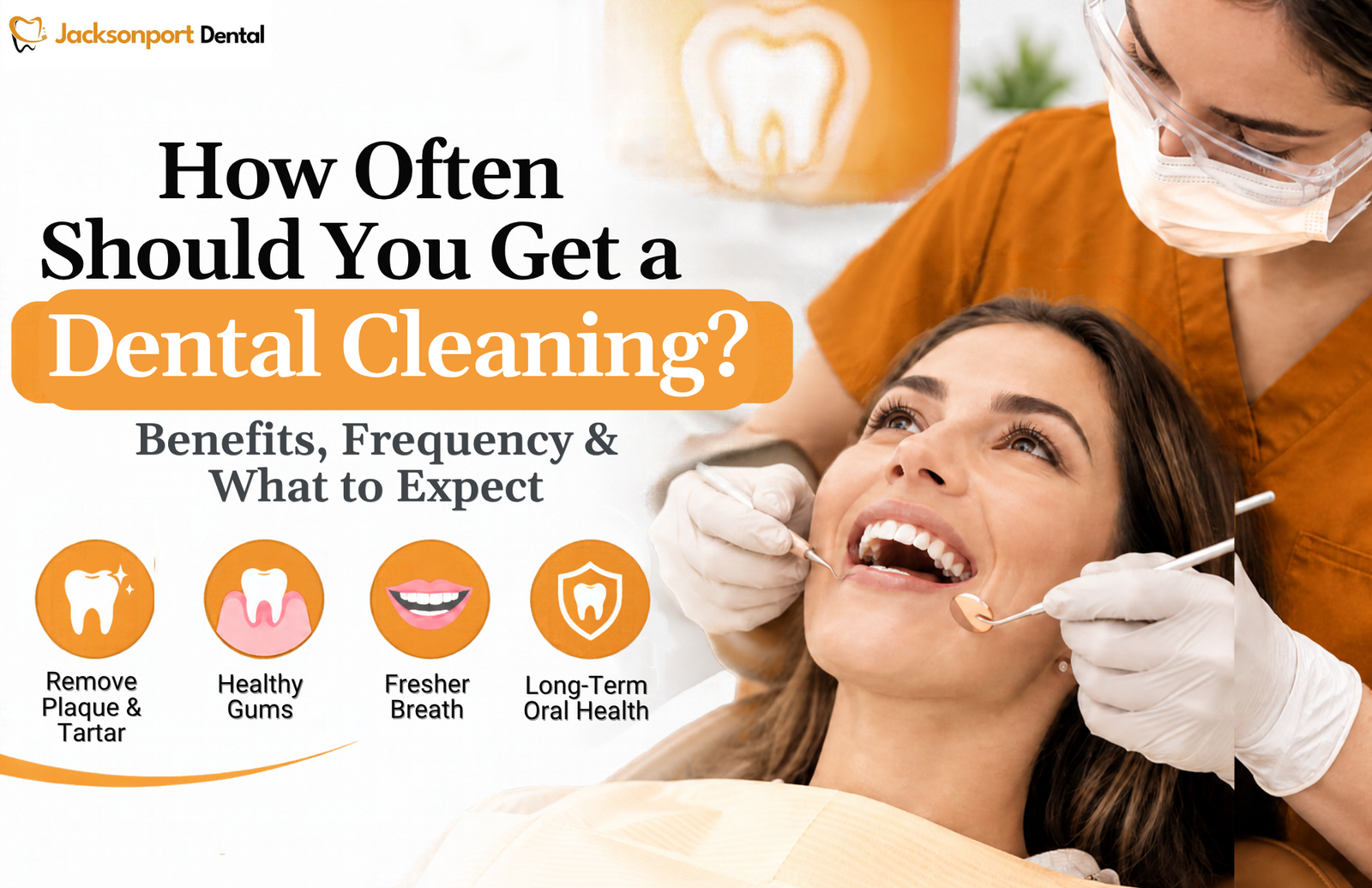
How often should you get a dental cleaning? For many people, a professional dental cleaning every six months is a common starting point, but the right schedule depends on individual oral health needs. Your gum condition, plaque and tartar buildup, dental history, and risk of gum disease can all influence how frequently you should visit a dental professional.
Even if you brush twice a day and floss regularly, some plaque can remain in hard-to-reach areas and eventually harden into tartar. Professional dental cleaning helps remove this buildup, supports healthy gums, and gives your dental team an opportunity to monitor your oral health.
At Jacksonport Dental, we encourage patients to make preventive dental care part of their regular routine. In this guide, you’ll learn how often to get your teeth cleaned, what happens during a cleaning appointment, and how to maintain healthy teeth and gums between visits.
How Often Should You Get Your Teeth Professionally Cleaned?
Many people benefit from a dental cleaning approximately every six months. However, this is a general guideline rather than a fixed rule for everyone.
Your dentist may recommend more frequent professional cleanings if you have:
- A history of gum disease or periodontal treatment
- Significant plaque or tartar buildup
- Bleeding, swollen, or sensitive gums
- Difficulty cleaning certain areas of your mouth
- Medical or lifestyle factors that affect your oral health
- Dental conditions that require closer monitoring
Some patients may need a different appointment schedule depending on their gum health and individual risk factors.
The best way to determine your cleaning frequency is to have your teeth and gums assessed by a dental professional. Your dentist or hygienist can recommend a schedule that suits your needs rather than relying on a one-size-fits-all approach.
Why Is Professional Dental Cleaning Important?
Brushing and flossing are essential, but they may not remove every deposit from your teeth. Professional cleaning reaches areas that can be difficult to maintain at home and helps control hardened tartar.
Here are some important benefits of regular dental cleaning.
1. Helps Remove Plaque and Tartar
Plaque is a sticky film of bacteria that constantly forms on your teeth. Brushing and cleaning between your teeth help remove it before it hardens.
When plaque remains on tooth surfaces, minerals in saliva can cause it to harden into tartar, also called dental calculus. Once tartar forms, a toothbrush cannot remove it effectively.
During professional cleaning, a dental hygienist uses specialized instruments to remove tartar from the teeth and around the gumline.
2. Supports Healthy Gums
Plaque and tartar buildup near the gumline can irritate gum tissue and contribute to gingivitis, an early form of gum disease.
Watch for signs such as:
- Red or swollen gums
- Bleeding when brushing or flossing
- Gum tenderness
- Persistent bad breath
Professional cleaning helps remove deposits that contribute to gum irritation. If gum disease has progressed, your dentist may recommend additional periodontal treatment.
You can learn more about gum disease and its symptoms from the Government of Canada.
3. Helps Reduce the Risk of Tooth Decay
Bacteria in plaque produce acids that can weaken tooth enamel. Over time, this may lead to cavities.
Professional cleaning helps control plaque and tartar buildup, while regular dental examinations allow your dentist to look for signs of tooth decay.
For more information about daily prevention, see the Government of Canada’s oral health recommendations.
4. Helps Keep Your Breath Fresh
Bad breath can sometimes be associated with bacteria, plaque, tartar, and gum problems.
Professional cleaning removes accumulated deposits that can contribute to unpleasant odours. Brushing your tongue, flossing daily, drinking water, and maintaining regular dental visits can also help keep your mouth feeling fresh.
If bad breath continues despite good oral hygiene, speak with your dentist to identify the possible cause.
5. Removes Some Surface Stains
Coffee, tea, and certain foods can leave external stains on your teeth.
During a professional cleaning, your dental hygienist may polish your teeth to remove some surface deposits and staining. This can leave your teeth looking cleaner and feeling smoother.
However, dental cleaning is not the same as teeth whitening. Cleaning removes certain external stains, while whitening treatments are designed to change the colour of natural tooth enamel.
If you are interested in a brighter smile, ask your dental team whether professional whitening is suitable for you.
What Happens During a Professional Dental Cleaning?
If you have never had a professional cleaning, knowing what happens during the appointment can help you feel more prepared.
The exact steps depend on your oral health, but a routine dental cleaning may include the following.
Step 1: Examination of Your Teeth and Gums
Your dental professional may examine your teeth and gums for plaque buildup, inflammation, bleeding, and other concerns.
This assessment helps determine whether you need a routine cleaning or additional care.
Step 2: Plaque and Tartar Removal
The dental hygienist uses specialized instruments, such as hand scalers or ultrasonic equipment, to remove plaque and hardened tartar from your teeth.
This process is called dental scaling. It focuses on deposits around the teeth and gumline.
Step 3: Teeth Polishing
After scaling, your teeth may be polished with a professional tool and polishing paste. This can remove certain surface stains and leave your teeth feeling smoother.
Step 4: Cleaning Between Your Teeth
Your hygienist may clean between your teeth to remove remaining debris and check areas where plaque tends to collect.
Step 5: Personalized Oral Hygiene Advice
Before your appointment ends, your dental team may recommend improvements to your brushing, flossing, or interdental cleaning routine.
You can explore Jacksonport Dental’s teeth cleaning and hygiene services to learn more about professional dental care.
Can a Dentist or Dental Hygienist Remove Tartar?
Yes. A dentist or dental hygienist can remove tartar using professional dental instruments.
Tartar forms when plaque hardens on the teeth. It can develop above or below the gumline, particularly in areas that are difficult to clean thoroughly at home.
Once tartar has formed, brushing and flossing cannot remove it effectively. Professional scaling is needed to remove these hardened deposits.
Avoid trying to scrape tartar off your teeth with sharp household tools. Doing so can injure your gums or damage tooth surfaces. A trained dental professional can assess the buildup and remove it safely.
Can You Remove Tartar by Brushing Your Teeth?
No. Brushing helps remove soft plaque before it hardens, but it cannot remove established tartar.
To reduce plaque buildup between dental visits:
- Brush twice a day for two minutes.
- Use fluoride toothpaste.
- Clean between your teeth daily with floss or another suitable interdental cleaner.
- Replace your toothbrush or brush head when it becomes worn.
- Limit frequent sugary snacks and drinks.
- Follow the cleaning schedule recommended by your dentist.
The American Dental Association explains that cleaning between teeth helps remove plaque from areas a toothbrush cannot reach effectively. Read its guide to dental floss and interdental cleaners.
How Long Does a Dental Cleaning Take?
A routine dental cleaning often takes approximately 30 to 60 minutes, although appointment length can vary.
Your cleaning may take longer if you have significant tartar buildup, gum inflammation, or other dental concerns that need attention.
A deep cleaning may require additional time or more than one appointment, depending on the extent of periodontal disease.
Your dental team can explain how long your appointment is likely to take based on your individual needs.
Does Professional Teeth Cleaning Hurt?
For many people, routine dental cleaning is comfortable. However, some sensitivity or mild discomfort can occur, especially if your gums are inflamed, your tooth roots are exposed, or you have substantial tartar buildup.
You may experience:
- Slight gum tenderness
- Temporary tooth sensitivity
- Minor bleeding if your gums are inflamed
- Discomfort around areas with heavy tartar deposits
Let your hygienist know if you feel uncomfortable during the procedure. They can adjust their approach and discuss ways to make the appointment more comfortable.
What Is the Difference Between Regular Cleaning and Deep Cleaning?
Regular dental cleaning and deep cleaning are different procedures used for different oral health needs.
Regular Dental Cleaning
A routine cleaning removes plaque and tartar from accessible tooth surfaces, including around the gumline. It is part of preventive dental care for maintaining healthy teeth and gums.
Deep Dental Cleaning
Deep cleaning, also known as scaling and root planing, is a periodontal treatment used when gum disease has caused pockets to develop between the teeth and gums.
It involves removing plaque and tartar from below the gumline and smoothing the root surfaces. This helps reduce bacterial deposits and supports gum healing.
Not everyone needs a deep cleaning. Your dentist will assess your gum health and determine whether this treatment is appropriate.
For more details, the American Dental Association explains scaling and root planing for gum disease.
What Should You Do After a Dental Cleaning?
After a routine dental cleaning, most people can return to their usual daily activities.
To maintain your results:
- Brush twice a day with fluoride toothpaste.
- Clean between your teeth every day.
- Drink water regularly.
- Limit frequent sugary snacks and drinks.
- Maintain a balanced diet.
- Follow any specific recommendations from your dental professional.
If you experience sensitivity after your cleaning, it is often temporary. Contact your dental office if you have persistent pain, significant bleeding, or symptoms that concern you.
How Can You Keep Your Teeth Clean Between Dental Visits?
Professional cleaning is important, but your daily habits play an equally important role in maintaining healthy teeth and gums.
Brush Properly Twice a Day
Brush for two minutes in the morning and before bed. Use a soft-bristled toothbrush and fluoride toothpaste, and gently clean all tooth surfaces.
Floss or Clean Between Your Teeth Daily
A toothbrush cannot effectively clean every space between your teeth. Daily flossing or another suitable interdental cleaning method helps remove plaque and food particles from these areas.
Clean Your Tongue
Bacteria can collect on the tongue and contribute to bad breath. Gently clean your tongue as part of your daily oral hygiene routine.
Choose Tooth-Friendly Foods
Limit frequent consumption of sugary foods and acidic drinks. Include a variety of nutritious foods in your diet to support your overall oral health.
Keep Up With Regular Dental Checkups
Even if your teeth feel healthy, routine dental visits can help identify potential problems early and keep your oral hygiene routine on track.
For additional advice, read our related guide on the importance of regular dental cleaning.
When Should You Schedule a Dental Cleaning?
You should consider scheduling a dental appointment if you notice:
- Visible tartar buildup
- Bleeding or swollen gums
- Persistent bad breath
- New or worsening tooth sensitivity
- Rough deposits on your teeth
- A long gap since your last dental visit
You do not need to wait until you experience tooth pain before seeking preventive dental care. Many oral health problems can develop gradually without obvious symptoms.
If you are unsure how frequently you need professional cleaning, your dentist can assess your oral health and recommend an appropriate schedule.
Book Your Dental Cleaning at Jacksonport Dental in Calgary
Keeping your teeth clean involves more than brushing and flossing at home. Professional dental cleanings help remove hardened tartar, support gum health, and allow your dental team to monitor your oral health.
At Jacksonport Dental, we provide preventive dental care and personalized recommendations to help patients maintain healthy smiles.
If you are due for a routine cleaning or have concerns about plaque, tartar, or gum health, our team can help you understand your options.
Visit our teeth cleaning and hygiene services page or contact Jacksonport Dental to arrange your appointment.
Jacksonport Dental
124-3730 104 Ave NE, Unit 124
Calgary, AB T3N 0T1
Phone: (403) 815-3040
Frequently Asked Questions About Dental Cleaning
1. How often should you get a dental cleaning?
Many people benefit from a professional dental cleaning approximately every six months. However, the ideal frequency depends on gum health, tartar buildup, dental history, and individual risk factors.
2. Can a dental cleaning remove tartar completely?
A professional cleaning can remove tartar from the areas being treated. If tartar has accumulated below the gumline or gum disease is present, additional periodontal treatment may be necessary.
3. Is professional teeth cleaning necessary if I brush twice a day?
Yes. Brushing twice daily helps remove soft plaque, but it cannot remove hardened tartar. Professional cleaning helps remove deposits that cannot be effectively removed with a regular toothbrush.
4. How long does a professional dental cleaning take?
A routine dental cleaning often takes around 30 to 60 minutes. The duration depends on the amount of plaque and tartar buildup and your individual dental needs.
5. Does dental cleaning make your teeth whiter?
Professional cleaning can remove some external stains caused by foods and drinks, making your teeth look cleaner and brighter. It does not change the natural underlying colour of your teeth like a whitening treatment can.
6. What happens if you skip dental cleanings?
Skipping recommended dental cleanings can allow plaque and tartar to accumulate. This may increase the risk of gum inflammation, periodontal disease, and other oral health problems.
7. Is deep cleaning the same as regular dental cleaning?
No. Regular cleaning removes plaque and tartar from accessible tooth surfaces. Deep cleaning, or scaling and root planing, treats deposits below the gumline associated with periodontal disease.
8. Can you eat after a dental cleaning?
After a routine cleaning, most people can eat normally. If you received fluoride treatment or another procedure, follow your dental professional’s instructions about when to eat or drink.
Contact Jacksonport Dental – Book Your Dental Cleaning in Calgary
Ready to schedule your next professional dental cleaning? Visit Jacksonport Dental for preventive dental care and personalized recommendations to help maintain a healthy smile.
Jacksonport Dental
- Address: 124-3730 104 Ave NE, Unit 124, Calgary, AB T3N 0T1
- Phone: (403) 815-3040
- Website: https://jacksonportdental.ca/
- Contact Page: Book an Appointment
Contact our team today to schedule your dental cleaning and take the next step towards healthier teeth and gums.