
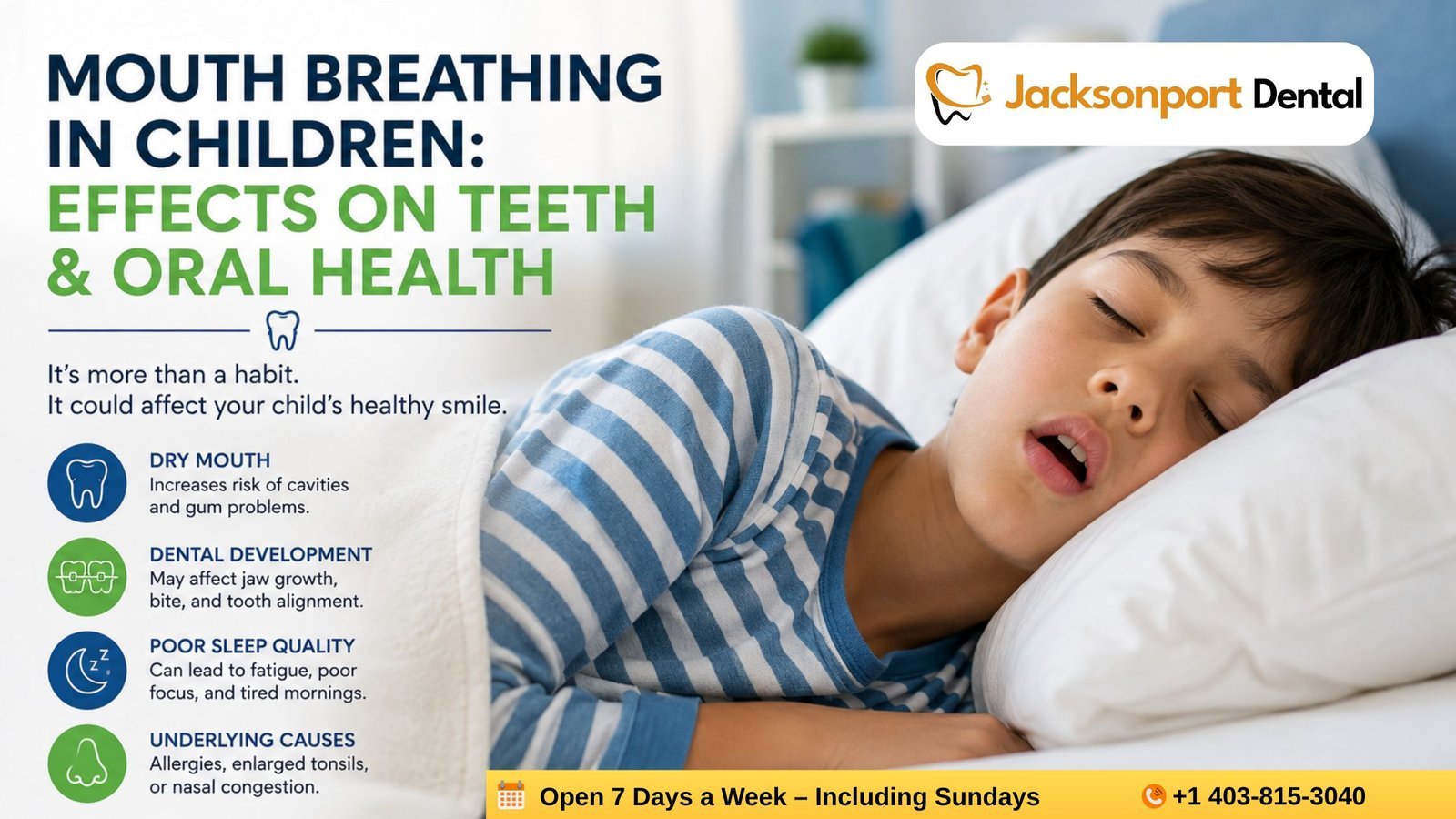
For many parents, mouth breathing may seem like a harmless habit—especially when a child has a stuffy nose or is sleeping deeply. But if your child regularly breathes through their mouth instead of their nose, it may be worth discussing with a dental professional.
Persistent mouth breathing can contribute to dry mouth, changes in oral hygiene, gum irritation and, in some children, differences in how the teeth and jaws develop.
So, can mouth breathing affect a child’s teeth? Yes. Long-term mouth breathing may affect the oral environment and can be associated with dental and facial development concerns, particularly when it occurs during childhood.
What Is Mouth Breathing?
Mouth breathing happens when a child regularly breathes through their mouth rather than primarily through their nose.
Occasional mouth breathing is usually not concerning. Children may breathe through their mouths when they have:
- A cold or blocked nose
- Seasonal allergies
- Nasal congestion
- Enlarged tonsils or adenoids
- Certain airway or breathing difficulties
The concern is persistent mouth breathing, especially when it occurs during sleep.
If you notice your child frequently sleeping with their mouth open, snoring, waking with a dry mouth or experiencing other breathing concerns, it is worth mentioning this to their healthcare or dental provider.
Can Mouth Breathing Affect a Child’s Teeth?
Yes. Persistent mouth breathing can contribute to changes in the oral environment and may be associated with dental problems.
When a child breathes through their mouth, saliva can evaporate more quickly. Saliva plays an important role in protecting teeth, washing away food particles and helping maintain a healthy oral environment.
Reduced moisture can contribute to:
- Dry mouth
- Bad breath
- Increased plaque buildup
- Higher risk of tooth decay
- Gum irritation
- Difficulty maintaining good oral hygiene
Mouth breathing may also be associated with changes in tongue position and the way the lips, cheeks and tongue interact with developing teeth and jaws.
How Mouth Breathing May Affect Dental Development
During childhood, the teeth and jaws are still developing. Persistent changes in oral posture or breathing patterns may be associated with changes in dental alignment and facial growth.
Some children who consistently breathe through their mouths may develop:
- Crowded or crooked teeth
- Changes in bite
- An open bite
- Increased dental spacing
- A narrower upper dental arch
- Changes in normal tongue and lip posture
This does not mean that every child who mouth breathes will develop these problems. Dental development is influenced by many factors, including genetics, oral habits, airway conditions and overall growth.
Signs Your Child May Be Mouth Breathing
Mouth breathing is not always obvious during the day. Some children develop the habit gradually, while others mainly breathe through their mouths while sleeping.
Parents may notice signs such as:
- Frequently sleeping with the mouth open
- Dry lips or a dry mouth in the morning
- Bad breath despite regular brushing
- Snoring or noisy breathing during sleep
- Drooling while sleeping
- Frequent nasal congestion
- Difficulty breathing comfortably through the nose
- Changes in the position or appearance of the front teeth
- Gum irritation or increased plaque buildup
One symptom by itself does not necessarily indicate a dental problem. However, several signs occurring together may be a reason to have your child’s breathing and oral health assessed.
Why Does Mouth Breathing Happen in Children?
There can be several reasons why a child breathes through their mouth. Common causes include nasal congestion from colds or allergies, enlarged tonsils or adenoids, and other conditions that make nasal breathing difficult.
Because the underlying cause may not be dental, a child’s care may involve more than one healthcare professional. A dentist can evaluate the child’s teeth, gums, bite and oral development and recommend further assessment when appropriate.
How Can Mouth Breathing Affect Kids’ Oral Health?
One of the most important concerns is dry mouth. Saliva helps protect teeth by clearing food debris and supporting the mouth’s natural defenses against harmful bacteria.
When the mouth remains open for long periods, especially during sleep, the oral tissues can become dry. This can make it easier for plaque to accumulate and may increase the risk of cavities and gum problems.
1. Increased Risk of Tooth Decay
A consistently dry oral environment can make it harder for saliva to perform its protective role. Combined with frequent snacking, sugary drinks or inconsistent brushing, this may increase a child’s risk of cavities.
2. Gum Irritation
Dry oral tissues can become uncomfortable or irritated. If plaque accumulates around the gum line, children may also experience redness, swelling or bleeding during brushing.
Good daily oral hygiene and regular dental examinations can help identify these concerns early.
3. Changes in Bite and Tooth Alignment
Long-term mouth breathing may be associated with changes in oral posture and jaw development. In some children, this can contribute to bite or alignment concerns that may require monitoring as they grow.
Early dental assessments allow a dentist to monitor these changes rather than waiting until a more noticeable orthodontic concern develops.
What Can Parents Do About Mouth Breathing?
If you suspect that your child regularly mouth breathes, the first step is to identify why it is happening rather than simply trying to stop the habit.
- Observe when it happens: Pay attention to whether your child mouth breathes during the day, at night or both.
- Look for related symptoms: Notice snoring, nasal congestion, dry mouth, bad breath or sleep-related concerns.
- Maintain good oral hygiene: Encourage twice-daily brushing with fluoride toothpaste and regular cleaning between the teeth as appropriate for your child’s age.
- Schedule regular dental visits: Dental examinations can help monitor tooth development, gum health and bite changes.
- Discuss persistent breathing concerns: If mouth breathing continues, speak with your child’s healthcare provider or dentist about whether further evaluation is appropriate.
Parents should not attempt to force a child to breathe through their nose without understanding the underlying cause. If nasal breathing is difficult, the child may need appropriate medical evaluation.
When Should Your Child See a Dentist?
Consider scheduling a dental assessment if your child regularly mouth breathes or you notice changes in their teeth, gums or bite.
A dental visit may be particularly useful if mouth breathing is accompanied by:
- Frequent cavities
- Persistent bad breath
- Bleeding or swollen gums
- Significant dry mouth
- Snoring or disrupted sleep
- Crowding or noticeable changes in tooth alignment
- Difficulty keeping the teeth clean
Early evaluation does not necessarily mean your child will need treatment. In many cases, the goal is simply to understand what is happening, monitor development and address problems before they become more complicated.
How Can Parents Support Their Child’s Oral Health?
If your child is a persistent mouth breather, maintaining good oral hygiene becomes especially important. Parents can help protect their child’s developing smile with simple daily habits.
Encourage Regular Brushing
Help your child brush their teeth twice a day with fluoride toothpaste appropriate for their age. Younger children may need supervision or assistance to make sure all tooth surfaces are cleaned properly.
Clean Between the Teeth
Flossing or another age-appropriate interdental cleaning method can help remove plaque from areas that a toothbrush cannot reach.
Encourage Water
Water can help keep the mouth comfortable and is a better everyday beverage choice for children’s teeth than sugary drinks.
Keep Regular Dental Appointments
Routine dental examinations allow your dentist to monitor your child’s teeth, gums, bite and overall oral development.
Parents can also learn more about children’s dental services and what to expect during a child’s first dental visit in our guide to a child’s first dental appointment.
Frequently Asked Questions About Mouth Breathing in Children
Can mouth breathing affect a child’s teeth?
Yes. Persistent mouth breathing can contribute to a dry-mouth environment, which may increase the risk of plaque buildup, tooth decay and gum irritation. It may also be associated with changes in oral posture, bite and dental development in some children.
Does mouth breathing cause crooked teeth?
Mouth breathing may be associated with changes in tongue and lip posture that can influence dental development. However, crooked or crowded teeth can have many causes, including genetics and normal differences in jaw development.
Does mouth breathing cause cavities in children?
Mouth breathing can contribute to dry mouth, which may reduce some of saliva’s natural protective effects. This can potentially increase the risk of cavities, particularly when combined with other risk factors such as frequent sugary snacks or inadequate brushing.
Is mouth breathing normal for children?
Occasional mouth breathing can happen when a child has a cold, allergies or temporary nasal congestion. Persistent mouth breathing, particularly during sleep, should be discussed with a dentist or healthcare professional.
Should I be concerned if my child sleeps with their mouth open?
Sleeping with the mouth open can have several possible causes. If it happens regularly or is accompanied by snoring, dry mouth, restless sleep or nasal breathing difficulties, speak with your child’s dentist or healthcare provider.
Can a dentist help with mouth breathing?
A dentist can assess your child’s teeth, gums, bite and oral development and identify dental concerns that may be associated with persistent mouth breathing. If an underlying airway or medical issue is suspected, your child may be referred to an appropriate healthcare professional.
Related Dental Resources for Parents
- The Ultimate Guide to Kids’ Dental Care: Age 2 to 12
- Children’s Dental Services: Tips for Calgary Parents
- Kids & Teen Oral Hygiene: Making Dental Care Fun and Effective
- How to Prevent Cavities: Expert Tips
- Family Dental Exam Guide for NE Calgary
Protecting Your Child’s Oral Health
Mouth breathing is not always a dental problem, but persistent mouth breathing deserves attention, particularly while a child’s teeth, jaws and facial structures are developing.
For families in NE Calgary, Cityscape and Cornerstone, regular dental visits can help monitor your child’s oral development and identify potential concerns early.
If you have noticed persistent mouth breathing, dry mouth, snoring, unusual tooth alignment or other changes in your child’s oral health, talk with a dental professional about your concerns.
Book Your Child’s Dental Visit
Jacksonport Dental provides children’s dental care for families in NE Calgary and surrounding communities.
Call: 403-815-3040
Email: info@jacksonportdental.ca