
Jacksonport Dental | NE Calgary
Dental fillings are designed to restore teeth affected by decay, but no filling lasts forever. An older filling may continue to work well for years, while another may eventually become worn, cracked, loose, or affected by decay around the restoration. Knowing the signs of a failing filling can help you seek care before a small problem becomes a larger one.
How Do You Know When a Dental Filling Needs to Be Replaced?
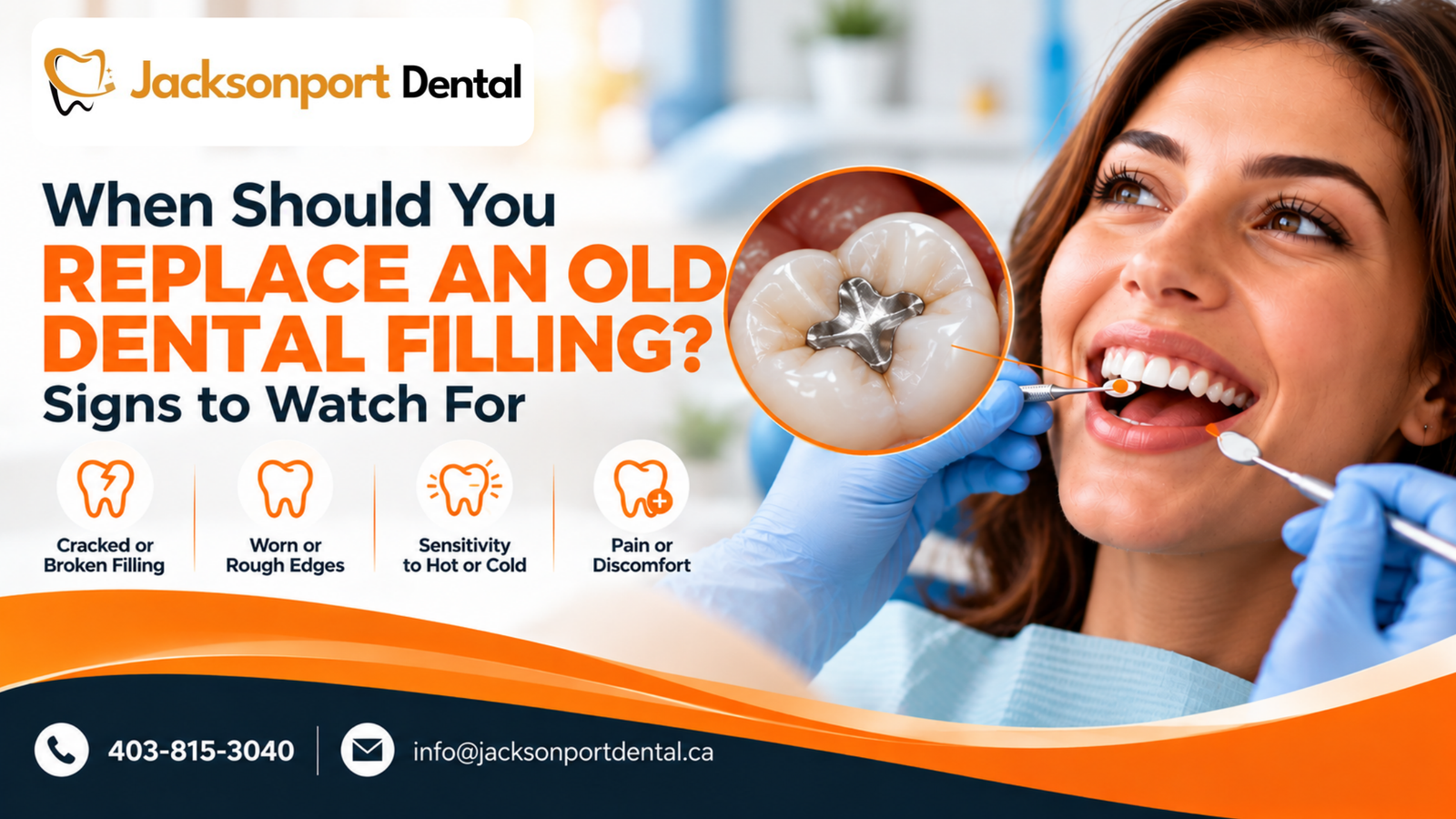
A dental filling may need to be replaced when it is damaged, worn, loose, or no longer provides a good seal around the tooth. Other warning signs include new sensitivity, pain when chewing, a visible crack or broken area, food repeatedly becoming trapped around the filling, or decay developing around the existing restoration.
Importantly, an old filling does not automatically need to be replaced simply because it has been in your tooth for a certain number of years. Your dentist can evaluate the filling, the surrounding tooth structure, your bite, and any symptoms before recommending replacement.
If you are concerned about an existing restoration, a comprehensive dental exam can help determine whether your filling is still functioning properly.
7 Signs You May Need a Filling Replacement
1. Your Filling Is Cracked or Broken
A cracked or broken filling may no longer protect the tooth as intended. Small fractures can sometimes be difficult to see, so discomfort while chewing or a change in how the tooth feels can be important clues.
2. You Have New Tooth Sensitivity
New sensitivity to cold, hot, sweet, or acidic foods does not always mean that a filling has failed, but it is worth having the tooth assessed. Sensitivity can also be associated with decay, cracks, gum recession, or other dental conditions.
If you have ongoing sensitivity, see our guide on why teeth may hurt when drinking cold water.
3. Your Filling Feels Loose
A filling that moves, feels different, or appears to have separated from the tooth should be checked by a dentist. A loose restoration can leave the underlying tooth more vulnerable to further damage.
4. You Notice Pain When Biting or Chewing
Pain when biting can have several causes, including a damaged restoration, a crack in the tooth, decay, or an issue involving the tooth’s deeper structures. A dental examination can help identify the cause rather than assuming the filling itself is the problem.
For more information about damaged teeth, read Cracked Tooth in Calgary: What to Do Before It Gets Worse.
5. Decay Has Developed Around the Filling
A filling repairs an area of tooth damage, but the surrounding natural tooth can still develop decay. If decay develops around an existing restoration, your dentist may recommend removing the old filling, cleaning the affected area, and restoring the tooth again.
6. Food Keeps Getting Trapped Around the Filling
If food repeatedly becomes trapped around a filling or between the restored tooth and its neighbour, the area should be evaluated. Changes in the shape or fit of a restoration can affect how easily the area can be cleaned.
7. Your Dentist Notices Wear During a Checkup
Some failing fillings do not cause obvious symptoms. During routine examinations, your dentist can check restorations for wear, cracks, leakage, recurrent decay, and changes in the surrounding tooth.
Regular appointments can help identify problems earlier. Jacksonport Dental also explains why regular dental checkups matter even when nothing hurts.
Does an Old Filling Always Need to Be Replaced?
No. The age of a filling alone does not determine whether it needs replacement. A filling that remains intact, functional, and surrounded by healthy tooth structure may simply need to be monitored.
Your dentist may recommend replacement when the restoration is damaged, the tooth has developed new decay, the filling no longer seals properly, or the restoration is affecting the function or health of the tooth.
The goal is not to replace a filling unnecessarily. It is to protect the natural tooth and address problems when treatment is appropriate.
What Happens When a Dental Filling Is Replaced?
The process depends on the condition of the existing filling and the tooth underneath it. In many cases, the dentist will examine the tooth, remove the old restoration if necessary, clean any decay or damaged material, and place a new restoration.
- Examination: The tooth and existing filling are assessed.
- Removal: The old or damaged filling may be removed.
- Cleaning: Any decay or compromised tooth structure is addressed.
- Restoration: A suitable filling material is placed and shaped.
- Bite check: The restoration is adjusted so it feels comfortable when you bite.
If a tooth has more extensive damage and there is not enough healthy structure for a simple filling, your dentist may discuss another restoration, such as a crown. Learn more about crowns, bridges and veneers.
What If the Tooth Is Too Damaged for Another Filling?
Not every failing filling can simply be replaced with another filling. If decay, cracks, or structural damage has weakened a tooth significantly, a different treatment may be more appropriate.
Depending on the condition of the tooth, treatment could involve a crown or, when the inner part of the tooth is affected, root canal treatment followed by appropriate restoration.
You can learn more about root canal treatment and when it may be recommended.
How Can You Help Your Dental Fillings Last Longer?
There is no guaranteed lifespan for every filling. The material, size and location of the restoration, your bite, oral hygiene, diet, and everyday habits can all influence how a filling performs over time.
- Brush twice a day with fluoride toothpaste.
- Clean between your teeth every day.
- Limit frequent sugary snacks and drinks.
- Avoid chewing very hard objects that can damage teeth or restorations.
- Attend dental examinations at the interval recommended for you.
- Have professional dental cleanings as recommended by your dental team.
- Contact your dentist if an existing filling becomes painful, loose, sharp, or damaged.
For additional information, see how regular dental checkups can help you avoid more extensive dental problems.
You can also maintain preventive care with professional teeth cleaning and hygiene services.
Old Dental Fillings in NE Calgary: When Should You Get Them Checked?
If you live in NE Calgary, including Saddleridge, Martindale, Taralake, or Redstone, you do not need to wait until an old filling causes severe pain before having it checked.
A routine dental examination gives your dentist an opportunity to evaluate existing restorations, look for signs of decay or tooth damage, and discuss whether a filling should be monitored, repaired, or replaced.
Jacksonport Dental provides restorative and family dental care for Calgary patients who need help with cavities, fillings, damaged teeth, and other oral health concerns.
If you have questions about filling materials, you can also read Are Dental Fillings Safe and Necessary?.
Frequently Asked Questions
How do you know when a dental filling needs to be replaced?
A filling may need replacement if it is cracked, broken, loose, worn, affected by recurrent decay, or no longer seals or functions properly. New sensitivity or pain when chewing can also indicate that the tooth should be examined.
How often should dental fillings be replaced?
There is no fixed replacement schedule for every filling. Some restorations can remain functional for many years, while others may need attention sooner depending on the material, tooth, bite, oral hygiene, and other factors.
Can an old filling cause tooth pain?
It can, but tooth pain has many possible causes. A damaged filling, decay around a restoration, a cracked tooth, bite problems, or deeper tooth problems can all contribute to discomfort. An examination is needed to determine the cause.
Can a filling be repaired instead of replaced?
In some situations, a dentist may be able to repair a restoration. In other cases, replacing the filling may provide a more appropriate solution. The decision depends on the condition of the filling and the tooth.
What happens if I leave a broken filling untreated?
A broken or loose filling can leave the underlying tooth vulnerable to further damage or decay. Delaying assessment may allow a problem to become more extensive, so it is best to contact your dentist if a restoration breaks or changes.
When should I call a dentist about an old filling?
Contact your dentist if you experience pain, new sensitivity, a loose or broken filling, swelling, difficulty chewing, or a sharp edge that is irritating your tongue or cheek. Severe pain, facial swelling, uncontrolled bleeding, or other urgent symptoms may require prompt dental attention. See our emergency dental services page for guidance.
Concerned About an Old Dental Filling?
If you have an old, cracked, loose, or uncomfortable filling, Jacksonport Dental can examine the tooth and explain whether the restoration should be monitored, repaired, or replaced.
Jacksonport Dental
124-3730 104 Ave NE, Calgary, AB T3N 0T1
403-815-3040 |
info@jacksonportdental.ca